STORY
My Mother Mocked My Uniform—Then the Groom Recognized Who I Was
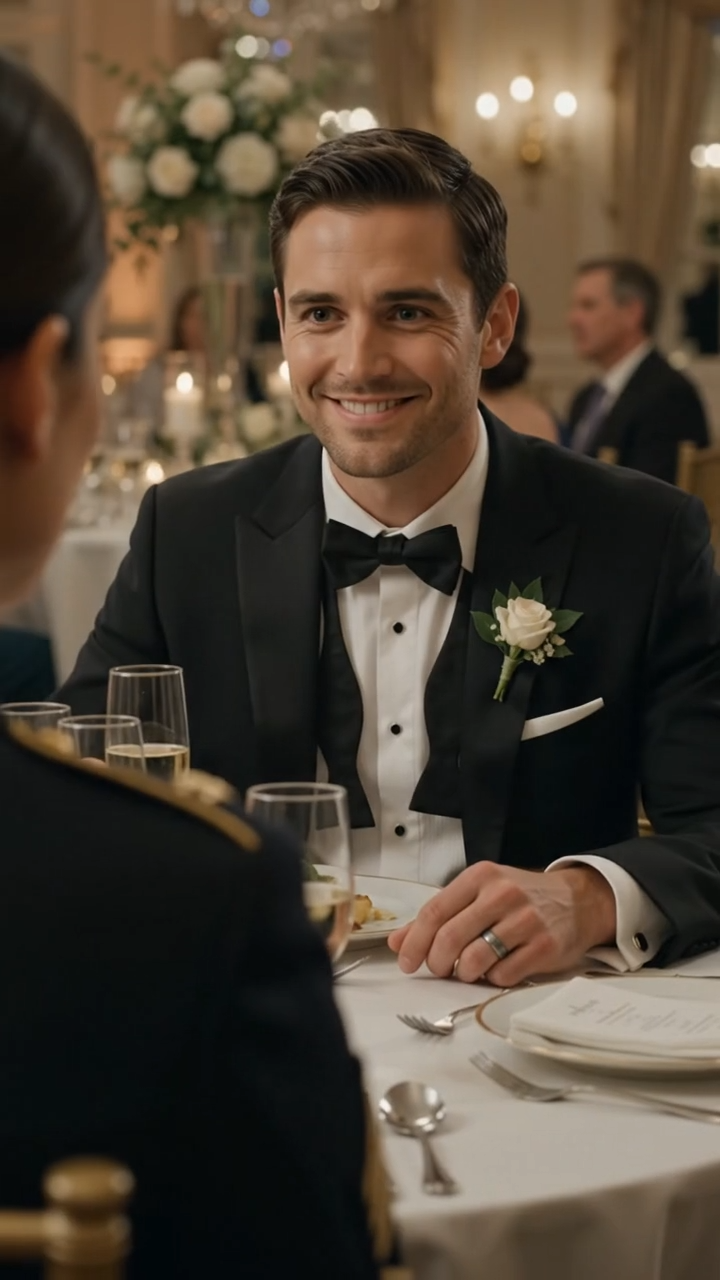
“I know that name.”
Daniel’s words landed harder than my mother’s insult.
For several seconds, nobody moved.
The quartet had stopped playing. A waiter stood near the edge of the dance floor holding a tray of untouched champagne. Ellie’s hand remained curled around the back of her chair, her veil spilling over one shoulder.
My mother recovered first.
“What are you talking about?” she asked Daniel.
He didn’t look at her.
His attention stayed on my uniform.
More specifically, on the ribbon rack she had dismissed without understanding it.
Daniel stepped closer.
“You’re a captain.”
My mother gave a short laugh.
It was automatic, the kind of laugh people use when reality has inconvenienced them.
“So?” she said. “A soldier with another title is still a soldier.”
Daniel turned toward her so sharply that Ellie flinched.
“No,” he said. “That isn’t what I mean.”
I could see him trying to decide how much to say in front of the room.
I had spent nine years learning how to read hesitation. His wasn’t uncertainty. It was restraint.
My father finally put down his bourbon.
“Daniel,” he said, “this is a wedding. Perhaps everyone should calm down.”
Daniel looked at him.
“I am calm.”
Then he pointed—not touching me, not making a spectacle of the uniform itself, just indicating the decorations my parents had never bothered to ask about.
“I know her name because people in my world know what she did.”
Ellie stared at me.
“What did you do?”
That question hurt more than I expected.
Not because she sounded cruel.
Because she sounded genuinely confused.
Nine years.
Nine years of promotions, courses, late-night classes, hard assignments, evaluations, responsibility, and silence—and nobody in my family knew enough about my life to answer the simplest question about it.
I looked at Ellie.
“I worked.”
Mom rolled her eyes.
“Oh, please. Everybody works.”
Daniel’s jaw tightened.
“Not like this.”
He had served in the Army Reserve for years, something Ellie had mentioned only briefly in one of the rare messages that had reached me. I had assumed he had done his training, served his weekends, and built a civilian career alongside it.
What I hadn’t known was that his professional military education had included an after-action case built around a disaster-response operation several years earlier.
My operation.
Not because I had been the highest-ranking person there. I hadn’t been.
Not because I had single-handedly saved everyone. I hadn’t.
Real work rarely looks like the stories people tell afterward.
It had been confusion, damaged roads, exhausted teams, civilians needing evacuation, broken communications, changing instructions, and dozens of people doing their jobs under pressure.
But when a communications failure cut one section of the response effort off from its original coordination plan, I had been the junior officer on the ground who reorganized movement, redirected vehicles, established a temporary control point, and kept the evacuation moving until senior command regained contact.
No movie moment.
No dramatic speech.
Just decisions made quickly enough that people got where they needed to go.
The report later became a leadership case study because of the way the team adapted without losing control.
My name was on it.
Daniel had studied it.
He looked at me now with the strange expression of someone discovering that a person from a professional

More From This Author