STORY
The Base Cook Made the Shot—Then Handed the General His Own Report
Saul Mercer came home from the night shift to find his kitchen table on the front lawn.
His daughter’s wedding china sat inside a cardboard box beside it. His winter coat was draped over a chair, one sleeve trailing in the wet grass. Captain Daniel Miller stood in the doorway with a fresh lock in his hand.
“Don’t make this ugly,” Miller said.
Saul looked past him. “Where’s Emma?”
“At work. She agreed it was time.”
Saul knew his daughter’s handwriting. The signature on the paper Miller held out was close, but Emma never made the second hump of her M that way.
The paper said Saul had signed over the house.
It also said he was no longer competent to manage his own affairs.
Saul was seventy-nine, and his knees hurt after eight hours on the kitchen floor at Fort Bellamy. But he knew whose name was on the deed. He had paid off the mortgage eleven years ago, three months before his wife, Ruth, died.
“I want to hear that from Emma,” he said.
Miller lowered his voice. “You can ask her tonight. Somewhere else.”
A neighbor’s curtain moved across the street. Saul felt heat rise in his face. He had taught Emma not to argue on a doorstep when someone wanted an audience. Now his son-in-law was using the lesson against him.
Saul took his coat from the chair. In its pocket was the small notebook where he wrote shopping lists and the times of his doctor’s appointments. He opened to the last page and wrote down the date, the time, and the number on Miller’s truck.
Then he walked to his car without touching the paper.
By noon, Miller had called the base kitchen twice to say Saul was confused and should be sent home. Saul’s supervisor, who had known him for six years, let him finish preparing lunch but watched him with worried eyes.
Saul worked carefully. He labeled the soup, checked the ovens, and pushed the mess cart toward the restricted range as he did every Thursday. His hands were steady until he thought of Emma arriving home to find her father’s belongings in the yard.
He had tried calling her. Both calls had gone to voicemail.
At the range gate, a young guard checked his badge and glanced at the cart.
“You okay, Mr. Mercer?”
“Not quite,” Saul said. “Let me through, please.”
Beyond the gate, three marksmen lay behind a prototype rifle. A steel target stood on a distant ridge, almost lost in the shimmer rising from the canyon. Twenty rounds had been fired. The target was untouched.
Captain Miller had reached the range before him.
Of course he had.
Miller was the officer supervising the trial. If the rifle passed, his unit would receive the contract to conduct the next phase. Saul understood why Miller loved the project. It gave him senior officers to impress and a reason to be away from home. Saul did not yet understand why the man had chosen this morning to take his house.
“Move the cart,” Miller snapped. “They’re working.”
Saul set the coffee urn beside the range shelter. One shooter fired. Dust lifted short and left of the target.
Miller called for another correction.
Saul watched a thin thread of dust rise halfway across the canyon. It vanished in the cut, then appeared near the ridge moving the other way.
“Your wind call is wrong,” he said.
The nearest shooter turned. Miller gave a humorless laugh.
“You cook eggs. Let the shooters shoot.”
General Sterling, standing behind the line, did not laugh. He watched Saul as the old man poured coffee into paper cups.
“Tell me what you saw,” Sterling said.
“The flag here says one thing. The canyon says three. Your round’s getting a push near the far wall that you haven’t allowed for.”
Miller folded his arms. “He’s upset, General. Family trouble.”
Sterling’s gaze shifted between them. “What kind of trouble?”
“None that belongs on this range,” Saul said.
Miller took a step toward him. “You were told to go home.”
“You made that difficult.”
For a moment neither man spoke. Then Sterling asked Saul whether he could make the shot.
Saul looked at the target. “With a cooler barrel and a fresh round, I think so.”
Miller objected at once. The rifle was classified. Saul was a civilian employee. He was too old.
Sterling held up a hand.
Saul removed his apron and folded it over the cart handle. When he knelt beside the mat, pain caught in his right knee. He waited for it to pass, then lay down behind the rifle.
Miller’s mouth tightened. Saul could hear him breathing.
The rifle felt unfamiliar in its details and familiar where it mattered. Saul settled his shoulder, looked through the scope, and waited for the air beyond the ridge to show itself again.
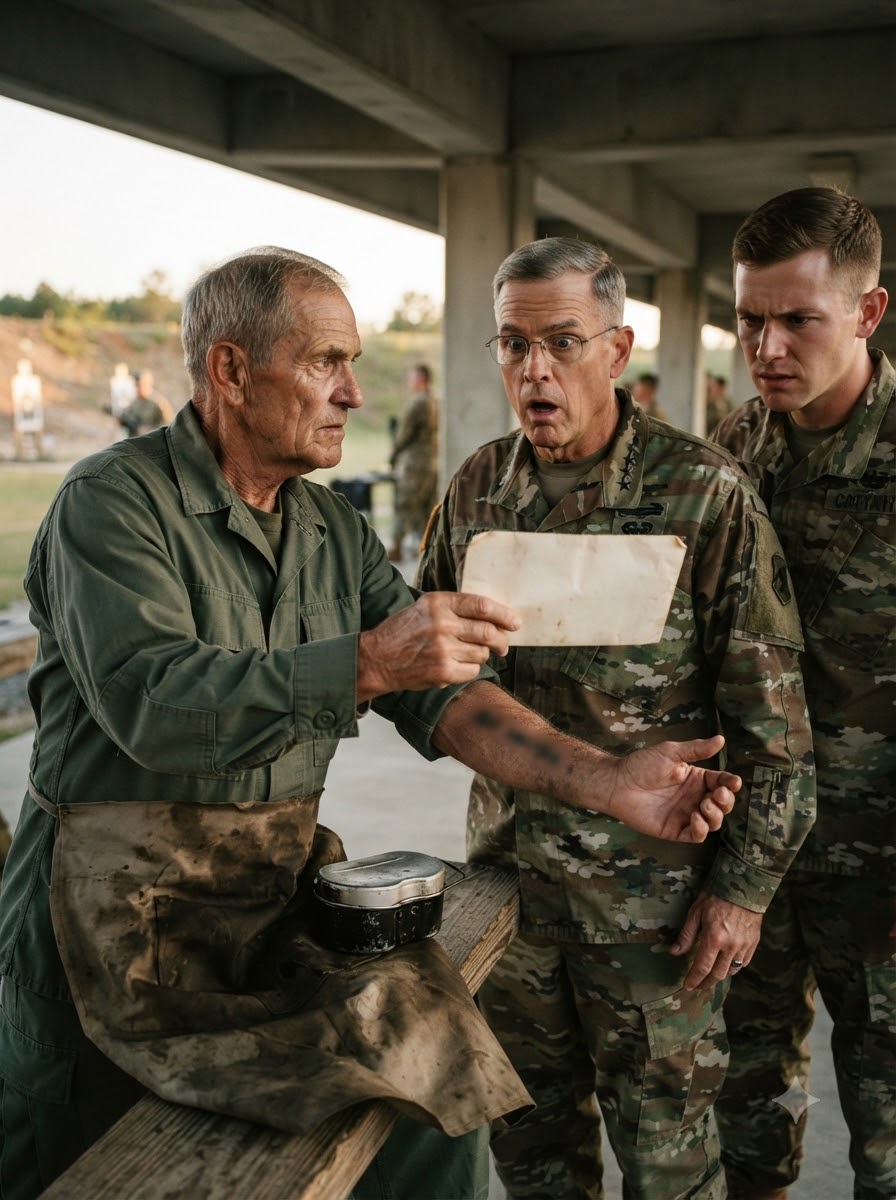
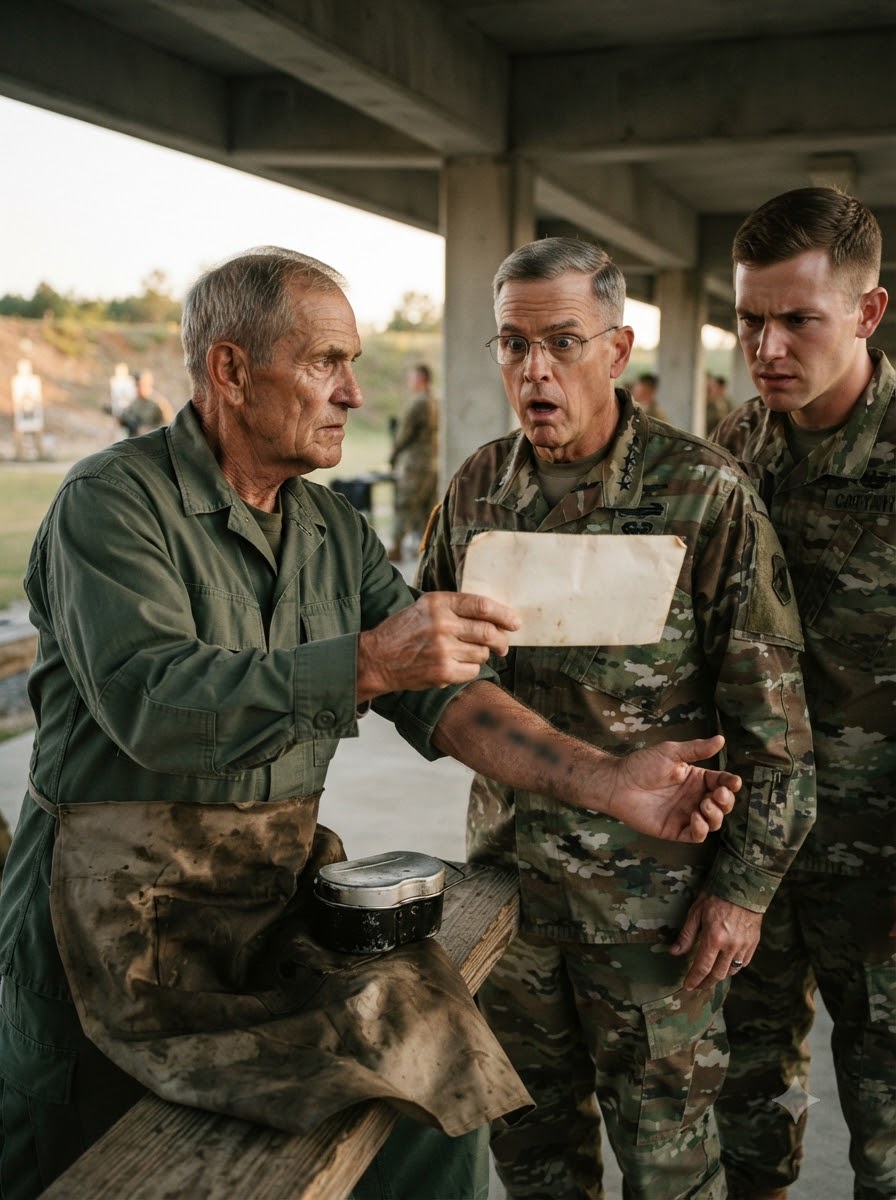
His sleeve slipped back from his forearm.
Miller stared at the faded mark beneath it: a black tower crossed by a silver slash. Saul saw the captain’s expression change in the reflection on the scope housing.
“That unit never existed,” Miller whispered.
Sterling came closer. His face lost its color.
“Gray Lantern,” the general said. Then, after a long moment, “Mercer?”
Saul kept his eye on the ridge. “You still talk too much before a hard shot, Lieutenant.”
He fired.
A second passed. Then a clear metallic strike came back across the canyon.
No one cheered. The three marksmen looked from the target to their instruments, trying to understand the correction. Sterling looked only at Saul.
Miller recovered first.
“One hit proves nothing,” he said. “We need the data.”
“You’ve got it,” Saul said as he sat up. “The ridge hasn’t moved.”
Sterling crouched beside him. “I was told you died.”
“I know.”
The general stood slowly. He had spent thirty years believing a report signed by men he trusted. Now one of those men was on the range, sweating through his uniform.
Sterling turned to Miller. “How did you know that insignia?”
Miller’s answer came too quickly. “An old briefing photograph, sir.”
“That file is sealed.”
“I had clearance for an archive review.”
Saul pulled his sleeve down. “Then you know the rifle’s test plan uses Gray Lantern’s field tables.”
Miller said nothing.
One of the range technicians, a woman named Ortega, looked up from her console. “The tables are credited to an internal source.”
“They were written by my team,” Saul said. “Before your captain was born.”
Sterling ordered the range closed. No one was to erase a log or remove a device. Miller protested, but the general sent two military police officers to stand at the gate.
It took Saul another hour to reach Emma.
She answered on the fourth call, her voice thin with panic. Miller had told her Saul had fallen at work and was being evaluated. She had been calling the base hospital, where no one could find him.
“He changed the locks,” Saul told her.
There was a silence.
“He told me you wanted to sell,” Emma said. “He said you’d signed the papers.”
“I didn’t.”
“I know,” she said, and started to cry.

More From This Author