STORY
I Locked My Pregnant Wife Under The Stairs—By Dawn, She’d Found A Hidden Room
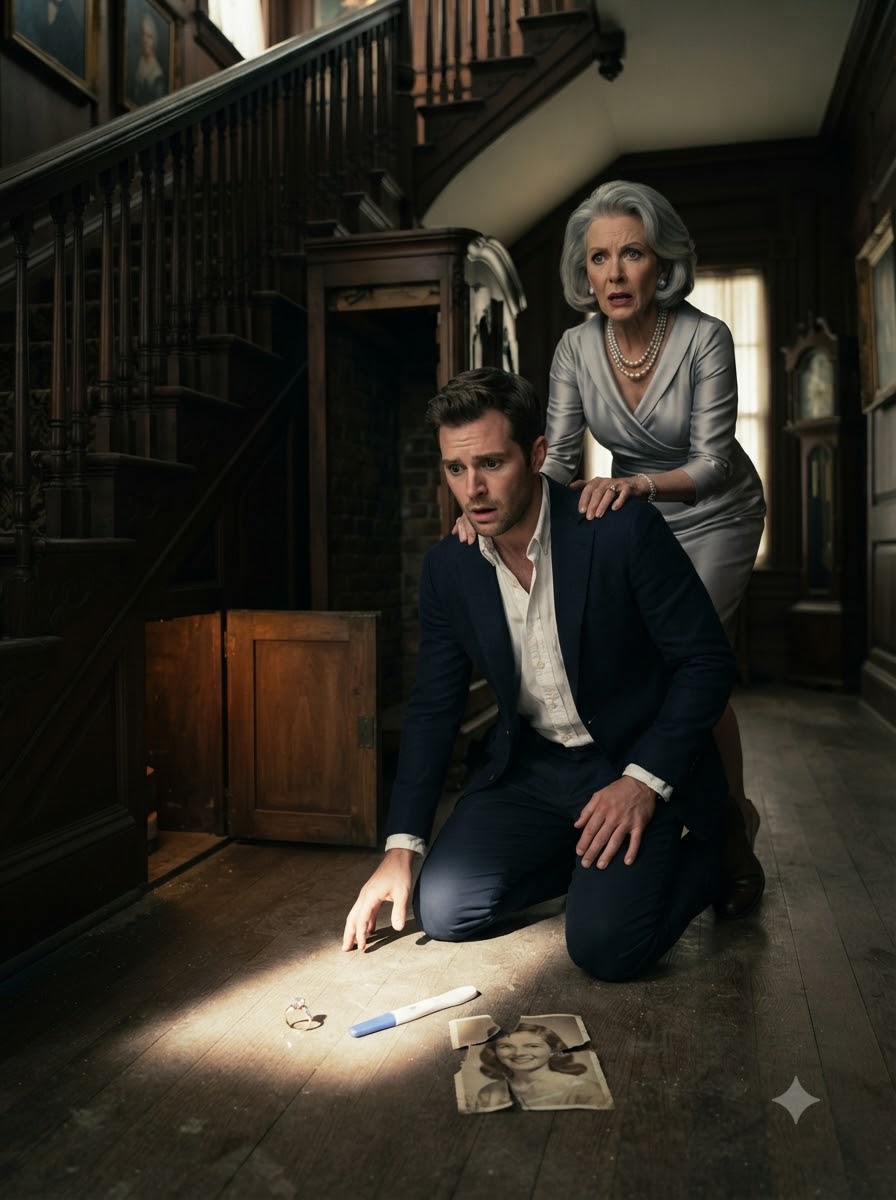
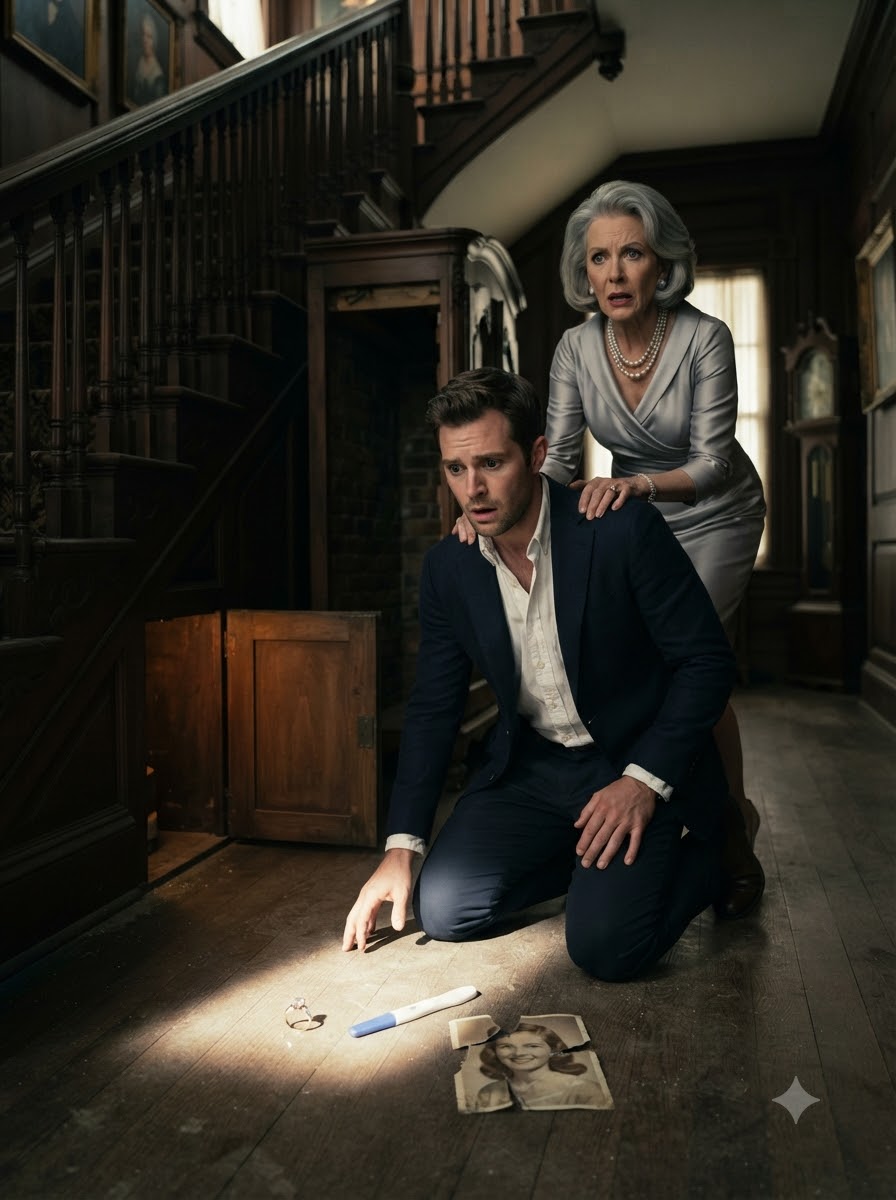
I wrenched my arm free from my mother’s desperate grip and stepped deeper into the narrow brick corridor, holding my phone flashlight high against the suffocating dark.
Behind me, Catherine’s aristocratic composure completely shattered. The woman who had spent my entire life correcting people’s posture and speaking in measured, velvet tones was suddenly clawing at the back of my linen shirt, her fingernails digging into my shoulder.
“Andrew, come back right now!” she hissed, her voice shrill and breathless in the cramped space. “That girl has lost her mind! Whatever she’s doing back there is a trick to tear this family apart!”
I didn’t answer her. I couldn’t. My boots crunched over flakes of fallen mortar as the beam of my flashlight cut through thirty years of undisturbed dust and landed on the chamber at the end of the passage.
It wasn’t just a crawlspace. It was an old wine cellar that had been bricked off from the main basement during the renovations when I was a child—equipped with a ventilation shaft leading to the garden carriage house, a rusted sink, a narrow iron cot, and a heavy oak desk piled high with yellowed legal binders.
Sarah stood beside the desk. Her cream blouse was streaked with soot from forcing the false panel open, and her hair had fallen loose around her shoulders, but her posture was ramrod straight. She didn’t look like a terrified captive. She looked like a prosecutor waiting for the jury to take their seats.
And sitting in a worn leather wheelchair right beside her was a frail, silver-haired man wrapped in a wool cardigan.
When the light hit his face, the breath left my lungs as if I’d been struck in the chest with a sledgehammer.
He was gaunt, his skin translucent from years away from the sun, and his left leg ended at the knee beneath the fold of his blanket. Yet there was no mistaking the sharp bridge of his nose, the deep-set gray eyes that mirrored my own in the bathroom mirror every morning, or the crescent-shaped scar beneath his lower lip.
It was the exact face from the oil portrait that used to hang above our parlor fireplace before my mother took it down when I turned ten.
Thomas Vance. My father. The man whose granite headstone I had visited at Bonaventure Cemetery every June since I was six years old.
“Dad?” The word tore out of my throat, barely louder than a whisper.
The old man’s eyes glistened as he looked at me. His lips trembled, forming my name before a dry, rattling cough shook his thin frame. Immediately, Sarah reached down, pouring water from a plastic jug into a paper cup and holding it steady against his hand. The gentleness in her touch—paired with the cold, steel glare she directed at me—made my stomach twist with a nausea far worse than the residue of last night’s tea.
“Don’t come any closer to us, Andrew,” Sarah said. Her voice echoed off the damp brick walls, stripped of every ounce of warmth she had ever given me during our three years of marriage. “You forfeited the right to play the concerned husband the second you turned that brass key.”
“Sarah, I—” I looked down at my trembling hands, still clutching the faded blue baby blanket I had picked up at the threshold, alongside her diamond wedding ring and the positive pregnancy test. “You’re pregnant. Why didn’t you tell me at dinner?”
“I tried to tell you for three days,” she replied evenly. “I put the ultrasound photo in my coat pocket before dinner so I could hand it to you after dessert. I begged you through the door to check my pocket. Instead, you listened to your mother tell you how talkative women learn their place, and you went upstairs to sleep like a coward.”
Every word landed like a lash across my face. Behind me, Catherine pressed herself against the brick wall, her chest heaving as she stared at the man in the wheelchair.
“You told me the nursing home in Augusta burned down,” my father rasped, his gaze locked entirely on Catherine. His voice was hoarse from disuse, scraping like dry leaves over stone, yet it carried an unmistakable authority that made my mother flinch. “You told me Andrew died of leukemia when he was twelve, Catherine. You told me there was no one left looking for me.”
My head spun. I turned slowly toward my mother. “What is he talking about?”
Catherine backed a step toward the storage room entrance, her manicured hands fluttering to her pearl necklace. “He’s senile, Andrew! Look at him—he had a massive stroke after the crash! His brain was damaged, he became violent, dangerous! I did what I had to do to protect you and preserve the Vance estate!”
“By burying him alive under our own house?” I roared, the sound reverberating through the narrow tunnel.
“He wasn’t here the whole time!” Catherine shrieked, the cultured Southern matriarch vanishing entirely into a cornered animal. “I kept him in a private care facility across the state line under his middle name! Only when the clinic director threatened to audit the guardianship papers twelve years ago did I bring him back to the carriage cellar! Martha and I fed him every single day! He had a bed, he had medicine—”
“Medicine?” Sarah interrupted sharply. She picked up a green ledger and a blister pack of pills from the oak desk, holding them up into the beam of my light. “You mean lorazepam and crushed scopolamine? The exact same powder I found in the kitchen canister labeled chamomile last week?”
I froze, remembering the bitter, chalky aftertaste at the bottom of the porcelain cup Catherine had handed me at midnight—and the unnatural, leaden sleep that had dragged me down while my wife was locked in the dark below.
Sarah stepped forward, her eyes blazing. “Do you know why I’ve been so pale all week, Andrew? It wasn’t just morning sickness. Three weeks ago, I noticed our housekeeper Martha slipping out to the garden carriage house at two in the morning with a tray of food and refills of sedatives written under your mother’s name. When I started asking questions about the estate’s quarterly pharmacy charges, Catherine started offering me ‘soothing herbal tea’ every afternoon. I poured mine into the sink after the first day made my vision blur. Last night, when I heard you coming toward the stairs at midnight, I heard her stop you in the hall. I knew she’d dose you so you wouldn’t hear me breaking through the false wall I’d seen Martha use.”
My knees felt like water. For months, whenever I felt foggy or exhausted during arguments between my mother and Sarah, Catherine had blamed stress at my architecture firm. Whenever Sarah pointed out discrepancies in the household trust accounts, Catherine wept and claimed Sarah was after our family inheritance.
And every single time, like a programmed dog, I had barked at my wife to protect my mother’s feelings.
My father lifted a skeletal, trembling finger and pointed at the yellowed blue baby blanket still clutched in my left hand.

More From This Author