STORY
My Parents Sold Lucy’s Cello—Then Grandma Exposed Their Plan Beside the Pool
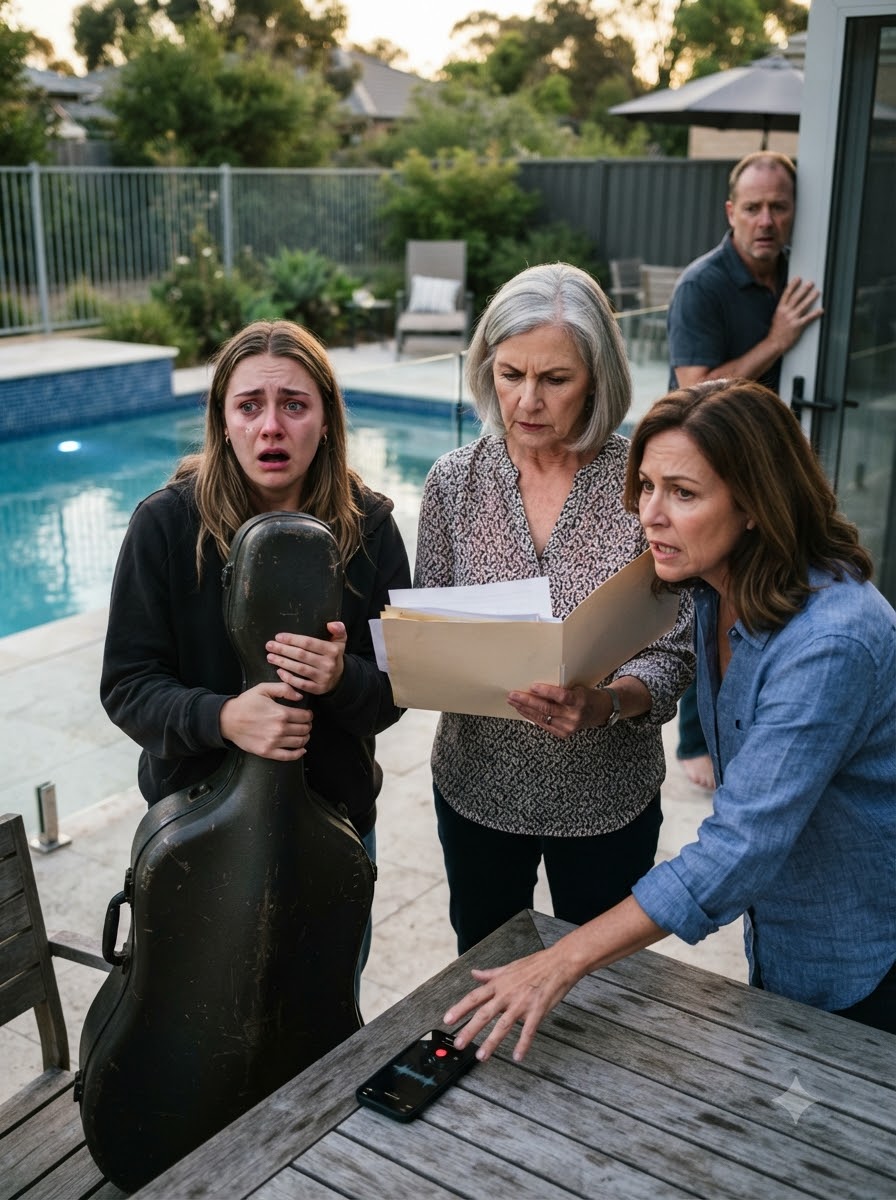
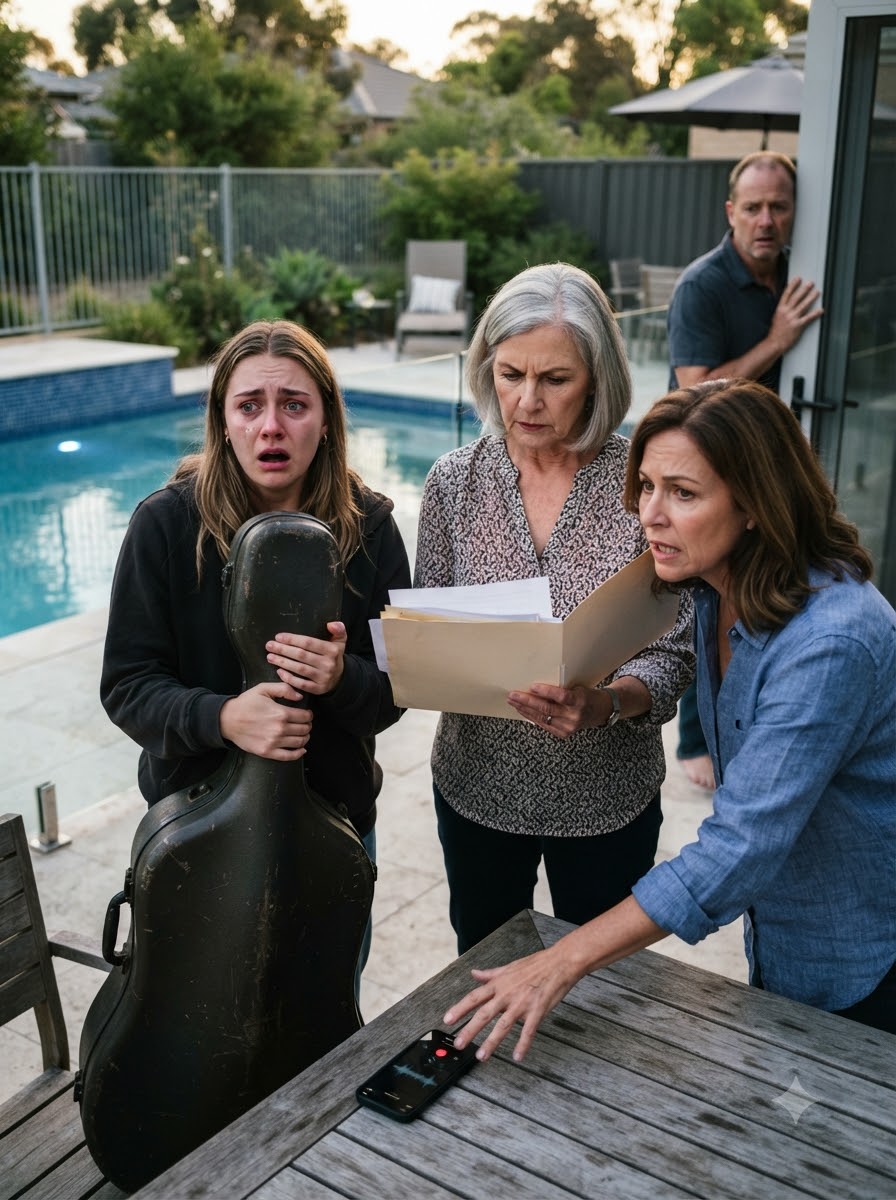
The first thing Lucy noticed was the empty corner.
She had walked into my parents’ music room with her sheet-music binder pressed to her chest. Her cello case had always stood beside the armchair, close enough that she could reach it before she took off her coat.
Now the rug showed a pale rectangle where the case had been.
Lucy looked behind the chair. Then she looked at me.
“Did Great-Grandma take it?”
“I don’t know,” I said.
I crossed to the locked cabinet where the cello itself was kept between lessons. The key was still in the cabinet door. Inside were my grandmother’s violin cases, her old viola, and rows of labeled drawers. The space reserved for Lucy’s cello was empty.
Through the music-room window, I could see a swimming pool under construction. The yard had been torn open, and a man in work boots was fastening tile along its edge. My parents had mentioned wanting a pool for years. My sister, Claire, had been talking all spring about how her children deserved a place to swim every day.
I shut the cabinet before Lucy could see how badly my hands were shaking.
My mother came into the doorway carrying a roll of blue painter’s tape. She stopped when she saw us. Her eyes went first to the cabinet, then to Lucy.
“Oh,” she said. “You’re early.”
“Where’s the cello?”
Mom set the tape on the piano. “Your father put it somewhere safe while the workers were here.”
“Where?”
“Somewhere it won’t get damaged.” Her voice brightened for Lucy. “Sweetheart, why don’t you go find Grandpa? I think he has ice pops.”
Lucy stayed beside me.
“She needs it for her lesson tomorrow,” I said.
Mom’s smile thinned. “We’ll sort it out.”
My father appeared behind her, his boots white with dust. He glanced from the open cabinet to the pool outside.
“I told you to text first,” he said to Mom.
Lucy lowered her binder. Dad saw her face and looked away.
I took her home without the cello. In the car, she asked if the workers had needed to move it to build the pool. I told her that was possible. Then she asked if it was safe.
“I’m going to find out,” I said.
My parents had made the same promise two weeks earlier, when they first asked to keep the instrument at their house. Grandma Evelyn had moved into an assisted-living apartment after a fall. Her music room remained exactly as she had left it, including its humidity controls, and Lucy had always practiced there on Saturdays. Mom said contractors would be working in the hallway and offered to “borrow the cello for safekeeping” until the dust settled.
It sounded unnecessary, but ordinary. I thought she meant they would keep it in the cabinet, as Grandma always had.
Lucy had been given the cello on her eleventh birthday. Grandma had owned it for decades, had cared for it herself, and had waited until Lucy was tall enough to play it properly. At the party, she had put the case in front of Lucy and told her, very clearly, “This one belongs to you now.”
I called Grandma from the parking lot outside Lucy’s music school. I had dropped Lucy off with the school’s loaner instrument, telling her I needed to make a few calls.
“Did you ask Mom and Dad to move the cello?” I asked.
“No. Why?”
The pause after I told her was long enough that I checked the phone.
“Don’t go back to the house,” Grandma said. “Not yet. Come see me.”
She lived fifteen minutes away. When I arrived, she was sitting at her little kitchen table with a folder open in front of her. She had already found the signed birthday transfer, photographs of the cello, and a valuation prepared for her insurance renewal. The cello had been valued at ninety-six thousand dollars.
I stared at the figure. I had known it was valuable. I hadn’t known how valuable.
Grandma touched a photograph showing a narrow repair on the cello’s back. “If it’s gone,” she said, “we find out where it went.”
We went back to my parents’ house together the next morning. Grandma rang the bell. Dad opened the door, saw her, and stepped onto the porch as though he could keep her there.
Mom came up behind him. “Evelyn. You should have called.”
“I did. Neither of you answered.” Grandma held out her hand. “Where is Lucy’s cello?”
Dad said he had moved it out of the work area. Mom said the same thing, almost over him. When Grandma asked to see it, neither moved.
“It’s with a specialist,” Mom finally said. “For a checkup.”
“Which specialist?”
“I don’t have the name in front of me.”
Grandma looked past her into the hallway. “Then get the receipt.”
Mom gripped the edge of the door. “Lucy’s mother is making a crisis out of nothing.”
I had spent years hearing my mother say that. It had worked on me often enough that I felt the old urge to apologize, even standing there without my daughter’s cello.
Grandma turned to me. “Write down what they’ve said. Today’s date, too.”
That night Mom called. She said Grandma was tired and easily confused. She said I was letting Lucy become attached to an object that required adult decisions. When I asked for the specialist’s name, she told me I was being cruel.
I ended the call and wrote every word down.
The first physical clue came from a strip of packing foam. It was caught in a thorny shrub beside the side gate, the one delivery people used. White foam, dark blue backing. I recognized it from the fitted support inside Lucy’s case because she had once peeled a corner loose while trying to tuck her rosin tin underneath it.
I photographed it before I picked it up.
The gate faced the driveway camera. My parents had installed the camera after a package theft and had given me access to the app because I was the person they called when it sent alerts while they were away. Dad had removed my access that morning. The app still showed thumbnails from the previous week, though the videos would not play.
On the previous Thursday, at 8:14 a.m., a thumbnail showed two men lifting a black case into a white van. One man had his hand over the blue repair tape Lucy and I had put on the case handle. Dad stood beside them, holding the gate.
I saved screenshots. Then I drove to the school and waited for Lucy’s lesson to finish.
She knew as soon as she got in the car. Children who live near family secrets learn to read faces early.
“Is it lost?” she asked.
“I think someone took it,” I said. “Great-Grandma and I are working on getting it back.”
She stared at the loaner case across the back seat. “I thought I was supposed to trust them.”
“You were,” I said.
The next day Grandma’s lawyer, Mr. Bell, met us at her apartment. He listened, examined the transfer papers and camera screenshots, and asked Grandma whether she wanted to involve the police.

More From This Author