STORY
My Sister Took Emily’s Speech—Grandma Patty Had a Bank Notice
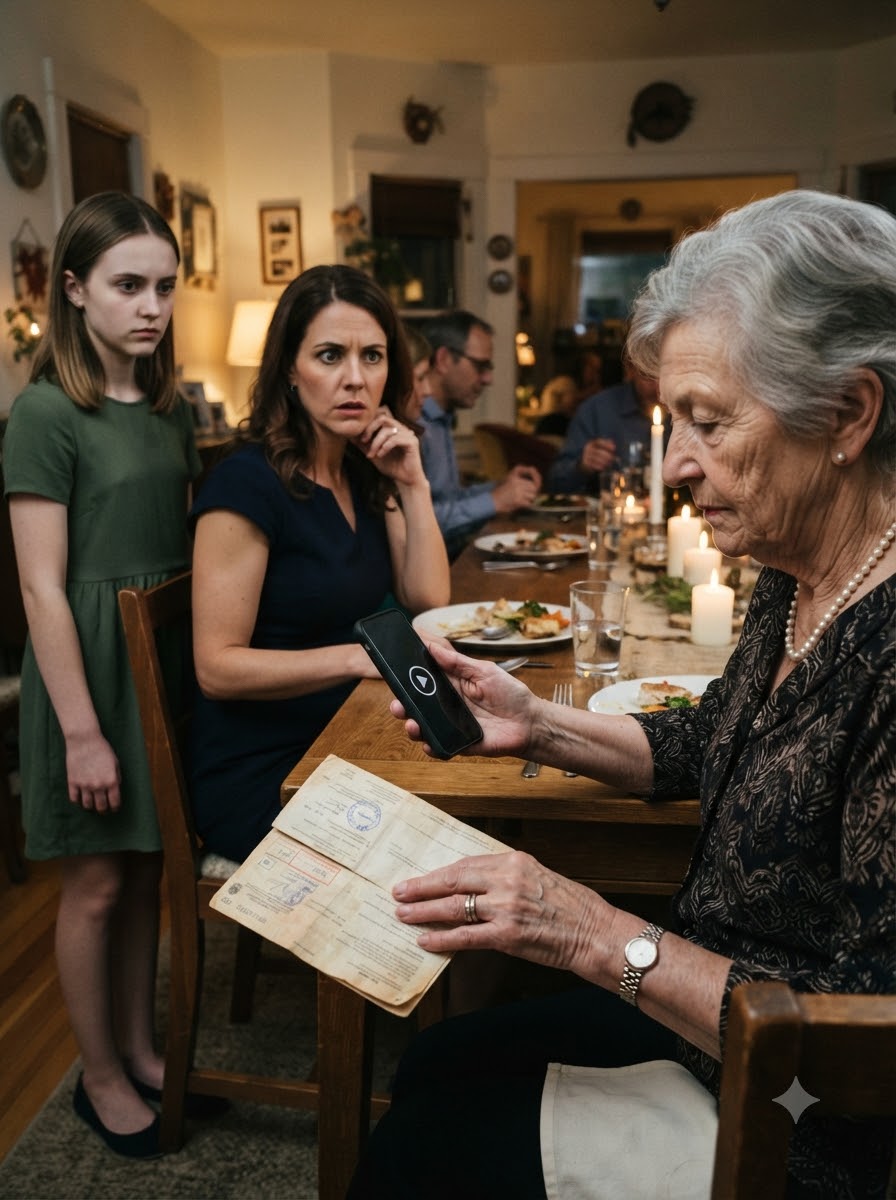
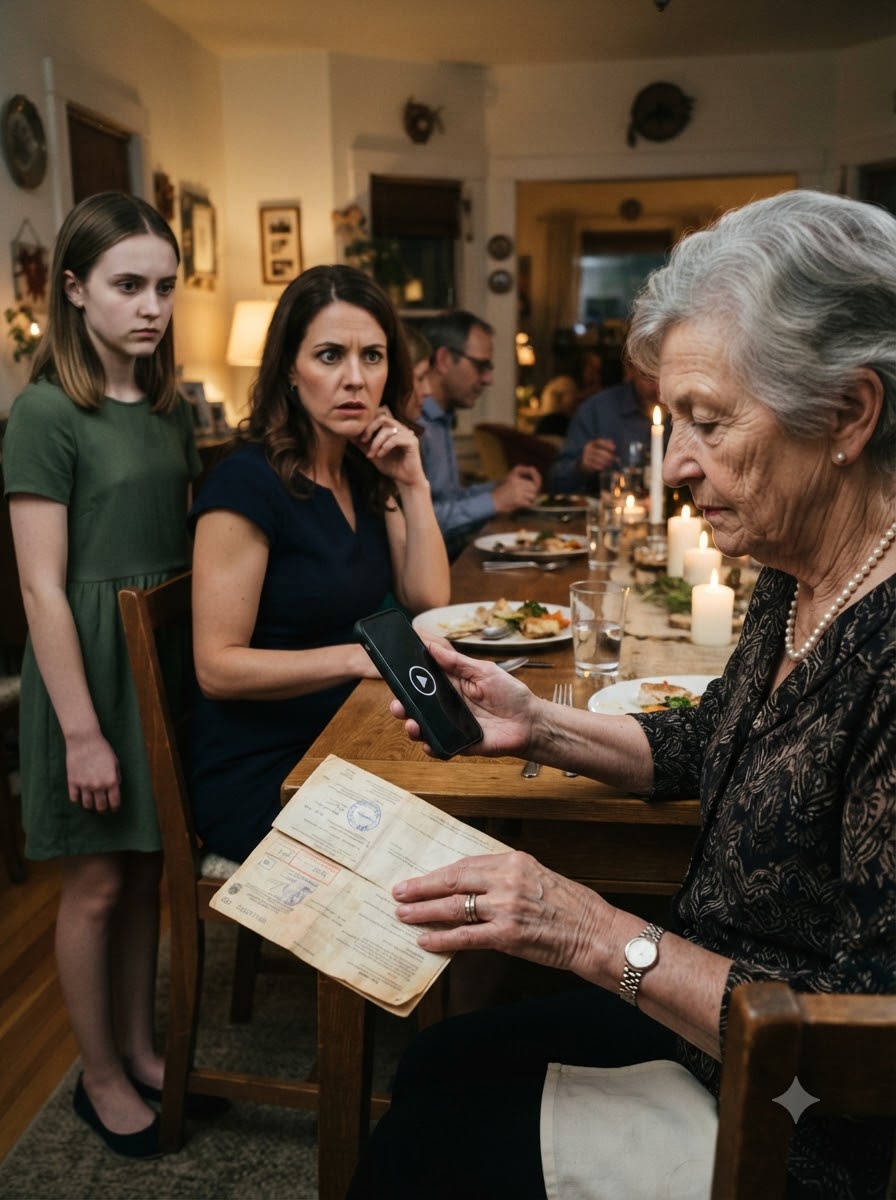
My daughter was halfway through her speech when my sister decided to humiliate her.
Emily stood beside my parents’ dining table in the pale-blue dress she had bought with her own allowance. She held a folded sheet of paper in both hands. The first lines were about my parents’ thirty-five years of marriage, and how she hoped she could learn to love people for that long.
Brianna leaned toward her husband and whispered, loudly enough for the whole table to hear, “She’s not exactly bright.”
Emily stopped reading. Her eyes dropped to the page.
My father gave Brianna a warning look, but my mother smiled as if it were an awkward joke. I felt Derek’s hand close around mine beneath the table.
Then Grandma Patty set down her fork.
“She knows what you stole.”
Five words. Brianna’s face went white.
My parents started talking at once. My mother said, “Patty, please.” My father said, “Not tonight.” Grandma didn’t look at either of them. She looked at Emily, who was still standing with her speech in her shaking hands.
For most of my life, I had mistaken silence for keeping the peace. That night I learned how much my silence had cost.
I’m Charlotte, the younger daughter in a family that had decided early what success looked like. My older sister Brianna had excellent grades, a scholarship, and a corporate job. She married Marcus, a finance executive, and my parents spoke about their life together as though every choice they made proved something about the rest of us.
I married Derek at twenty-one. Emily was born the next year. Derek worked long hours as a mechanic, and I stayed home while she was small. We paid our bills, laughed a lot, and raised a girl who loved drawing buildings and asking how bridges stayed up.
To my parents, that never seemed to count for much.
Grandma Patty was different. At eighty-two, she still drove herself to the garden center and insisted on carrying her own bags of soil. She listened when Emily talked. She called her brilliant, not because Emily got every answer right, but because she wanted to know why things worked.
The dinner was meant to celebrate my parents renewing their vows after thirty-five years. Emily had practiced her speech in our kitchen for a week. She had saved for her dress and helped me make lemon bars for dessert. On the drive over, she asked twice whether speaking before dinner would be all right. I told her her grandparents would love it.
My mother had set the table with white linen and flowers. Brianna arrived in cream silk and asked whether my dress was from Target. Derek squeezed my hand, and I let the comment pass. That was what I usually did.
When Grandma came in, she hugged Emily first.
“Look at you,” she said. “Will I get to hear the speech you told me about?”
Emily grinned. “After we eat.”
Dinner might have gone smoothly if Brianna had left her alone. Instead she kept turning the conversation toward school. She asked whether Emily was still “doing that little drawing thing,” then told us about the advanced programs her future children would attend.
Emily quietly explained that she liked architecture. She had made a cardboard model of a library, with a sloped roof to catch rainwater.
Brianna said, “How sweet.”
Later, when my father invited Emily to speak, Brianna made her remark.
In the silence after Grandma’s five words, I pushed back my chair and went to Emily. I put my arm around her shoulders.
“You didn’t do anything wrong,” I told her.
Grandma nodded. “Not one thing.”
My mother reached toward Grandma’s hand. “Can we discuss this privately?”
“No,” Grandma said. “You’ve had plenty of time to do that.”
She took a thick envelope from her handbag and laid it on the table. I saw Emily’s name written across the front in Grandma’s handwriting.
I had no idea what was inside. Later, I would learn that Grandma had spent the previous six weeks finding out exactly where Emily’s money had gone.
The first clue had been a birthday card.
Every year, Grandma gave Emily a small present and put money aside for her future. When Emily turned twelve, Grandma had written that the account was growing and that one day Emily would get to decide whether it helped pay for college, trade school, or whatever came next.
Emily had thanked her for the gift. She hadn’t mentioned the account.
Grandma asked me about it a few days later. I told her I didn’t know what account she meant. I remembered signing paperwork years before, when my mother offered to help Grandma open an education fund for Emily, but I had never received statements. My mother handled them, and whenever I asked, she said everything was taken care of.
Grandma went home and dug out her copies of the paperwork. The account was an education savings account in Emily’s name, with my mother listed as custodian. Grandma had made the deposits. My mother was supposed to manage the money for Emily, not spend it.
A recent statement, which Grandma obtained through the account provider, showed a balance under nine thousand dollars.
There should have been more than sixty thousand.
Grandma did not call my mother first. She had known her daughter long enough to expect an explanation before she got an answer. She took the statements to an attorney named Helen Ward, who requested the account records and traced the withdrawals.
Over eleven months, $51,400 had moved out in six transfers. The first two went to an account belonging to Brianna’s consulting business. The next four went to a property company Brianna had formed to buy and renovate a condominium.
The transfer descriptions said “education reimbursement” and “family expense.” There were no invoices for Emily’s education. Grandma asked me to bring her every receipt I had for Emily’s school expenses. I brought a shoebox: art supplies, field trips, a summer design class Derek and I had saved up to pay for. None matched the withdrawals.
By then Helen had also found a loan agreement. It said Emily’s account had lent Brianna’s property company $45,000. My mother had signed as custodian. My signature appeared beneath a sentence saying I knew about and approved the arrangement.
I had never seen the document.
Grandma showed it to me at her kitchen table three days before the dinner. The signature looked enough like mine to unsettle me. Whoever made it had copied the way I looped the C in Charlotte. But they had joined the last two letters, and I never did. I practiced my signature on the back of an envelope while Grandma watched.
“Did Susan ever ask you to sign anything like this?” she asked.
“No.”
I stared at the date. It was a Thursday in October. Emily had been home with a fever that week. I remembered because Derek had taken two days off so I could help Grandma after she hurt her ankle.
Grandma remembered too. On the date of the supposed signing, I had spent the afternoon with her. My mother had not been there.
- 1
- 2

More From This Author