STORY
My Husband Woke From a Coma—Then a Nurse Exposed My Mother
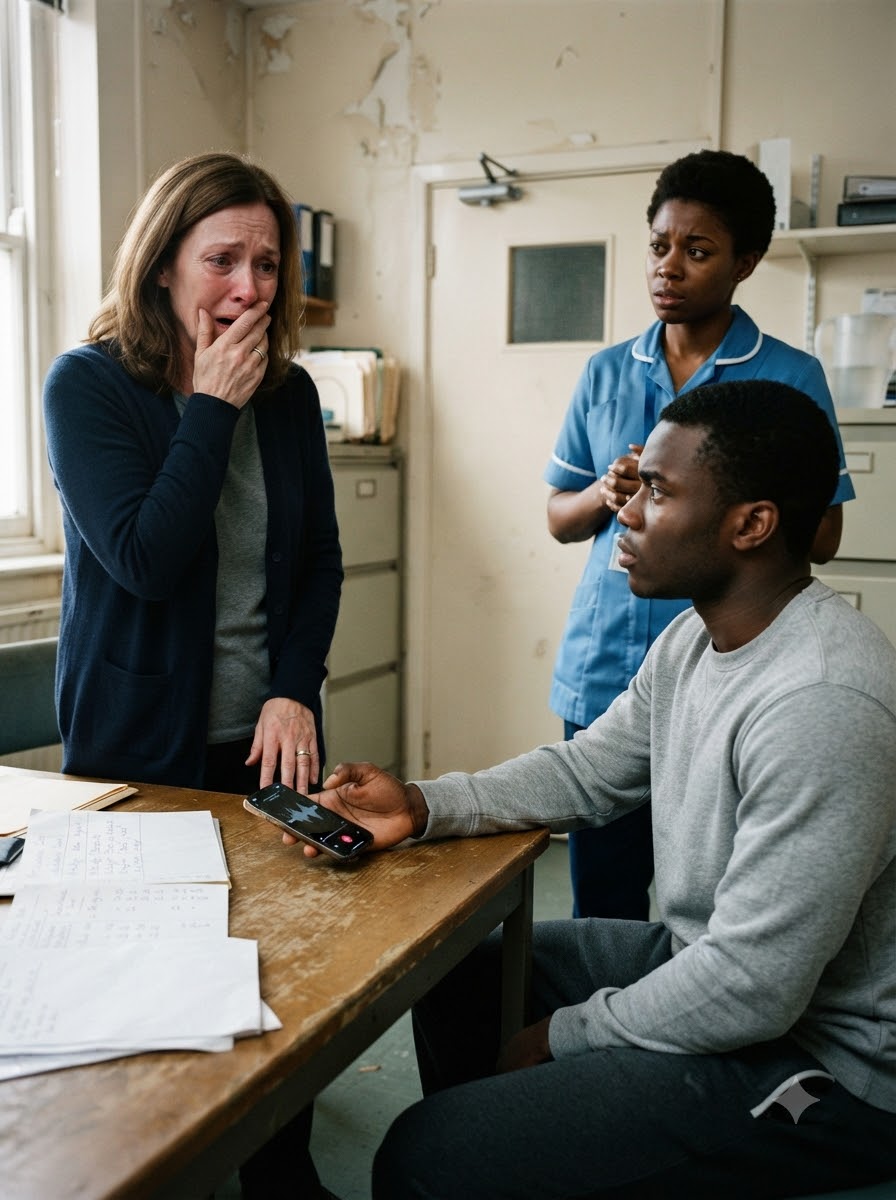
Kunle struck the bedroom door with his shoulder just as Wendy turned the key.
The frame shook.
“Open this door!” he roared. “You people want to bury me alive!”
Wendy backed away, clutching their six-year-old daughter, Dara, against her chest. On the other side of the door, furniture scraped across the floor. Glass shattered.
Her mother, Mrs. Akinola, stood in the passage with trembling hands.
“The police are coming,” she whispered. “Just keep Dara away from him.”
Wendy barely recognized the man inside the room.
For twelve days, she had prayed for Kunle to wake from his coma. Now he was awake, but he had torn out his hospital line, stripped off his gown, attacked an orderly and accused everyone around him of plotting to kill him.
He had escaped from the private hospital before dawn. By the time Wendy and her mother found him at home, he had overturned the sitting room and pulled framed photographs from the wall.
Now he was shouting that somebody had tampered with his car.
At first Wendy assumed it was delirium.
Then Kunle shouted something that made her blood run cold.
“Ask Tunde why he visited my mechanic! Ask my brother what he did to my brakes!”
Mrs. Akinola looked sharply at Wendy.
Before either woman could speak, the bedroom door burst open.
Kunle emerged barefoot, his eyes red and unfocused. There was dried blood near the stitches on his forehead. He held the broken metal rod from a standing fan.
Dara screamed.
The sight of his daughter stopped him for half a second. His rage collapsed into confusion.
“Dara?” he said softly. “Why are you afraid of me?”
Wendy moved between them.
“Kunle, please put that down.”
“They are drugging me,” he said. “The nurse put something in my drip. Tunde paid her. I heard them.”
“You were unconscious,” Wendy replied, fighting tears. “You could not have heard anybody.”
“I woke up before they knew.”
Sirens sounded outside.
Kunle’s face changed again. He gripped the rod and rushed toward the front door.
Six police officers entered at once.
He fought them with frightening strength. It took four men to force him down and two more to bind his wrists. Even inside the van, he kicked at the doors and begged Wendy not to let them take him back.
“To another hospital,” she promised. “I’m taking you somewhere safe.”
His voice followed her as the van moved.
“Don’t trust my brother!”
The psychiatric hospital admitted Kunle before noon. A doctor named Hassan ordered a sedative when Kunle tried to strike an attendant.
Within minutes, Kunle was asleep.
Wendy thanked the officers, then followed Dr. Hassan into his office with her mother beside her.
“Has your husband ever had a psychiatric condition?” the doctor asked.
“Never,” Wendy said. “We dated for years before we married. I have known him for almost half my life. He has never behaved like this.”
Mrs. Akinola nodded.
“He survived a serious accident,” she explained. “He was in a coma for weeks. He became violent after waking.”
Dr. Hassan asked for the records from the private hospital.
Wendy handed him the envelope Tunde had given her that morning.
Kunle’s elder brother had managed everything after the crash. He had arranged the ambulance, chosen the hospital and handled Kunle’s company documents while Wendy struggled to pay bills.
Tunde had seemed like a blessing.
He had even recommended Wendy for a new administrative job after her employer dismissed her for missing too many shifts.
Dr. Hassan studied the papers.
“Some pages are missing,” he said.
“Missing?”
“There is no complete medication chart for the last seven days. There is also no toxicology report.”
He examined Kunle, paying particular attention to the scars around his head and the puncture marks on his arms.
A brain scan showed no structural damage severe enough to explain his condition.
“His brain is intact,” Dr. Hassan told Wendy. “He has suffered trauma, but this level of sudden agitation could also be caused by medication, withdrawal or poisoning. We need blood and urine tests.”
Wendy felt her mother’s hand close around hers.
“Are you saying someone could have done this to him?”
“I’m saying we should not assume madness merely because a patient is behaving irrationally.”
That evening, Tunde arrived carrying fruit and wearing the concerned expression everyone had praised since the accident.
“My poor brother,” he said. “Perhaps this runs in our father’s family. Daddy used to have episodes.”
Wendy stared at him.
Kunle’s father had died before she joined the family, but she had never heard such a story.
“Why didn’t you tell the first hospital?”
Tunde shrugged.
“It was shameful. Our family kept it private.”
Dr. Hassan entered before Wendy could question him further.
“I need the missing treatment records,” the doctor said. “You signed several of the consent forms. Can you obtain them?”
Tunde’s expression tightened.
“I signed because Wendy was too distressed.”
“That does not answer my question.”
“I’ll ask the hospital.”
As Tunde turned to leave, a small paper fell from his folder.
Wendy picked it up.
It was an invoice from a mechanic called Femi’s Auto Care. The date was three days before Kunle’s accident.
The description read: inspection and replacement of rear brake hose.
Kunle had specifically mentioned his brakes.
“Tunde,” Wendy called.
He snatched the invoice from her hand.
“It’s for my car.”
“What model do you drive?”
He paused.
Wendy already knew the answer. Tunde drove a black SUV.
The invoice listed a silver Toyota Camry.
Kunle’s car.
“I was helping him,” Tunde said. “He complained about the brakes.”
“Then why wasn’t the hose replaced?”
“It was. Maybe it failed again.”
Tunde smiled, but sweat had appeared above his lip.
“You are exhausted, Wendy. Don’t let the things Kunle shouted while unstable enter your head.”
He left before she could stop him.
The laboratory results arrived the next morning.
Dr. Hassan closed his office door before speaking.
“We found high levels of a steroid and a stimulant in Kunle’s system. In combination, especially after a head injury, they can cause paranoia, hallucinations and aggression.”
“Were they prescribed?”
“Not according to the documents we have.”
Mrs. Akinola covered her mouth.
Wendy remembered Kunle’s desperate cry.
The nurse put something in my drip.
She phoned the private hospital and requested the complete medical file. The records manager refused, claiming only Tunde was listed as Kunle’s next of kin.
“I am his wife,” Wendy said.
“According to the form, you and your husband were separated.”
Wendy nearly dropped the phone.
She drove there immediately.
The administrator eventually showed her a copy of the admission form. Her signature appeared at the bottom, agreeing that Tunde could make medical and financial decisions.
The signature resembled hers, but the final stroke curled in the wrong direction.
It was a forgery.
Another document authorized Tunde to operate Kunle’s business accounts during incapacity.
Wendy photographed every page before the administrator realized how serious the situation had become.
That night, she searched their home.
Kunle was a building contractor. Before his accident, he had been negotiating the sale of a valuable plot inherited from his father. Tunde had pressured him to sell it cheaply to an investment company.

More From This Author