STORY
My Parents Left Emma in a Hot Car—Then Police Found My Mother’s Recording
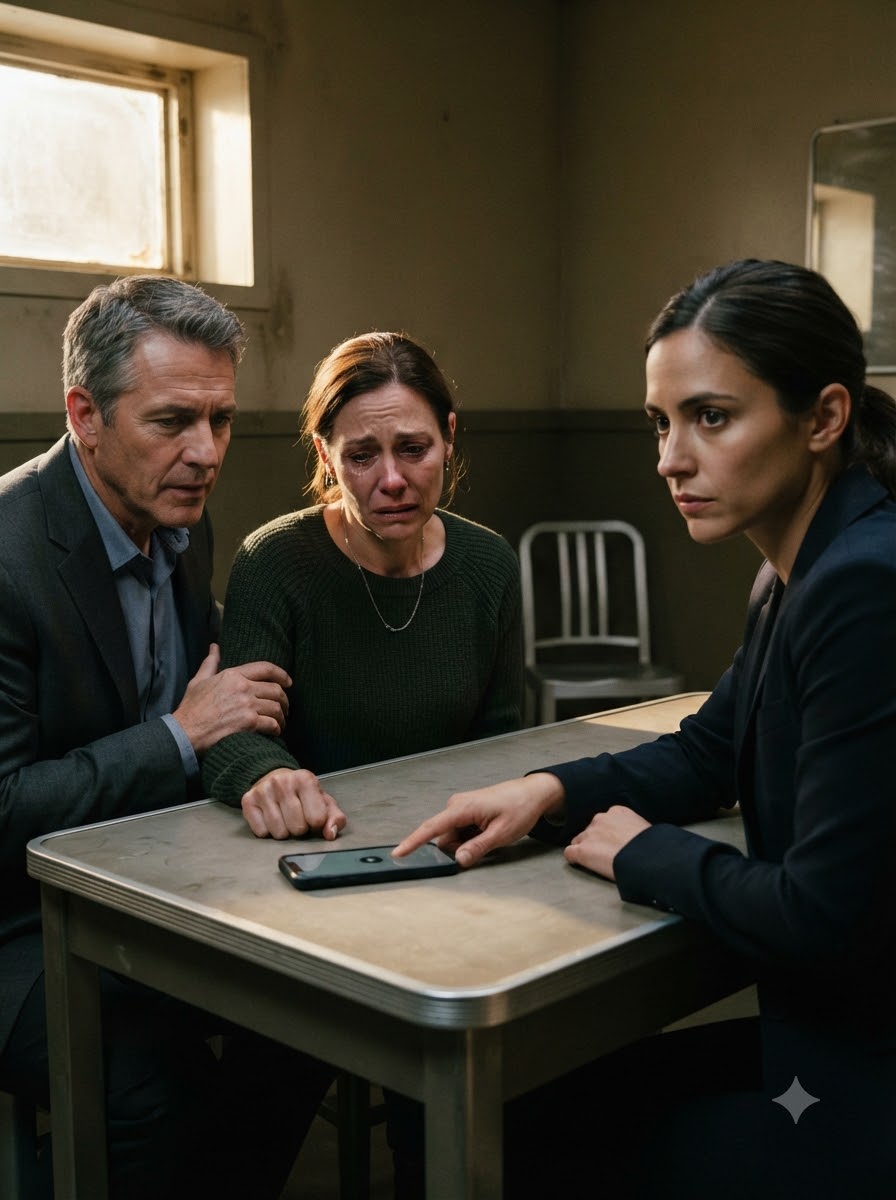
The call came at 2:47 on a Tuesday afternoon, while I was standing in front of twenty people explaining why our company had lost money in the second quarter.
My phone vibrated against the conference table.
Once.
Twice.
Then again.
I almost ignored it. My mother had Emma that day, and she had already sent me three messages before noon: a picture of Emma eating strawberries, a complaint about the heat, and a reminder that I worked too much.
But something inside me tightened before I even looked at the screen.
I picked up the phone.
“Are you Emma’s mother?” a woman asked.
Her voice was unsteady.
“Yes.”
“My name is Catherine Walsh. I’m at Westfield Mall. I found your daughter unconscious inside a car.”
The room disappeared.
“What car?”
“Your mother’s silver sedan. The windows were closed. The ambulance is taking her to Memorial Hospital. You need to come now.”
I was already moving.
I left my laptop open, abandoned my presentation, and ran through the office while my boss called after me. I could not explain what had happened because I did not yet understand it myself.
Catherine stayed on the phone while I drove.
She told me she had been crossing the parking lot when she heard a child making a faint, rasping sound. At first, she thought it was a bird or a broken alarm. Then she saw Emma in the back seat.
Strapped into her car seat.
Alone.
Her face had been bright red. Her blond curls were stuck to her forehead. Her head had fallen sideways against the harness.
“She wasn’t crying anymore,” Catherine said. “That was the worst part. She sounded like she had used up all her strength.”
The car had been parked in full sunlight.
All four windows were closed.
Catherine had called 911, then tried the doors. When they would not open, she began shouting for help. A man nearby used a tire iron to smash the rear window.
The paramedics found Emma barely responsive.
I ran two red lights. I heard horns, brakes, and someone shouting through an open window, but I kept driving.
Memorial Hospital was thirty minutes from my office.
I reached it in fourteen.
Emma was in the pediatric intensive care unit when I arrived. Nurses surrounded her tiny bed, adjusting cooling blankets, checking monitors, and pushing fluids through an IV.
Her stuffed rabbit was missing.
That detail nearly destroyed me.
Emma never went anywhere without that rabbit. My parents knew it. They had known it since the day she was born.
Dr. Andrews met me outside the room.
“She suffered severe heat exhaustion progressing toward heat stroke,” he said. “Her core temperature was dangerously high. She was severely dehydrated and had an altered level of consciousness. We’re monitoring her for seizures, kidney injury, and neurological damage.”
“Will she wake up?”
“She’s responding to treatment. That’s encouraging. But she was very close to dying.”
I pressed my palm against the glass.
Emma lay beneath the blankets, her fingers curled around nothing.
My parents had taken her that morning because I had a major presentation and they insisted on keeping her for the day.
My mother, Patricia Morgan, had kissed Emma’s forehead at seven o’clock and said, “Let us spoil our grandbaby. You work too hard.”
I had hesitated.
I always hesitated around them.
My parents had spent my entire childhood teaching me that hesitation was disobedience and boundaries were cruelty. When I questioned them, they called me dramatic. When I objected, they called me ungrateful. When I cried, they said I was manipulating them.
So I had handed them my daughter and told myself I was being paranoid.
Now Emma was fighting for her life because I had ignored the feeling that had been warning me for years.
A woman sat in the corner of the ICU waiting area, her face pale and her hands clasped tightly in her lap.
“Catherine?” I asked.
She stood immediately.
“I’m so sorry,” she said. “I wish I had found her sooner.”
“You found her,” I said. “You saved her.”
Catherine shook her head. “There was something else. I told the police, but I wanted to tell you too. The car had a folded sunshade on the back seat. It was right beside her.”
I stared at her.
“Are you sure?”
“It was silver. Folded in half. I remember because I kept thinking, why would someone have that in the car and not use it?”
I looked back through the glass at Emma.
The heat had not been unavoidable.
Protection had been within reach.
Someone had chosen not to use it.
At 6:15 that evening, I heard my mother laughing in the corridor.
She entered the waiting area carrying shopping bags, wearing a new cream blouse with its tag still attached. My father, Richard, held an electronics-store box under his arm. My sister Valerie followed with a coffee and two glossy department-store bags.
They looked relaxed.
They looked pleased with themselves.
My mother saw me and smiled.
“There you are,” she said. “We were wondering when you’d get here.”
I could barely speak.
“Emma almost died.”
Her smile faded, but not into fear.
Into irritation.
“We heard she was having a little episode,” Valerie said. “Your father said the paramedics were being dramatic.”
“She was unconscious in your car.”
My father set down the box. “She was asleep when we left.”
“She was locked inside a sealed car for more than three hours.”
My mother sighed. “We went shopping. We were gone longer than expected.”
“You left a three-year-old in a car during a heatwave.”
“She had toys,” my mother said.
For a moment, I thought I had misunderstood her.
“What?”
“She had her toys. She wasn’t helpless.”
Valerie took a sip of coffee. “Honestly, Emma was getting impossible. She screamed every time Mom tried to put her in the stroller. We needed a break.”
“You needed a break, so you left her to die?”
My father’s face hardened.
“We are her grandparents,” he said. “We are allowed to make decisions about her care.”
“You are not allowed to gamble with her life.”
I pulled out my phone and began recording.
My mother noticed.
“Oh, stop being hysterical.”
“Tell me why you didn’t use the sunshade.”
The three of them went silent.
Only for a second.
But it was enough.
Then my mother said, “There was no sunshade.”
“Catherine saw it.”
“Then she’s mistaken.”
“She saw it beside Emma’s seat.”
My father stepped toward me.
“You’ve always believed strangers over your own family.”
“You left my daughter in a hot car.”
He grabbed my throat.
His hand closed around my neck, and my head struck the wall. I smelled his cologne and felt the familiar pressure of his fingers, the same fingers that had once pinned me against a kitchen counter when I was sixteen.
“Watch your mouth,” he whispered. “You don’t get to accuse us after everything we’ve done for you.”
Valerie slapped me.
“Stop making a scene,” she said.
My mother grabbed my hair and pulled hard enough to tear my scalp.
Catherine screamed.
Nurses rushed from the ICU. Security guards came running. My father released me and immediately raised both hands as if he were the victim.

More From This Author