STORY
Carol’s Fifty Boxes Showed Hank What June Hid During Her Final Weeks

Then she tried another explanation. Carol had been confused by her medication. Maybe she had forgotten what she’d signed.
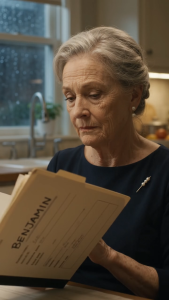
Hank opened the thick envelope from the box.
Inside were letters Carol had written over the last weeks of her life, each dated. The last had been dictated to Miriam and signed in Carol’s uneven hand, with two witnesses. Miriam had included a note about Carol’s condition that day: alert, able to answer questions, clear about what she wanted.
Hank read part of the letter aloud.
“Diane told me she was paying my bills. I believed her. When I found the first withdrawal, I asked for the bank receipts. She told me I must have misplaced them.”
His voice caught. He set the page down and found his place again.
“I do not want Hank to think I kept quiet because I valued this house more than his marriage. I needed to be sure. Now I am sure.”
Diane said, “She never liked me.”
Carol had liked Diane. I had watched her give Diane the good china cups when she visited, though she served the rest of us from the everyday set. More important, Carol had trusted her with the bank card when she was frightened and sick.
Hank lowered the letter. “She trusted you.”
Diane began to cry. She said she had made bad decisions. She said they were behind on bills. Hank knew they had been, though he hadn’t known how far behind. She promised to repay the money from her next commission. Diane sold real estate when work came in, and it hadn’t come in often that year.
Then her phone rang.
She looked down, silenced it, and slipped it into her pocket. Hank asked who was calling. She said it didn’t matter.
I noticed a second envelope on the bed, tucked beneath the folder. On it Carol had written, “For Hank, when you’re ready to believe me.”
It held printed messages Diane had sent to a man named Paul Blevins. Carol had found them on a tablet Diane borrowed and returned without signing out of her account. Miriam had kept copies.
Paul’s name appeared on an estimate for renovations to Carol’s house. In one message, he asked how soon they could get inside. In another, Diane answered, “Once Carol’s gone, Hank will want it dealt with fast.”
Hank read the words twice.
There was no affection in the messages, nothing to say Paul was anything but a contractor. They were awful enough as they stood. Diane had been making plans for the house while Carol was alive in it.
“I didn’t mean it like that,” Diane said.
Hank pointed to the date. Carol had still been walking then. She had been making Sunday calls, asking Hank whether he’d eaten. She had asked Diane to pick up ginger ale because it was the only thing that settled her stomach.
Diane said, “I was trying to prepare. Somebody had to.”
Hank stood. For a moment I thought he would shout. Instead he moved past Diane into the hall and called Miriam Vale from the number on her letter.
It was after seven. Miriam answered on the third ring.
Hank told her what he had found and that Diane was there. He put the call on speaker. Miriam asked him to leave the original documents where they were and photograph everything. She said Carol had already filed a report with the bank and that her office had notified the county clerk about the deed. She had also arranged for a forensic document examiner to review the signature.
Diane said, loudly, “Miriam, you know Carol asked me to help.”
“I know she asked you to buy groceries and pay bills with her card,” Miriam said. “She told me herself. She did not authorize a transfer of her home.”
Diane folded her arms. “It’s my word against hers.”
“No,” Miriam said. “It isn’t.”
She listed what she had: bank records, the company filing, the hospital’s treatment records, copies of Diane’s messages, and a statement from the notary whose name appeared on the deed. The woman had confirmed she hadn’t notarized anything that day. She had never met Carol.
There was a silence long enough for me to hear the kitchen clock.
Diane picked up her purse. Hank stepped aside to let her pass. He did not touch her.
“Where are you going?” he asked.
“Home.”
“You can get your things tomorrow,” he said. “I’ll be there with June.”
Diane gave me a sharp look. I had meant to stay only long enough to deliver supper. I nodded anyway.
She left without the blue folder.
That night, Hank and I took photographs of every page Miriam had named. We put the documents back in the order Carol had kept them. Then I heated the meatloaf in Carol’s kitchen, and Hank ate two bites because I sat across from him until he did.
Afterward, he went back to the bedroom.
“Will you stay?” he asked.
I sat in the doorway while he opened box 1.
Inside was a pair of tiny red mittens, a drawing made with fat crayons, and a note about the year he came to live with Carol. Box 2 held a photograph of Hank asleep under the kitchen table while Carol studied for a bookkeeping certificate. In box 8, there was a crooked wooden birdhouse he’d made at school. In box 16, beneath an old birthday card, was the receipt for the key on his leather ring.
Carol had kept one box for every year of Hank’s life. Some were crowded. Some held only a photograph and a few lines. There was a ticket from his first motorcycle show, a newspaper clipping about the garage where he got his first steady job, and a program from the day he married Diane.
There were harder things, too. A letter Hank had written after a fight and never remembered writing. A picture of him sitting in a hospital waiting room after he’d been hurt in a crash, Carol beside him with her hand over his.
He laughed once, at a school photograph with hair down over his eyes. Then he wiped his face on his sleeve and opened the next box.
I went home after midnight. Through my window, I could see Carol’s bedroom light until morning.
Diane came to Hank’s house the next day for her clothes. I sat at his kitchen table as promised. She tried to speak to him twice. Both times he said they could talk through attorneys.
Within a week, the bank had frozen what remained of Carol’s account and opened its investigation. Miriam filed to have the deed set aside. The county clerk flagged the property records while the case went forward. Hank gave a statement to investigators, as did I. Paul Blevins turned over his messages and the renovation estimate. He said Diane had told him Carol intended to leave her the house.
That part took months to sort out. The deed was declared invalid, and the house remained in Carol’s estate. Diane eventually admitted she had signed Carol’s name. She pleaded guilty to theft and forgery. The court ordered restitution, and a lien was placed against assets she owned. Hank’s divorce went through the following spring.

More From This Author