STORY
He Wanted Her House—Until Hannah Opened Her Father’s Deed
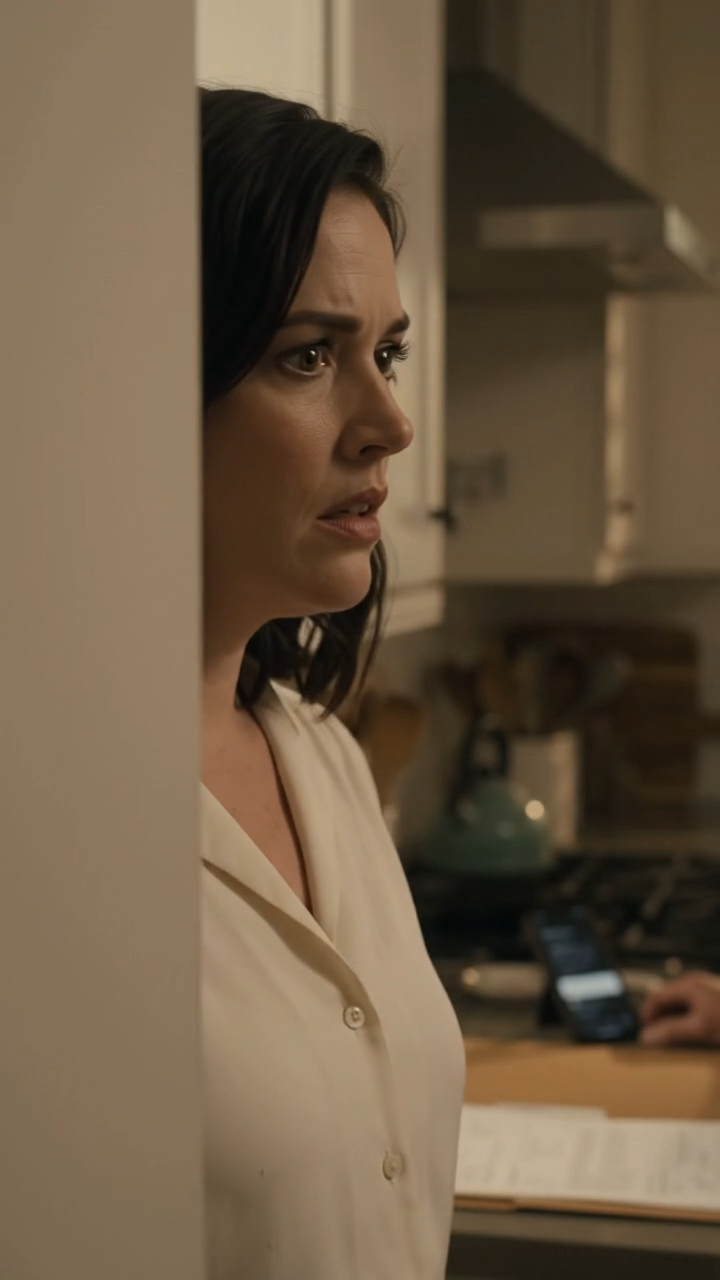
as if he were trying to calculate exactly how much I had heard.
So I helped him.
“I heard you tell her I hadn’t signed yet. I heard her tell you to convince me the deed was about love. I heard her say you could figure out how to get rid of me afterward.”
“Hannah—”
“And I heard what you called me.”
His eyes dropped.
That hurt more than if he had denied it.
Because shame meant memory.
He remembered every word.
Eleanor stepped forward.
“People say things when they’re frustrated.”
I looked at her in disbelief.
“You were frustrated because I still owned my parents’ house?”
“That’s not what I meant.”
“What did you mean?”
She opened her mouth.
Nothing came out.
Keith rubbed both hands over his face.
“This is being twisted completely out of context.”
“Then give me the context.”
He looked at the attorney, then at his mother, then back at me.
“It was a stupid conversation. Mom gets in my head. I was angry.”
“At what?”
“At feeling like an outsider in my own marriage.”
The words came smoothly now.
He had found his path.
“I’ve lived here for years,” he said. “I’ve worked, contributed, taken care of things. But every time we talk about the future, you remind me this house came from your parents. Do you know what that feels like?”
I almost admired the speed of it.
Within seconds, he had transformed from a man caught planning to take my property into a wounded husband suffering from exclusion.
For eleven years, that version of Keith would have worked on me.
I would have apologized.
I would have searched my own behavior for some hidden cruelty.
I would have tried to prove my love.
That was the mechanism he had counted on.
I stood and walked to the kitchen doorway.
“You know what I remember most clearly?”
Keith didn’t answer.
“You laughing.”
His expression changed.
“After you called me a naive fat woman who disgusted you, you laughed.”
Eleanor looked away.
“Then you said two nice dinners and a few romantic words would make me sign.”
Keith stepped toward me.
“I didn’t mean that.”
“You meant enough of it to prepare the papers.”
I pointed toward the folder he had brought home from dinner.
It was sitting on the side table exactly where I had left it.
The attorney picked it up and examined the pages.
Keith’s jaw tightened.
The paperwork would have added him to the property.
Not someday.
Not as a vague romantic gesture.
Immediately.
Eleanor tried a different tactic.
“Even if he handled this badly, marriage requires forgiveness. Your parents would never want you destroying your home over one conversation.”
That sentence almost broke my composure.
Not because it was persuasive.
Because she had invoked my parents while trying to take the last thing they had left me.
I walked toward her.
“Don’t use them.”
She blinked.
“Hannah—”
“You don’t get to use my parents to shame me into giving away what they protected for me.”
Her softness vanished.
For the first time in eleven years, Eleanor stopped pretending.
“You always were possessive about this place,” she said.
Keith turned sharply.
“Mom.”
But she was angry now.
And angry people often reveal what careful people hide.
“He has invested years

More From This Author