STORY
Megan Mocked My Cabin—Then My Father’s Hidden Box Exposed Her Lie
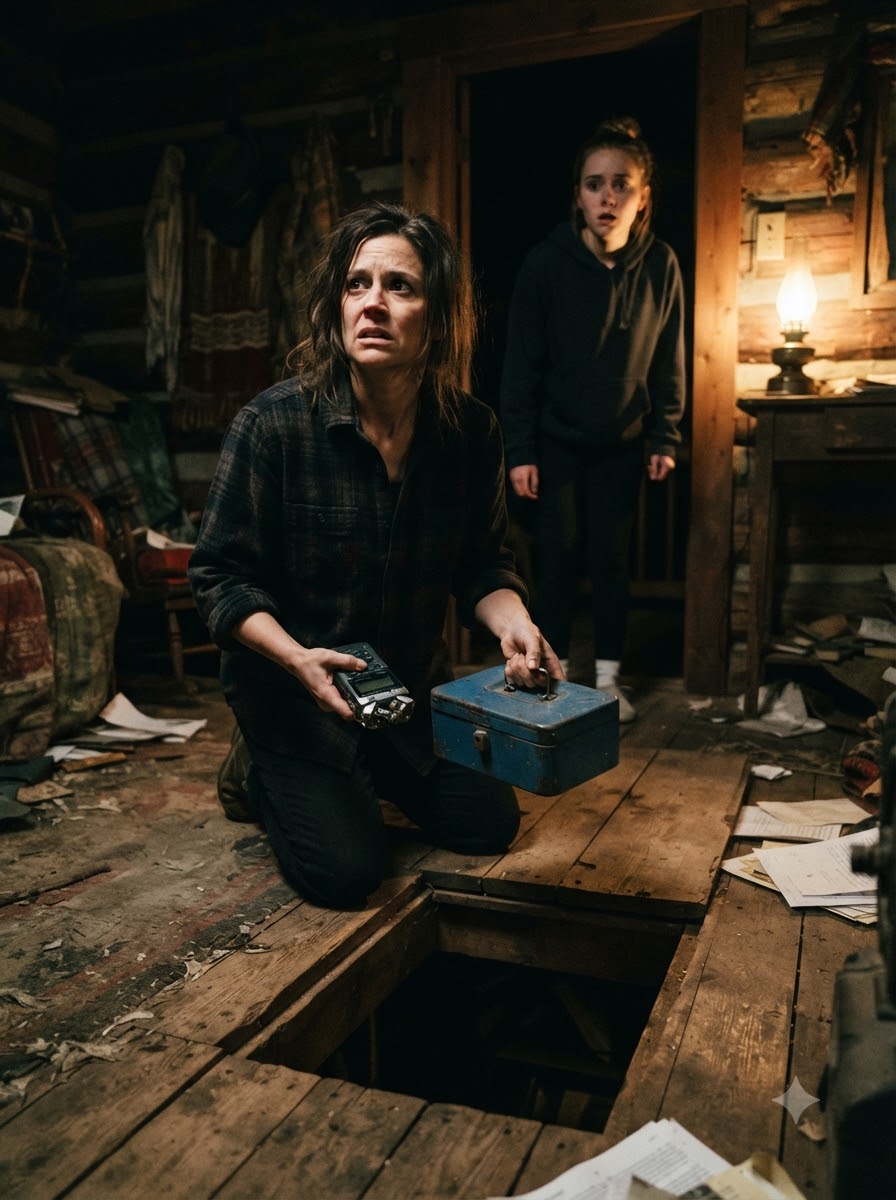
My sister laughed when the lawyer said I had inherited our father’s cabin.
Megan had just been given his oceanfront apartment in Miami. She was sitting at the head of our mother’s dining table, turning the apartment keys around one finger, when my name came up.
“The cabin and its surrounding land,” the lawyer said.
Megan looked at my boots. I had come straight from Fort Bragg for the funeral and was still in uniform.
“That fits you,” she said. “A dirty woman like you belongs out in the woods.”
The room went quiet. My mother studied her coffee. My uncle pressed his thumb into the edge of his napkin. I waited, foolishly, for one of them to say my sister’s name in a warning tone.
No one did.
I got up and left before the lawyer finished reading.
By the time I reached the cabin, rain had turned the gravel road silver in my headlights. I remembered the place as cold and cluttered, full of split firewood and coffee cans holding bent nails. But when I opened the door, warm air touched my face.
A lamp was burning on the table.
Under it sat an envelope with my name in Dad’s handwriting. Beside it was the red emergency radio I had given him years earlier. Its little green charging light was on.
For a moment I stood in the doorway, listening. The heater ticked. Rain whispered against the roof. There was no other sound.
I checked the two rooms and the bathroom before I went back to the table.
Dad’s letter was three pages long. I sat down to read it, still wearing my coat.
He began by telling me he was sorry he had not explained the cabin while he was alive. Then, in the cramped writing he used when his arthritis was bad, he wrote, Megan has been inside this house without my permission. She came looking for a folder. Please don’t let her know what you find until you speak to Paul.
Paul was the estate lawyer.
At the bottom of the page, Dad had drawn a rough map of the living room. An X marked a spot beneath the stone hearth.
I read the sentence again, then looked up at the fireplace.
The radio clicked. A voice came through, thin with static.
“Anna? It’s Ruth.”
Ruth Calder lived on the next property, about half a mile down the lane. She had helped Dad with groceries after he stopped driving.
“I saw your car come in,” she said. “Your father asked me to leave the heat and lamp on tonight. He thought you might come after the reading.”
My throat tightened. “When did he ask you?”
“Last Tuesday.”
He had still been alive then. Barely.
Ruth hesitated. “Are you all right there?”
I looked at the letter in my hands. “I don’t know yet.”
“Call me if you need me,” she said. “I’m awake.”
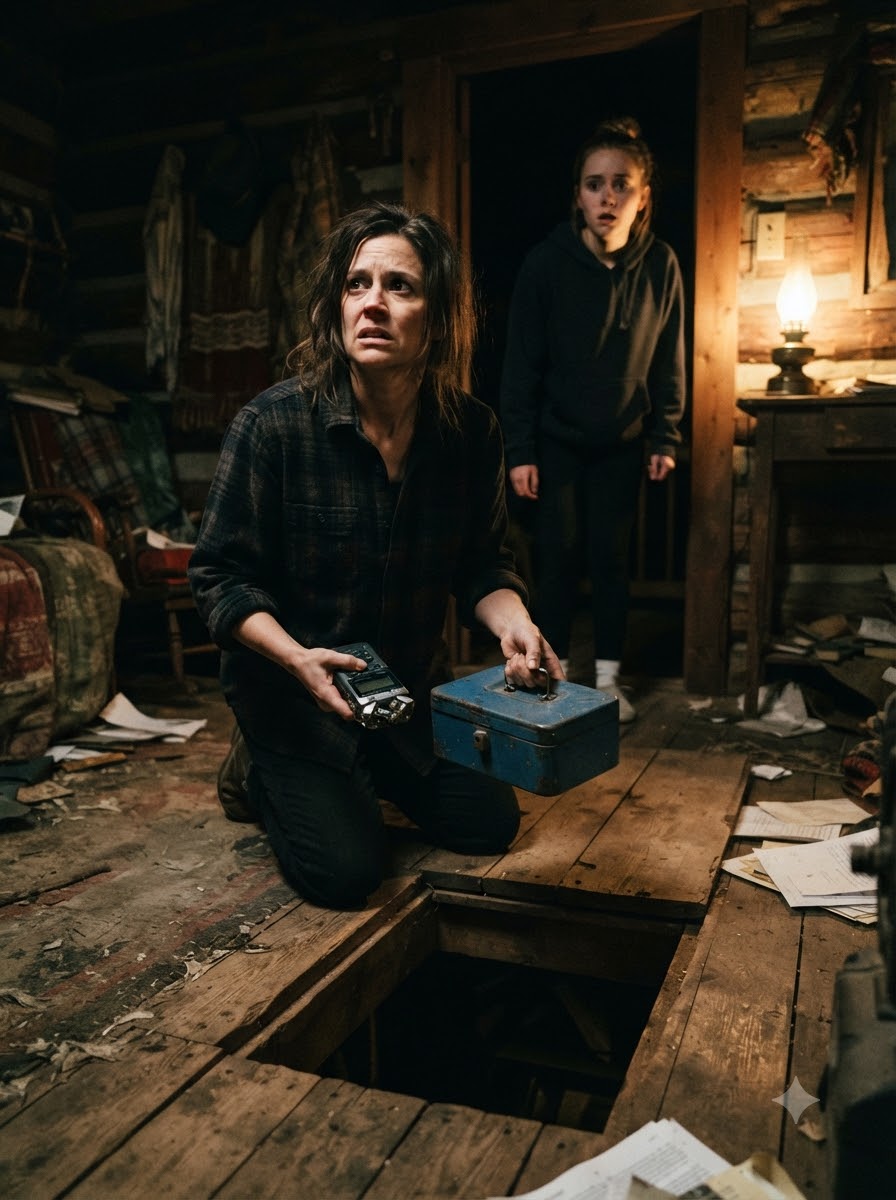
I set the radio down and got a flashlight from my car. The hearth was made of uneven fieldstone, fitted together by someone with more patience than skill. I found the loose stone near the floor. Behind it was a steel box, just large enough for a stack of papers.
It was locked. The key was taped to the last page of Dad’s letter.
Inside were surveys, bank statements, photographs and a small digital recorder. On top was a business card from a land trust I had never heard of.
I spread the papers across the table.
Dad’s cabin sat on one hundred and twelve acres, far more land than I had understood it to have. Its boundary ran along a narrow river corridor that connected two protected forests. For two years, the land trust had been trying to buy a conservation easement over most of it. Their latest written offer was $1.46 million.
The cabin was not the consolation prize everyone had treated it as.
Dad had declined the offer while he was alive. A note clipped to it said, Anna should decide whether to keep the land whole. The money is hers if she wants it, but the decision must be hers too.
I read that line several times. Then I found the other contract.
It was an option to purchase all one hundred and twelve acres for $82,000. The buyer was a company called Mariner Ridge Development. The signature at the bottom looked like Dad’s, if you glanced at it. The date was three weeks before he died.
A yellow note in Dad’s handwriting was attached to the page.
I did not sign this. Paul has the original. This is the copy Megan brought me.
My phone rang before I could pick up the recorder.
Megan’s name filled the screen.
I let it ring out. She called again immediately, so I answered.
“Where are you?” she asked.
“At the cabin.”
There was a pause. “Why would you go there tonight?”
“It’s mine.”
“You haven’t signed anything yet.”
“The will says it’s mine.”
“That place is falling apart, Anna. I was going to offer to handle it for you.”
I looked at the option contract. “Handle what?”
“Disposing of it. There’s a company interested in the land. Dad was working with them.”
“He was?”
Another pause. “That’s what they told me. Don’t go through his papers and make a mess. They’ll need access tomorrow.”
I said I was tired and ended the call.
Then I slid the steel box into my bag and called Paul.
He answered on the fourth ring. When I told him about the option, he went silent.
“Your father brought me a copy,” he said at last. “He believed it was forged.”
“Why didn’t you tell me at the reading?”
“Because I had not yet told the executor what he found, and because Megan was sitting beside her.”
“My mother is the executor.”
“I know. Could you come to my office in the morning? Bring everything you have. And Anna, don’t sign anything.”
I slept on top of the bedcovers with the radio beside me. Around two in the morning, headlights moved between the trees. A car slowed at the end of the gravel lane, idled for half a minute, then drove on.
Ruth called over the radio while the sound of its engine was still fading.
“That was Megan,” she said. “I know her car.”
In the morning, I photographed the papers and sent copies to a secure address Paul gave me. Then I drove into town. Ruth followed in her truck without my asking her to.
Paul’s receptionist locked the office door behind us. Paul laid the option contract on his desk next to a photograph of Dad, taken at the hospital on the date beside the signature. In the photograph, his right hand was swollen and bandaged.
“He couldn’t have held a pen that day,” I said.
“He could speak,” Paul said. “And he did. He told me Megan brought him this contract and said he had forgotten signing it. He called me after she left.”
Paul had obtained copies of the papers Mariner Ridge held. The company had paid $180,000 for an exclusive option, believing Dad had signed it. The option fee had been wired not to Dad, but to a consulting company registered to Megan.

More From This Author