STORY
My Daughter Called Grandpa After David Broke My Leg—He Found the Recording
I should have felt relief. Instead I thought about the envelope I had found three weeks earlier in our recycling bin. It had contained a letter from a law office I didn’t recognize. When I asked David about it, he said it was junk mail and tore it up.
I told Ruiz. Then I remembered one more thing.
For Emma’s birthday, my mother had given us a small camera so relatives could watch her blow out candles when they couldn’t visit. After the party, I’d kept it on a bookshelf overlooking the kitchen. David hated that camera. He unplugged it whenever he noticed it, but Emma sometimes plugged it back in to show Grandpa her drawings.
I had no idea whether it had been on Tuesday night.
Dad went to the house with a police officer and brought back my laptop and the camera. I gave Ruiz access to the account where its recordings were stored.
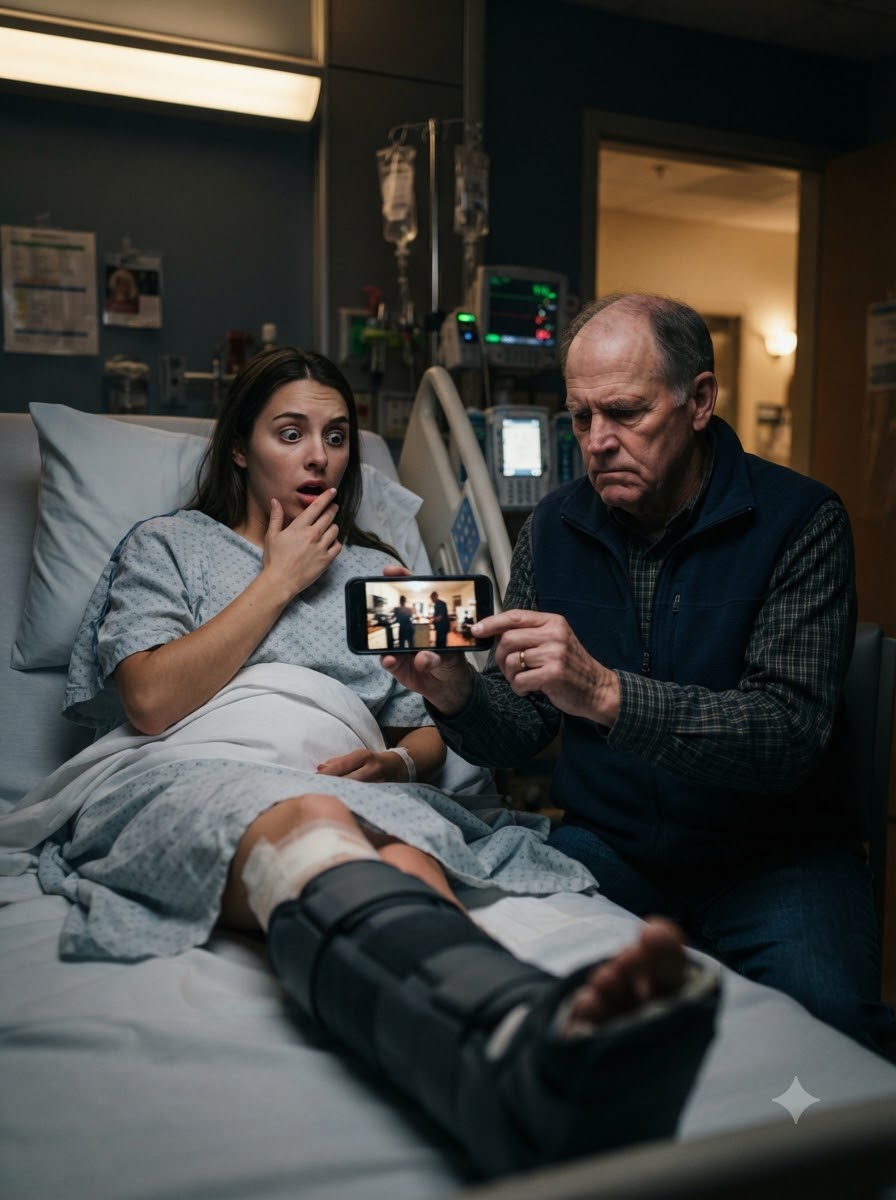
That evening, she came to my room carrying a tablet. She asked if I wanted to see it. I said yes.
The camera’s view was partly blocked by a vase. It showed David entering the kitchen and Margaret stopping beside the sink. I heard my own voice ask about the transfer.
I watched David seize my blouse. The impact against the island sounded dull through the tiny speaker. Then came the crack of my leg and Emma’s scream.
Afterward, David’s face filled the frame as he bent over me.
“Tell the doctor the floor was wet,” he said.
Margaret was visible behind him, holding her wineglass. She stayed there while he threatened me. She stayed there while Emma cried.
Ruiz paused the video.
“Is that enough?” I asked.
“It’s important,” she said. “And the bank is sending us the original documents.”
David was arrested for assault the next morning. Margaret told a reporter outside the station that her son was a devoted father dealing with a troubled wife. The clip spread around town before the kitchen recording was ever shown in court.
For a few hours, I regretted telling anyone. I worried that neighbors would look at Emma and see a child caught between two parents with different stories.
Then Ruiz called about the power of attorney.
The notary named on it was a longtime friend of Margaret’s. The document carried my signature, or an attempt at it, dated on a Wednesday when I had been at the pediatrician with Emma. The bank’s security video showed Margaret presenting it alongside David.
That was the first time I understood how much planning had gone into taking the money. Margaret had not merely defended him after he hurt me. She had stood at the bank with a forged document and waited while an employee processed it.
The second revelation came from the property company’s records.
The company owned a house Margaret had bought the year before and could no longer afford. Its lender was preparing to foreclose. Two days after the transfer from my account, a payment of $190,000 was due.
My inheritance had been their way out.
Ruiz discovered an email Margaret had sent David the morning before the assault. She wrote that the bank might call me to verify the paperwork and that he needed to “keep Sarah calm until Friday.” David replied that I was already suspicious. Margaret’s answer was brief: “Then make sure she has someone speaking for her.”
They had expected me to question the transfer. They had a plan for that, too.
Dad read the email once when my lawyer showed it to us. He put the page down carefully, as if any sudden movement might make it worse.
“I’m sorry,” he said.
“You didn’t do this.”
“I believed him when he said you wanted space.”
There had been calls David never told me about. Invitations I never received. Dad and I had both let the silence go on too long, each thinking the other had chosen it.
“I wanted you here,” I told him.
“I’m here now.”
David was released on bail under a no-contact order. Margaret stopped speaking publicly after the bank produced its security footage, but she found another way to reach me. She sent a card to the hospital with a picture of Emma tucked inside.
The message said, You can still keep this private for her sake.
I gave it to Ruiz.
At the preliminary hearing, David sat beside his lawyer in a dark suit. He looked rested. He had always known how to look reasonable from across a room.
His lawyer argued that I had confronted him angrily, that the injury was unintended, and that four-year-old Emma could not understand what she saw. Margaret was prepared to testify that I had fallen while David tried to steady me.
Then the prosecutor played the camera recording.
In the courtroom, I could hear every word David had said beside my broken leg. I had to grip the edge of my seat to stop myself from looking away.
The recording showed the shove. It showed Margaret watching. It also showed the kitchen floor, dry and clear, before David began telling the dispatcher about spilled water.
When it ended, David’s lawyer stopped using the word “slipped.”
The bank evidence came next. The forged power of attorney bore a notary stamp, but the notary’s journal had no record of my appearing before her. Bank footage showed David and Margaret together at the counter. The prosecutor read Margaret’s email about keeping me calm and making sure someone spoke for me.
David stared down at the table.
Margaret’s attorney tried to argue that she had believed the paperwork was genuine. The email made that hard to sustain. So did her card.
Neither of them had known Emma’s call would bring the police while the kitchen still looked exactly as it had when I fell. Neither had known the camera was running. They had counted on having time to clean the floor, coach each other, and turn my injury into a story about my temper.
The judge ordered David to remain away from Emma and me. Margaret was charged separately over the forged document and the transfer. The notary lost her commission and faced charges of her own.
The criminal cases took months. David eventually pleaded guilty to aggravated assault and financial crimes rather than face the recording at trial. Margaret pleaded guilty to fraud and conspiracy. Their lawyers called the agreements practical decisions. I thought of them as the first decisions either of them had made without expecting me to pay for the consequences.
The bank returned the frozen funds to my account. David and Margaret had spent a little of the money before the freeze, and a restitution order covered that amount. Collecting it would take time. I hired an accountant to help me sort through three years of statements, and he found other smaller withdrawals I had missed. Those became part of the settlement when I divorced David.
None of that felt as simple as getting my life back.

More From This Author