STORY
My Daughter Sent a Realtor to My Kitchen—Richard Found Her Court Filing
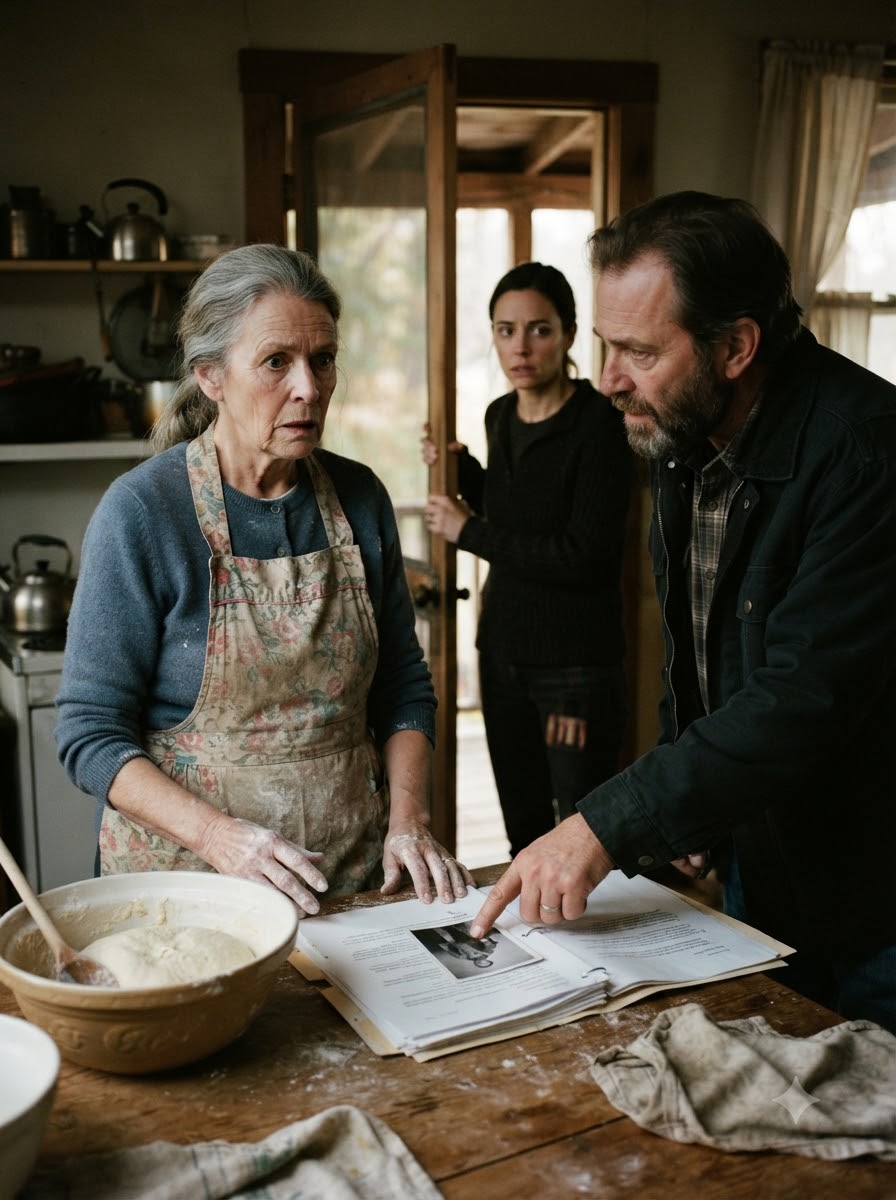
Richard asked Tyler to stop taking pictures and leave. Brenda began protesting, then noticed my phone propped against the flour tin.
I had turned on its video recorder when I heard the realtor’s car door close outside. It had captured Tyler’s announcement, the listing agreement, and Brenda’s claim that I had agreed.
“You recorded us?” she asked.
“Yes.”
“In your own family?”
“In my own kitchen.”
She took Tyler by the arm and left without another word.
The bread burned while I stood at the window watching her SUV pull away. The top was black, but the middle was soft. Richard cut us each a slice.
Then he helped me make calls.
The county recorder’s office had received a deed three weeks before: a quitclaim deed transferring my house from me to the Bell Family Property Trust. Brenda was trustee. The same dead notary’s seal appeared on the acknowledgment.
I had never created a property trust. I had never signed a deed.
The clerk explained how to obtain a certified copy and how to flag a suspected fraudulent recording. She could not erase it on my word alone. We would need an attorney and a court order. Until then, the public record showed a cloud over my title.
That was when the morning stopped feeling like an attempted argument and started feeling like a burglary.
Over the next week, we learned where the keys had gone.
Brenda had kept an old copy of my house key from when Walter was ill. Using the forged power of attorney, she had gained access to my credit union accounts. She had opened an online profile in my name and changed the notification address to an email account I had never seen.
A credit union investigator showed me the transaction list. There were three transfers totaling $41,800 to a business account connected to Brenda’s newest restaurant venture. A fourth transfer, for $6,000, had gone to Meadowbrook.
The shared room cost nothing like that as a deposit.
We found the answer in Meadowbrook’s file. Brenda had paid a $1,500 reservation fee. The remaining $4,500 had been refunded two days later to the same business account, after she told the admissions office I would be delayed.
Meadowbrook had never evaluated me. Its director said Brenda had described me as unsafe alone but had declined to provide a doctor’s assessment. I asked for copies of every record bearing my name.
Meanwhile, Richard and I inventoried Walter’s clocks. The tall mahogany regulator in the hallway was still there. So were the carriage clocks in the study. But a small brass travel clock that Walter had kept in a blue velvet case was missing from the locked display cabinet.
I had last seen it before my pneumonia. I had blamed myself for misplacing it.
Richard found the velvet case behind a stack of towels in the linen closet. Inside was a folded consignment receipt from a local antiques dealer. Brenda had used her own name. The description matched the clock, down to a hairline crack across the enamel face. The sale price was $7,200.
“She didn’t even need the power of attorney for this one,” I said.
Richard looked at the receipt. “No. She just needed your key.”
I sat on the floor beside the open closet. Walter had bought that clock after our first trip overseas. He used to wind it on Sunday nights.
“I gave her money whenever she asked,” I said. “Why take his things?”
Richard sat down beside me, his bad knee cracking. “That’s a question she may answer. It won’t change what she did.”
The police took a report, and the district attorney’s office assigned an investigator. Richard recused himself from doing anything beyond helping me gather my own records. He had friends in those offices, but he made clear that the case had to stand on evidence, not his name.
My attorney filed to void the deed and block any transfer of the property. The court granted a temporary order. The credit union froze Brenda’s access and began its fraud review. I changed the locks while a locksmith stood beneath Walter’s hallway clock, listening to it strike noon.
Brenda called twice. I let both calls go to voicemail.
On the third call, she left a message saying she was willing to “put this misunderstanding behind us” if I would tell the credit union I had authorized the transfers.
Then Tyler came alone.
He stood on the porch without the easy grin he had worn for the realtor. “Mom says you’re trying to have us arrested.”
“I reported what happened,” I said through the screen door.
“She said Richard made you do it.”
“Did Richard make you bring a realtor into my kitchen?”
Tyler looked down at his shoes. “I thought you knew about the house.”
“You told her I had bad days.”
“Mom said you did.”
“You’ve been here. Did I seem unable to decide where I live?”
He did not answer.
I opened the screen door, but I didn’t invite him inside. “If you want to help me, tell the truth to the investigator.”
A week later, he did.
Tyler handed over the messages Brenda had sent him. In one, she instructed him to take photographs of every clock with a maker’s mark. In another, she wrote, If Grandma asks about the paperwork, say the lawyer prepared it. Don’t get into details.
The most important message arrived the night before the realtor visited. Brenda had written: Get the listing signed while she’s calm. If she stalls, tell the agent she forgets things. We need an offer before the lender starts asking about the trust.
The investigator found the lender.
Brenda had applied for a $180,000 loan using my house as security for her restaurant business. The lender’s title review had caught an inconsistency in the recorded deed, and Brenda needed the house sold quickly enough to pay down her business debts before anyone examined the paperwork closely.
That was the second layer. She had not only planned to move me out and take the sale proceeds. She had already used a false deed to make my home look like collateral she controlled.
At the meeting with investigators, Brenda tried every version of the story.
First she said I had asked her to handle my finances. Then she said a document service must have used the wrong notary seal. When shown the credit union transfers, she said they were repayment for years of helping me.
I thought of the January afternoon when I had been too weak to carry laundry downstairs and Richard had brought soup. Brenda had sent a text: Hope you feel better soon.
The investigator placed Tyler’s messages on the table. Brenda read them without touching them.
“He didn’t understand the pressure I was under,” she said.
Tyler was sitting beside her. “I understood what you told me to do.”
“You were supposed to help your grandmother.”
“I brought a realtor because you told me she’d sign.”
Brenda looked at me then. “You gave Tyler everything. Tuition, a car, whatever he needed. When I needed help, it was always a lecture.”

More From This Author