STORY
My Father Mocked My Medical Exit—Until His 6:14 A.M. Email Filled the Screen
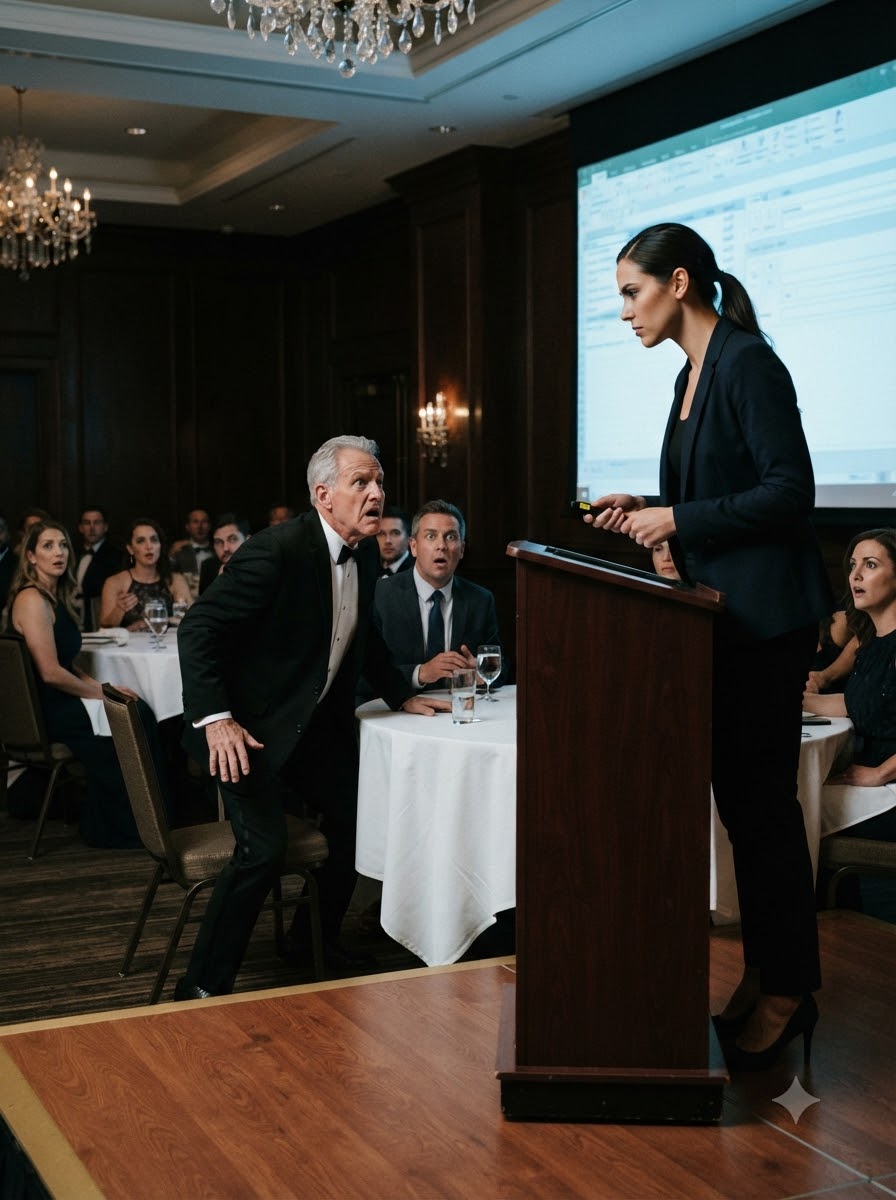
“Arthur told me to clear the bed!” Thorne blurted out, pointing a trembling finger straight at my father. “We were at the club until eight-thirty! When we got back, the waiting room wait-time metric was red, and Arthur’s executive bonus was tied to keeping ER door-to-discharge times under ninety minutes for the Q4 board report! I called him from the desk when Clara asked for the spinal tap, and he told me not to hold a bed for four hours over a med student’s hunch!”
“Shut your mouth, Julian!” my father roared, grabbing Thorne’s coat sleeve.
Thorne yanked his arm free in front of three hundred witnesses. “No! I’m not going to prison alone for your bonus metric! You’re the one who came into my office at five-thirty in the morning and used my terminal password before switching to your admin code! You told me if we blamed Clara and got her out of the program, the family would never know a test was refused!”
My father froze.
Every word he had spent five years carefully burying under polite cocktail-hour jokes was now hanging in the air over the main ballroom, recorded by at least forty phones held up across the tables and captured live on the foundation’s event audio feed.
At Table 3, my mother let out a broken sound and stood up. She looked at my father—really looked at him—as if seeing the man she had been married to for thirty-two years for the first time.
“Arthur?” she whispered, loud enough for the front tables to hear. “She was twenty-five. She was your own daughter. You let her carry $140,000 in debt and told our whole family she lost her mind… to protect your quarterly bonus?”
My father turned toward her, his mouth opening and closing, the polished composure that had carried him through three decades of boardrooms completely gone. “Helen, you don’t understand the liability—if the hospital had been hit with a willful negligence finding—”
“A seven-year-old boy died, Arthur,” she said, her voice shaking with a disgust so deep she stepped backward away from him. She took off her coat, dropped her Evening Committee badge onto the tablecloth, and walked straight down the side aisle toward the exit without looking back.
Before my father could take a step after her, the two men from the back doors reached the foot of the stage.
The taller one held up a gold badge and a thick manila envelope.
“Dr. Arthur Vance and Dr. Julian Thorne,” he said clearly. “I’m Investigator David Miller with the State Office of Inspector General, Healthcare Fraud and Patient Abuse Division. We have been monitoring the St. Luke’s server audit for the past six weeks alongside Ms. Vance’s compliance unit. Please step away from the tables and surrender your hospital credentials and phones pursuant to a grand jury subpoena.”
Beside Investigator Miller stood a woman in a simple navy dress who hadn’t been on the gala guest list.
It was Elena Morales—Leo’s mother.
I had called her three weeks ago, the morning the state prosecutor confirmed the backup logs were admissible.
For five years, Elena had blamed herself. Because the altered hospital chart claimed Leo had no neck stiffness and no rash when he left the ER at 9:15 p.m., the hospital’s risk-management lawyers had convinced her in 2020 that the infection had developed suddenly at home after midnight and that nothing could have saved him. She had signed a nominal bereavement release to pay for his funeral, believing she had waited too long to bring him back.
Now she stood ten feet from my father and Dr. Thorne, holding a framed five-by-seven photo of her little boy in his baseball uniform against her chest.
Thorne couldn’t even look her in the eye. He stared at the carpet as one of the investigators escorted him toward the side hallway.
My father looked up at me on the stage one last time.
“Clara,” he said hoarsely, his shoulders sagging inside his tailored jacket. “I’m your father. You just ruined my life.”
I unplugged my thumb drive from the podium laptop and closed the folder.
“No, Dad,” I said quietly, switching off the microphone so only he and the front row could hear. “You ruined it at 5:58 in the morning five years ago. I just stopped carrying the lie for you.”
The fallout didn’t take years. Once the raw audit logs and the audio from the banquet hit the state medical board and the district attorney’s desk, the wall of institutional protection my father had built crumbled in days.
By Monday morning, the St. Luke’s Board of Trustees held an emergency session and terminated both Dr. Arthur Vance and Dr. Julian Thorne for cause, stripping my father of his pension bonuses and removing his name from the donor wall in the surgical pavilion before noon.
Associate Dean Marcus Cole tendered his resignation forty-eight hours later after investigators subpoenaed the rest of his 2020 emails, revealing two other resident whistleblowers whose complaints he had buried under “professionalism reviews” at my father’s request.
Two weeks later, the State Medical Board permanently revoked both my father’s and Dr. Thorne’s licenses to practice medicine.
In criminal court, faced with felony charges of tampering with official medical records, obstruction of a mortality investigation, and healthcare fraud tied to executive performance bonuses, Dr. Thorne took a plea deal that included eighteen months in state prison and full testimony against my father. Because my father had used his administrative override to destroy evidence of a preventable pediatric death and then used hospital endowment funds to induce the medical school dean to retaliate against a witness, the judge sentenced him to thirty-six months in state correctional custody and ordered massive restitution.
My mother filed for divorce the same week my father’s indictment was unsealed. She sold their large house near the country club, moved into a quiet townhouse across town, and spent months coming to my apartment on Sunday afternoons just to sit at my kitchen counter and ask how she could ever make up for the five years she had believed him over me.
It took time, and it wasn’t easy at first, but without my father’s voice in the room, we slowly learned how to talk to each other honestly again.
In civil court, the fraudulent release Elena Morales had been pressured into signing in 2020 was thrown out by a judge in less than twenty minutes. St. Luke’s settled with Leo’s family for twelve million dollars and, as part of a mandatory state consent decree that I helped draft, agreed to install a permanent, uneditable whistleblower protection lock on all student and nursing clinical notes—a protocol the state health department officially named the Leo Morales Patient Safety Rule.
As for my own record, the new dean of St. Luke’s School of Medicine sent a formal, public letter of apology that was entered into the national medical registry. My 2020 disciplinary file was expunged in full, the university paid off the entirety of my $140,000 student loan balance plus five years of lost wages, and they offered me immediate reinstatement into my fourth-year clinical rotations with a full scholarship.

More From This Author