STORY
My Husband Demanded Divorce at Dawn—Then My Folder Exposed His Forged Plan
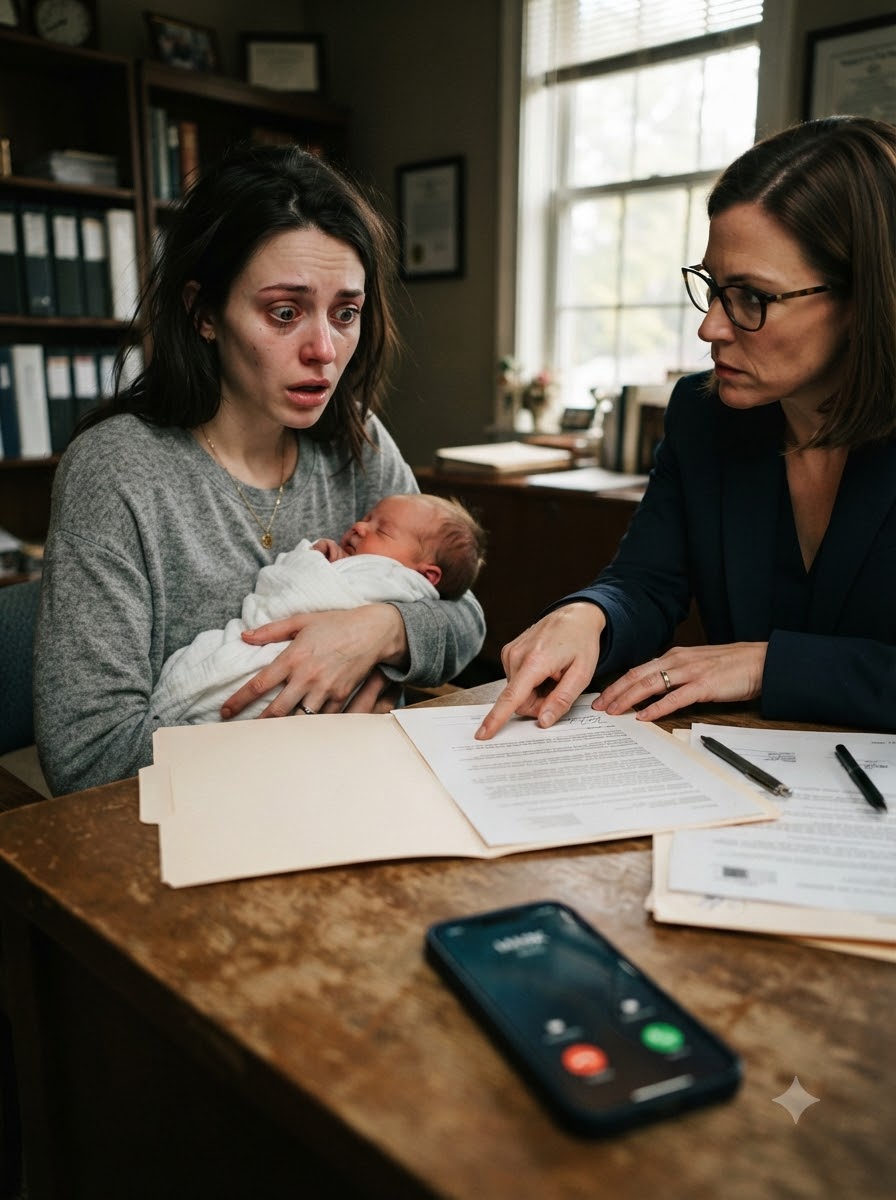
“No,” he said.
“Did Mr. Mark Carter sign the agreement?”
“Yes.”
“Was he advised of its meaning?”
“Both parties were.”
Mark shifted in his chair.
Dana called the mortgage broker next.
The broker testified that Mark had submitted the refinance application with a scanned signature and had insisted Emily was traveling and unavailable for verification.
The lender had become suspicious when Mark’s income statements did not match his tax filings.
The broker identified the bank account listed for disbursement.
Northstar Holdings.
Lacey began crying.
Her attorney objected to the implication that she had participated in wrongdoing.
Dana did not accuse her of forgery. She did not need to.
She produced an email from Mark to Lacey, recovered from a shared business account.
Send the application again. She won’t look closely at the signature. Once it funds, we can pay off the vendors and put the rest in the Northstar account.
The email was dated three months before Mark demanded the divorce.
The judge read it twice.
Mark stared at the table.
His attorney leaned toward him and whispered urgently.
Mark shook his head.
Then he looked at Emily.
“This is being taken out of context,” he said.
The judge raised a hand.
“You will have an opportunity to respond.”
Mark’s attorney asked to address the court.
He argued that the funds had been used for the family’s benefit, that the house was marital property, and that Mark’s behavior reflected poor judgment rather than fraud.
Dana asked permission to introduce one final exhibit.
It was a voice recording.
Mark’s voice filled the courtroom.
The recording had been made legally by the mortgage broker during a verification call.
Emily could hear the strain in his voice as he said, “She’ll sign anything if you tell her it’s routine. She’s tired all the time. I just need the money released before she talks to a lawyer.”
The room seemed to contract around him.
Mark’s mother covered her mouth.
His father turned away.
Lacey whispered, “You said it was already done.”
Everyone heard her.
Mark looked at her with naked fury.
“You were supposed to stay quiet.”
The judge ordered silence.
The temporary ruling came that afternoon.
Emily received exclusive use of the house while the divorce proceeded. Mark was barred from refinancing, selling, transferring, or encumbering the property. His access to joint accounts was restricted, and an independent forensic accountant was appointed to trace the missing funds.
He was ordered to pay temporary child support and Emily’s legal fees.
The court also referred the suspected forgery and financial transfers to the district attorney’s office.
Mark did not go to jail that day.
But the life he had arranged began collapsing immediately.
His business accounts were frozen pending review. Two vendors filed claims after discovering their invoices had never been paid. Northstar Holdings closed its website and stopped answering calls.
Lacey hired her own attorney.
Carol stopped speaking to Emily altogether, but not before sending one final message.
You destroyed this family.
Emily read it once and deleted it.
The forensic audit took four months.
It found that Mark had diverted $86,000 from their joint accounts and used Emily’s inherited contribution to maintain the household while he built a separate financial life.
It also found that he had been planning to leave before the baby was born.
The storage unit contained furniture for an apartment, including a crib, a sofa, and framed photographs of Mark with another woman.
Emily had seen that woman once at a business dinner. Mark had called her a client.
The divorce agreement awarded Emily the house subject to the remaining mortgage, credited her inheritance against the property, and required Mark to repay the diverted funds. His share of the remaining equity was offset by the money he had taken and the legal costs he had caused.
He received supervised parenting time at first.
Over time, the schedule expanded, but only after he completed a financial accountability program and a court-ordered parenting course.
He never apologized in a way that mattered.
His first apology was that he had been under pressure.
His second was that Emily had pushed him away.
His third blamed his family for encouraging him.
By the final hearing, he stopped apologizing and began calling the consequences unfair.
Emily no longer cared.
She moved the baby’s crib into the room overlooking the backyard. She painted the walls a soft green and replaced the heavy curtains that had made the house feel permanently dim.
She reopened her bookkeeping practice from a small office near the kitchen.
Her first client was a woman who had been told she was “too emotional” to understand her own finances.
Emily helped her find three years of missing payments.
Then another client came.
Then another.
The plain folder stayed in the bottom drawer of Emily’s desk.
She no longer needed it to protect herself. The court records were certified, the accounts were separated, and the house stood in her name with the inheritance formally recognized.
Still, she kept the folder.
Not as a reminder of Mark.
As a reminder of the woman she had been before she understood her own strength.
One Saturday morning, nearly a year after Mark’s 4:30 a.m. announcement, Emily made breakfast while her son sat in a high chair banging a spoon against the tray.
Sunlight poured across the kitchen floor.
There were no guests upstairs.
No one waiting to criticize the eggs.
No one asking why the baby was crying.
The house was quiet except for her son’s laughter.
Emily set a plate in front of him and kissed the top of his head.
For years, Mark had believed her silence meant she had no answer.
He had mistaken patience for surrender, kindness for weakness, and trust for blindness.
But Emily had never been helpless.
She had been observing.
She had been preserving the facts.
And when the moment came, the truth did not need to shout.
It only needed to be placed on a desk, one page at a time, until the future he had arranged for himself became impossible to recognize.

More From This Author