STORY
My Husband Hid Me at His Gala—Then His Boss Saw My Pendant
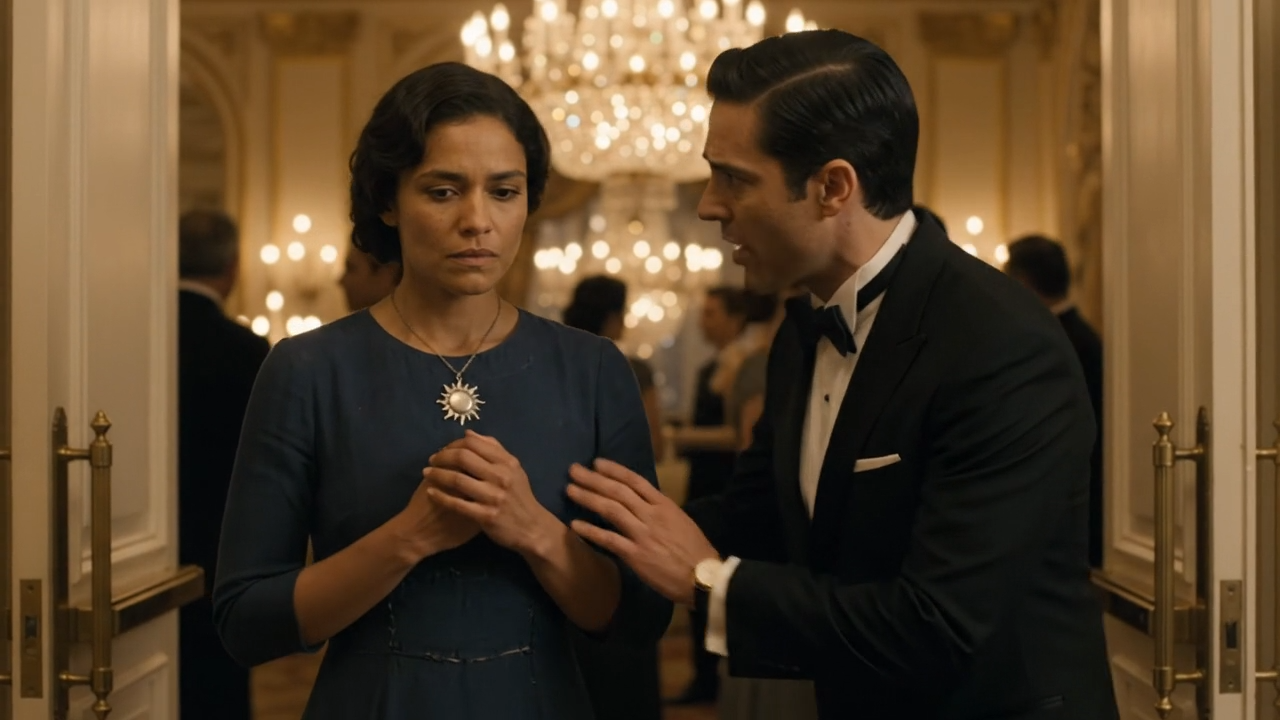
I wanted to receive the result privately.
I said yes.
We met in a quiet conference room, not the ballroom.
No chandeliers. No champagne. No audience.
A lawyer placed the sealed report on the table and explained the conclusion in plain language.
The probability of a biological mother-daughter relationship was greater than 99.99 percent.
I read the number twice.
Then I looked at the woman across from me.
She was crying silently.
I wasn’t.
Not immediately.
My first thought was Clara.
I wished she had lived long enough to know she had been right.
The other half had found its way back.
I touched the pendant.
“My mother raised me,” I said.
The chairwoman nodded through her tears.
“Yes.”
There was no hesitation in her answer.
“She did.”
That was when I cried.
Not because I had suddenly become the daughter of a powerful woman.
Not because a new family history had opened in front of me.
I cried because the first person on the other side of that history understood that Clara could not be replaced.
We did not become mother and daughter overnight.
We became two people trying to recover years neither of us could return.
She showed me childhood photographs slowly. She answered questions when she could and admitted when she couldn’t. We compared records. Dates lined up. Old photographs showed the complete silver pendant hanging from my neck when I was very young.
The scar was visible in one summer photograph.
There was no longer reasonable doubt.
Alonso learned the DNA result from me that evening.
He stood in our kitchen with both hands on the counter.
For several seconds he said nothing.
Then came the sentence that ended whatever remained between us.
“This could be good for us.”
Us.
I stared at him.
His mind had already crossed the bridge from my lost childhood to his opportunities.
“Good how?” I asked, although I knew.
He began talking about relationships, introductions, the board, how complicated his position had become, how important it was that we appear united.
Appear.
That word finally clarified everything.
He wanted a wife who looked right beside him.
When he believed I did not, he hid me.
Now that my identity could increase his status, he wanted me visible again.
I unclasped my wedding ring and placed it on the counter.
He stared at it.
“You’re emotional.”
“No,” I said. “For the first time in years, I’m being precise.”
I moved out two days later.
The divorce was not dramatic. There was no ballroom confrontation, no screaming match, no attempt to destroy him. Attorneys handled the financial details. I asked for what was fair and nothing designed to punish him.
His professional life did not collapse because I demanded revenge.
It changed because people had watched him reveal himself.
The board members who saw him distance himself from his own wife remembered it. His boss remembered him trying to control a private conversation that did not belong to him. A senior role he had expected was eventually given to someone else.
He remained wealthy.
He remained successful by most people’s standards.
He simply discovered that status could not erase character once the right people had witnessed it.
As for me, I kept working at the clinic.
That surprised almost everyone except the

More From This Author