STORY
My Parents Took My Car—Until the Title Exposed Their Secret Plan for My House
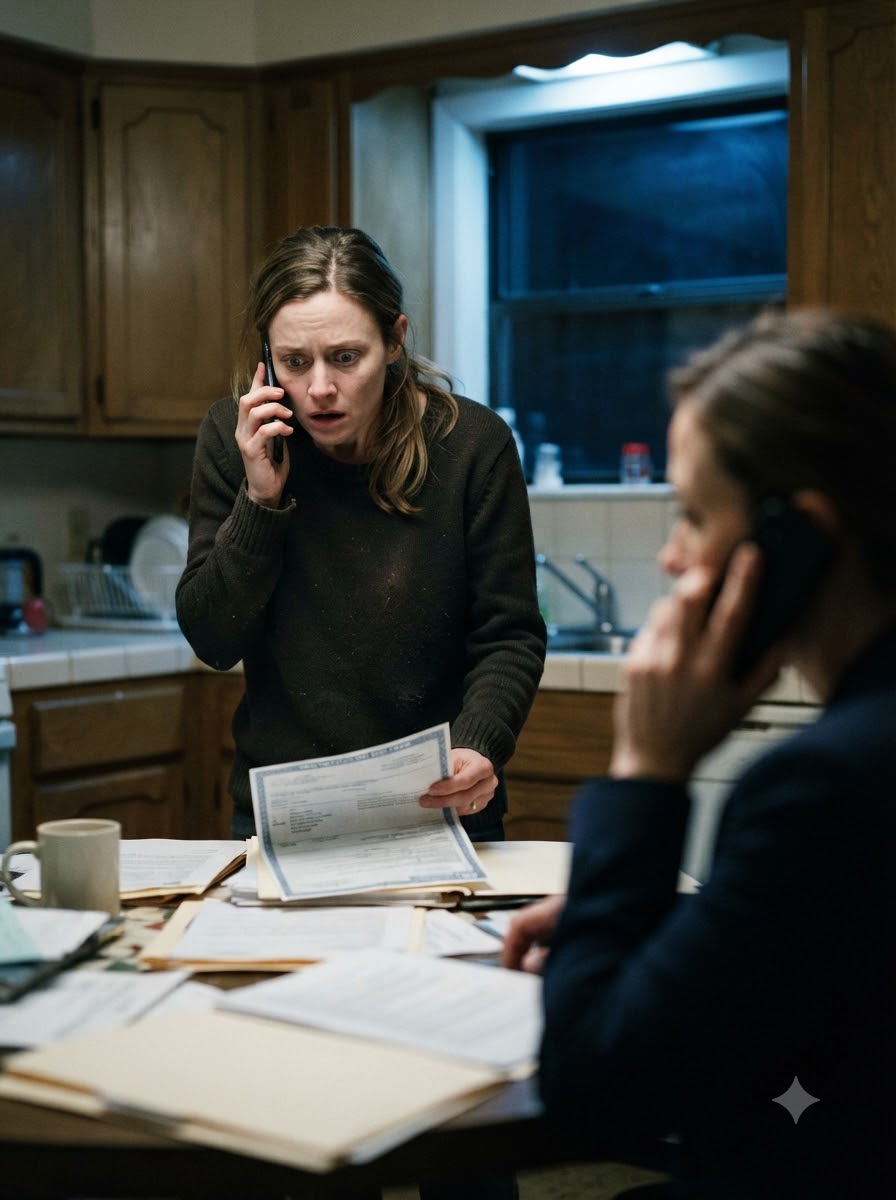
They remained inside for eighteen minutes.
When they left, Lauren was carrying the folder.
The timestamp matched the digital submission exactly.
The second layer was not merely that they had forged my signature.
They had staged the transfer as part of the birthday humiliation, expecting the public scene to force me into accepting it. They wanted me too shocked and ashamed to challenge the paperwork.
The car was never a spontaneous gift to Lauren.
It had been planned.
Daniel arranged a meeting at his office the following Monday. He invited Dad’s attorney, Patricia Voss, and a representative from the state title division. He also requested that a detective attend.
I almost canceled.
Then I remembered Dad saying, “She’ll be back.”
So I went.
Dad arrived in a dark suit, his lawyer beside him. Mom came too, carrying a handbag so tightly her knuckles were white. Lauren sat between them, pale and furious.
Patricia Voss entered last.
Dad did not look at me.
His attorney began. “This matter can be resolved privately if Rachel withdraws her complaint and acknowledges that the vehicle was transferred with family authorization.”
Daniel placed the certified title records on the table.
“There was no family authorization,” he said. “There was an unauthorized electronic filing.”
Dad’s lawyer frowned. “The vehicle was purchased with funds from Mr. Carter’s business.”
I pushed a folder forward.
Inside were my bank statements, the purchase contract, and four years of insurance payments. The down payment had come from my savings account. Every loan payment had come from my account. The registration fees and repairs had come from my account.
“The business did not purchase my car,” I said. “I did.”
Dad finally looked at me.
“You worked for me. Your income came from my company.”
“My wages were not gifts.”
Mom leaned toward me. “You’re twisting everything because you’re angry.”
“No. I’m documenting everything because you lied.”
Lauren’s face reddened. “Dad told me you agreed to give me the car.”
“I did not.”
“He said you were moving away and didn’t need it.”
“I never said that.”
“He said you wanted to make things right.”
“I never said that either.”
Dad slammed his palm against the table.
“This is absurd. We are discussing a family misunderstanding, not some criminal conspiracy.”
The detective opened a laptop.
“Mr. Carter,” he said, “we have the surveillance footage from your office, the software access logs, the title application, and the notarization certificate.”
Patricia Voss began to cry.
Mom turned on her. “You told us it was legal.”
Patricia covered her mouth.
The detective continued. “The notary certificate states that Rachel Carter appeared before Ms. Voss and signed the transfer in person. Can you confirm that occurred?”
Patricia looked at Dad.
He shook his head once.
It was a tiny movement, but everyone saw it.
Patricia lowered her eyes. “No.”
The room went still.
“I was told Mr. Carter had authorization,” she whispered. “Lauren brought the form. She said Rachel had already signed electronically and that I was only confirming the identity information.”
“That is not what the certificate says,” the detective replied.
“I know.”
Dad stood so quickly his chair struck the wall.
“This is ridiculous. Patricia is confused. She’s trying to save herself.”
“You told me to backdate it,” Patricia said.
Mom gasped.
Dad’s lawyer grabbed his arm. “Sit down.”
But Patricia had started crying in earnest.
“You said Rachel had humiliated the family and that Lauren deserved something. You said no one would challenge a transfer for a car.”
Lauren stared at her.
“You said it was legal,” she whispered.
“I said I didn’t know,” Patricia replied. “You told me your sister wanted you to have it.”
Lauren turned toward Dad.
“You told me she signed it.”
Dad looked at his other daughter with naked irritation.
“Don’t make this worse.”
That was when Lauren broke.
She pulled out her phone and placed it on the table.
“I have the messages,” she said.
Dad’s face changed.
“Lauren,” Mom warned.
“I have the messages from the night you told me to come to the office. You said Rachel needed to be taught a lesson. You said the car would be mine after the dinner.”
She unlocked the phone and handed it to the detective.
There were messages from Dad instructing her to bring a copy of my license, reminding her to use the company portal, and telling her to keep my keys during the dinner.
One message, sent at 11:51 p.m., read: Once she is publicly cut off, she won’t risk making this bigger. She’ll accept the invoice and walk away.
I stared at those words for a long time.
The invoice had never been the point.
The public humiliation had been designed to make me feel powerless. The forged title was supposed to reinforce the lesson. They believed that if they took my place in the family, my money, and my car all at once, I would come crawling back for permission to exist.
Instead, they had created evidence.
The state canceled the fraudulent transfer that afternoon and restored my title. The police opened an investigation into forgery, identity misuse, false notarization, and attempted theft. Patricia surrendered her notary commission. Carter Family Motors was audited, and several irregular vehicle filings were discovered during the review.
The $400,000 invoice was not legally enforceable. Daniel sent Dad a formal notice stating that I rejected every demand and considered the document evidence of harassment and coercive conduct.
Dad responded by claiming the invoice had been a joke.
Then he said I had misunderstood.
Then he said my parents had a right to recover the cost of raising me.
Daniel reminded him that parents do not create retroactive debts for ordinary childhood expenses, and that labeling birthday gifts and emotional labor as billable charges did not make them contractual obligations.
Dad stopped responding after receiving notice that I intended to seek damages for the fraudulent title filing and the public distribution of private financial information.
The country club refunded my deposit after reviewing security footage and hearing from several guests. Two family friends apologized. So did one of Dad’s business partners, who admitted that the dinner had changed his opinion of Dad’s judgment and ethics.
Most relatives stayed silent.
That silence hurt less than it once would have.
For years, I had believed family loyalty meant enduring anything quietly. I had mistaken being tolerated for being loved. I had accepted insults as concern and control as protection because I had been trained to doubt my own memory.
The birthday dinner ended that confusion.
Lauren eventually agreed to cooperate with the investigation. She returned my keys through her attorney and gave me a written apology. I did not forgive her immediately. I am not sure forgiveness is something owed on a schedule.
Mom sent me one final letter.
She wrote that I had always been difficult, that my father had acted out of love, and that I had destroyed the family by refusing to accept correction.
I did not answer.
I kept the letter with the other evidence.
The photographs Mom tore from the ballroom had been collected by a cousin after I left. Most were bent or marked with torn tape, but none was beyond repair. I placed them in new frames and hung them in my apartment—not because my parents had given me a happy childhood, but because those years belonged to me too.
A month after the dinner, I drove the silver sedan to a new office.
I had left my old job and started a small consulting business with money I had saved before my parents decided my independence was an insult. The first client was a former colleague from Dad’s company. The second came from one of the business partners who had witnessed the birthday spectacle.
When I parked outside my new office, I sat for a moment with both hands on the steering wheel.
The car was still mine.
The title was still mine.
My name, my work, my life—none of them had been gifts my family could revoke whenever I disappointed them.
I had spent years believing I needed their permission to become an adult.
They had spent one evening proving that they would never give it.
So I gave it to myself.

More From This Author