STORY
My Parents Tried to Sell My Villa—Hollis Found a Second File
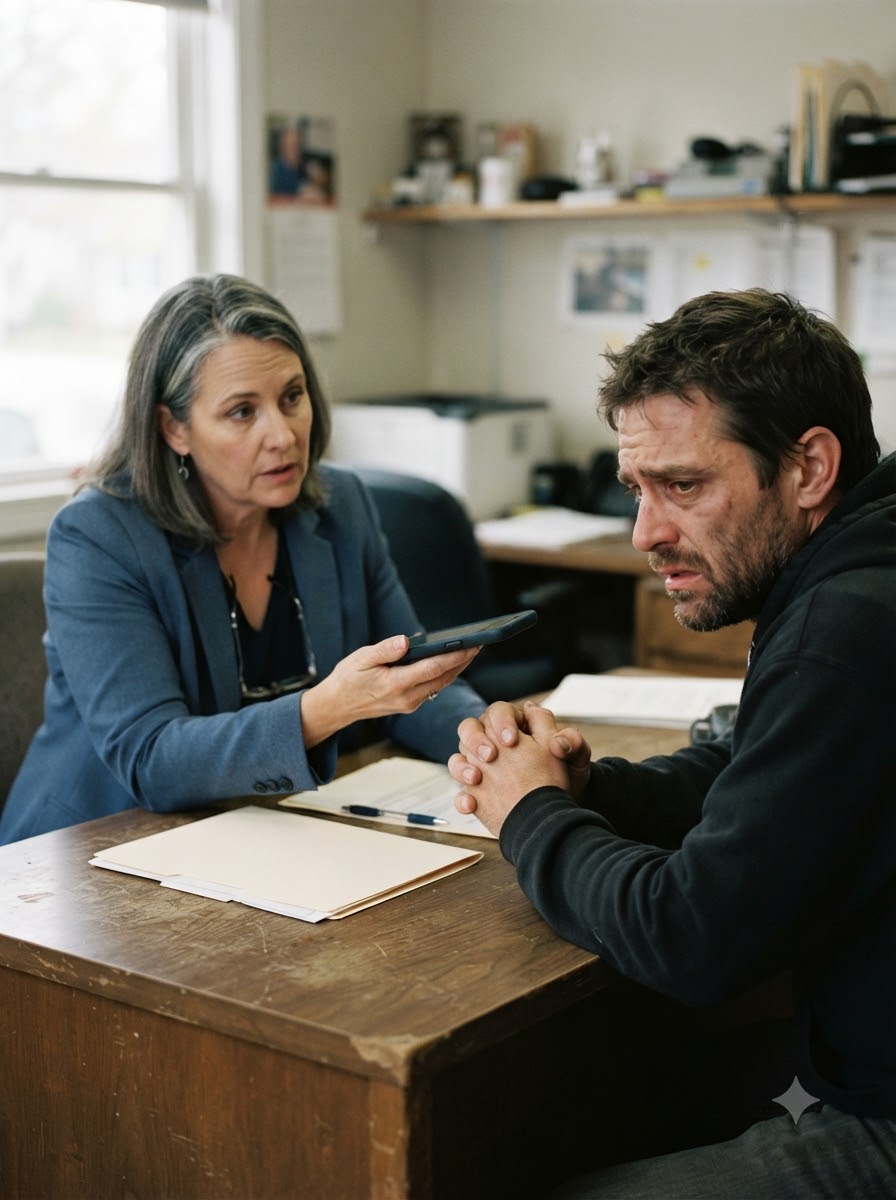
“Why did you think I’d sell for that amount?” I asked.
“I didn’t. That’s why I insisted on speaking to you.”
The office door opened. Ortiz stepped in carrying her own folder. She asked whether Hollis could give us the room.
Once he had gone, she laid out a color print of a still from a security camera. It showed my father, my mother, and a woman with cropped gray hair at the counter of a shipping store.
“Elaine Wexler,” Ortiz said, touching the woman in the picture.
The notary worked at the store. She had told Ortiz I had signed the document in front of her on Tuesday morning. The store’s camera showed my mother signing instead. Elaine’s body blocked part of the counter, but there was a clear view of the page when my mother passed it back. Ortiz had also found the transaction receipt in the store’s records.
I stared at my mother’s bent head. I could picture how carefully she would have formed each letter.
“She said I was abroad,” I told Ortiz.
“She knows. Ms. Wexler says your father told her you couldn’t come in because of an emergency, then asked if there was another way. She stamped it anyway. She’s changed her account since we showed her the video.”
The first layer was there in black ink and on camera. My parents had not made a panicked mistake about who owned the house. They had forged a way to take it.
I wanted to see them. Ortiz advised me not to meet them alone. Instead, she arranged for us to speak that afternoon at the sheriff’s office, with her present, after they had agreed to come in and give statements.
I spent the hours before that meeting at the house.
My father’s key still worked. Inside, the rooms smelled faintly of floor polish. Someone had moved the wicker chairs to make the living room look larger. On the kitchen island lay a printed sheet of suggested improvements for a buyer: remove the herb beds, widen the drive, take down the old shed.
I had built those herb beds myself. I folded the sheet and put it in my bag.
My phone buzzed. It was Chloe.
“I heard you came back,” she said.
“Where are you?”
“At Mom and Dad’s.”
“Did you know they were selling my house?”
There was a pause.
“I knew Dad was trying to get money,” she said. “He told me you’d offered to help.”
“How much do you owe?”
Her breathing went rough. “I don’t want to talk about it.”
“Tell me.”
“Twenty-eight thousand. It was more. I’ve paid some.”
My father had spoken of a dangerous lender. Twenty-eight thousand dollars was a serious debt, but it did not explain a rushed sale for hundreds of thousands below value.
“Who is the lender?”
“A man I met through a poker game. His name is Vince. Dad said he’d deal with him.”
“Has Vince threatened you?”
“Dad told me not to answer his calls. He said Vince came to the house.”
I looked out through the kitchen window at the water. “Did you see him?”
“No.”
I told Chloe about the forged document. She went quiet. Then she said my father had taken her phone the night before, supposedly to keep Vince from contacting her. She had got it back that morning.
Before we hung up, I asked her to save every message she had about the debt.
At the sheriff’s office, my parents were already seated across the table when Ortiz and I entered. My mother’s eyes were red. My father stood halfway, as if he expected to hug me.
I sat down before he could.
“You didn’t need to bring strangers into this,” he said.
“I called because you told me you’d sold my house.”
“To protect your sister,” my mother said. Her voice trembled, but she held my gaze.
Ortiz asked them to explain how they had obtained my permission. My father said I had agreed by phone weeks earlier. He could not give a date. My mother said I had promised to sign whatever was needed, then left for Zurich before doing it.
“You signed for her instead,” Ortiz said.
My mother looked down.
My father leaned forward. “We had her permission in principle. Elaine understood the situation.”
“Elaine says she did not know Mrs. Pierce would sign Madeline’s name,” Ortiz said.
That made my father turn toward my mother. It was a small movement, but she saw it.
“You told me it was legal,” she said to him.
“I said Maddie wouldn’t object once she understood.”
“You said Elaine had done it before.”
They both fell silent.
I asked why they had emailed to say the house was sold when no sale had closed.
“We had a buyer,” my father said. “We needed you to accept it.”
At least he had finally answered one question honestly.
Then Ortiz opened her second folder.
Tern Harbor Holdings had been formed eight months earlier. The company address was a rented mailbox, but its bank account and state filings led to a man named Warren Bell. I knew him vaguely from my parents’ Christmas parties. He owned several waterfront rentals. More importantly, he and my father had been business partners years ago.
Ortiz had found a draft agreement in the documents Warren voluntarily provided after investigators contacted him. Warren was to buy the house for $640,000 and pay my father a separate $90,000 “consulting fee” through another company.
My father’s face drained of color.
“I didn’t know about that,” my mother said.
“Warren says the fee was your idea,” Ortiz told my father. “He has your emails.”
My father recovered enough to scoff. “It was payment for finding him an investment. It wouldn’t come out of Madeline’s proceeds.”
“My proceeds?” I asked. “You were selling my house without telling me.”
He ignored me. “Chloe was in danger.”
Ortiz slid a final sheet across the table. It was a record of a wire transfer from my parents’ joint account. Two weeks earlier, my father had paid Vince $28,000.
Chloe’s debt was gone before my mother wrote to me. My father had known it. He had continued telling Chloe to hide and had sent me an email about a dangerous lender after the lender had been paid.
My mother read the transfer twice. “You said Vince wouldn’t take the money.”
“He wanted more,” my father said.
“Vince gave us a receipt stating the account was settled,” Ortiz replied. “We confirmed it with him this morning.”
There was a long silence. Outside the room, someone laughed at something down the hall, an ordinary sound so far removed from us that it hurt.
My father looked at me. “I was going to put the rest in a safe account. You would have got it.”
I thought of the low offer, the consulting fee, and the herb beds marked for removal. He still seemed to believe that if he explained his intentions long enough, the documents would change.
“No,” I said. “You expected me to give in because you’d already started.”

More From This Author