STORY
My Pregnancy Test Exposed the Vasectomy Lie Diego Used to Destroy Our Marriage
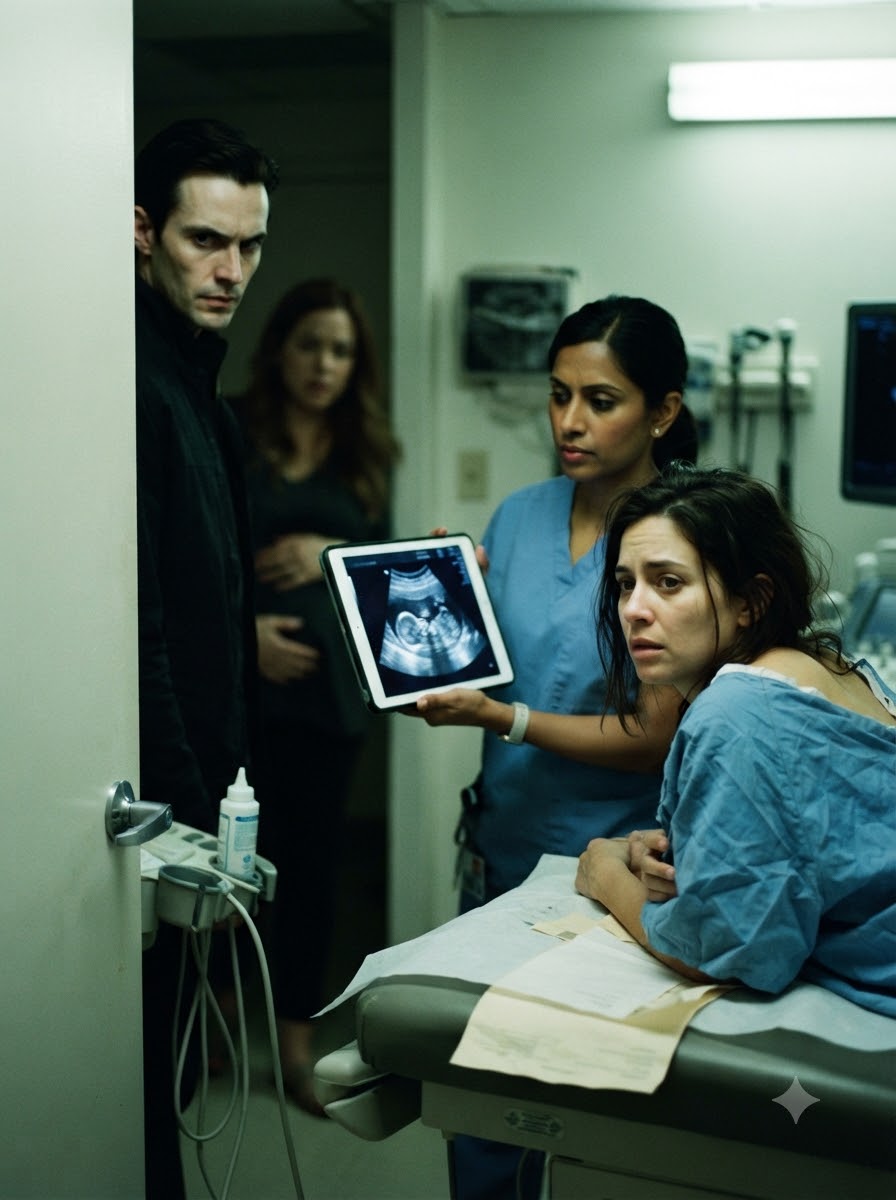
“I know how it works,” Diego snapped.
“Then did you complete the analysis?”
His silence was brief.
Too brief.
“Yes.”
“When?”
“A few weeks afterward.”
“And what were the results?”
He looked toward Paola.
“Clear.”
Dr. Salinas did not call him a liar. She simply wrote down the estimated gestational age, signed the report, and handed it to me.
“You should keep this with your medical records.”
In the hallway, Paola seized Diego’s arm.
“You told me the surgery happened before you two last slept together.”
“It did.”
“No,” I said. “It didn’t.”
His head whipped toward me.
“You’re confused.”
“I remember the night. It was the Friday before the procedure. Sofía stayed with your mother.”
“That doesn’t prove anything.”
Paola looked pale.
“What about your test results?”
“They were fine.”
She stepped away from him.
For the first time, I saw fear behind her polished smile.
That afternoon, I called a lawyer.
Marisol Vega listened without interrupting while I described the accusation, the public posts, the divorce agreement, and the ultrasound.
“Do not sign anything,” she said. “Do not leave the house. Save every message and screenshot. We’re going to find out what he knew and when he knew it.”
The next day, I began collecting records.
Our medical insurance portal showed the vasectomy claim. Beneath it was another claim dated three weeks later for a post-vasectomy semen analysis.
Diego had taken the test.
The result itself was not visible under my login, but the clinic had mailed a copy to our house.
I remembered seeing an envelope from the urology center among the papers Diego had piled in the desk drawer.
The envelope was gone.
I searched the desk, filing cabinet, bedside table, and garage. Nothing.
Then I remembered our printer.
Diego always scanned documents before throwing them away. The printer stored recent files on the household cloud drive, an account we both used.
There it was.
POST-VASECTOMY SEMEN ANALYSIS.
Motile sperm present.
Continue alternative contraception.
Repeat analysis in six to eight weeks.
The file had been scanned six days before I showed him the positive pregnancy test.
He had known.
My hands shook so badly I had to sit on the floor.
The first revelation proved the baby had been conceived before the surgery.
The second proved Diego had known his operation had not yet made him sterile.
His shock in the kitchen had been a performance.
His accusation had been an exit plan.
Marisol told me to preserve the file in three places. A digital specialist verified its metadata, including the date and the device used to scan it.
Then we found more.
Our tablet still carried an old backup of Diego’s messages. Months before his vasectomy, Paola had written, I hate waiting for you to finally leave her.
Diego replied, I need a reason that makes me look like the victim.
Two days after his semen analysis, he sent another message.
Still not clear. There are swimmers.
Paola answered, Then be careful with her.
His response was worse.
Doesn’t matter. If she gets pregnant, nobody will believe it’s mine.
The vasectomy had never caused his suspicion.
It had given him a story.
Marisol filed for divorce on my behalf. We requested temporary support, exclusive use of the house, and an order preventing either parent from discussing the case publicly or disparaging the other in front of Sofía.
Diego responded by claiming the messages were jokes and the laboratory report was inconclusive.
At the temporary hearing, he arrived with Paola and his mother.
He told the judge I had become unstable.
He said I had invaded his privacy.
He insisted the pregnancy could belong to anyone.
Marisol waited until he finished.
Then she submitted the ultrasound report, the urology instructions, the insurance claim, the scanned laboratory result, and the digital expert’s affidavit.
Finally, she displayed the messages.
The courtroom went silent.
Diego leaned toward his attorney. His attorney did not look at him.
“That conversation was taken out of context,” Diego said.
The judge’s expression hardened.
“What context makes ‘I need a reason that makes me look like the victim’ appropriate?”
Diego blamed Paola.
“She pressured me. She was obsessed with me.”
Paola stood so abruptly her chair scraped the floor.
“You told me Laura had cheated before!”
The judge ordered her to sit.
Elena stared at her son as though she no longer recognized him.
Diego tried again.
“Laura trapped me with another baby. We had agreed we were done.”
“No,” I said quietly. “You decided we were done. I agreed to discuss permanent contraception after your follow-up test. You lied about the result.”
The judge granted me temporary possession of the house and ordered Diego to pay support and contribute to prenatal medical expenses. His request for primary custody of Sofía was denied.
Because he had turned our daughter’s school pickups into opportunities to question her about my supposed lovers, his visitation remained structured until he completed a parenting course.
The DNA test was performed after my son, Mateo, was born.
Diego was his father.
The probability exceeded 99.99 percent.
By then, even Paola had left him.
During discovery, we learned their affair had started seven months before my pregnancy. Several restaurant dates Diego claimed were business meetings had been charged to his company card. His employer investigated, found repeated false expense reports, and fired him.
The firing did not erase his financial obligations. The court calculated support based on his previous earning capacity after finding that his misconduct had caused his unemployment.
The house was sold as part of the final settlement. My inheritance contribution was traced and credited to me before the remaining equity was divided.
Diego also had to pay a substantial portion of my legal fees because he had concealed financial records, made false statements, and tried to coerce me into signing an agreement without disclosure.
I did not get every dollar or every apology.
Courts cannot return sleep. They cannot remove whispers from a neighborhood or give a child back the morning her father carried a suitcase out the door.
But I kept my dignity.
That mattered more than the house.
Elena came to see me three months after Mateo was born.
She stood on the porch holding a small knitted blanket.
“I believed him because he was my son,” she said.
“You called me a liar.”
“I did.”
She did not ask me to forget it. She did not make excuses.
“I am ashamed.”
I let her meet Mateo because forgiveness and access were not the same thing, and because my children deserved relationships built on honesty rather than punishment.
She cried when Mateo gripped her finger.
“He has Diego’s eyes,” she whispered.
“No,” I said. “He has his own.”
A year later, Sofía and Mateo shared a sunny room in the apartment I bought with my portion of the settlement.
It was smaller than the house, but it was peaceful.
No one searched my phone there.
No one made me defend the truth at my own kitchen table.
One evening, I found the original pregnancy test in a box of documents. For a moment, I was back in that bathroom, staring at two pink lines and believing they announced only a baby.
They had announced something else too.
They exposed a man who thought a medical procedure could hide his betrayal. They revealed the difference between doubt and calculation, between a frightened husband asking questions and a guilty one manufacturing answers.
Diego had told me to sign before everyone learned the truth.
In the end, everyone did.
Not the truth he invented.
Mine.
I placed the test beside Mateo’s first ultrasound photograph, where a date and a measurement had begun unraveling every lie.
Then I heard my children laughing in the next room.
I closed the box and went to them.
I had once thought the miracle was the pregnancy.
I was wrong.
The miracle was that when Diego tried to bury me beneath his shame, I did not stay there.
- 1
- 2

More From This Author