STORY
My Son Banned Me From His Wedding—Then I Found Jessica’s Signature on Our Shop Deed
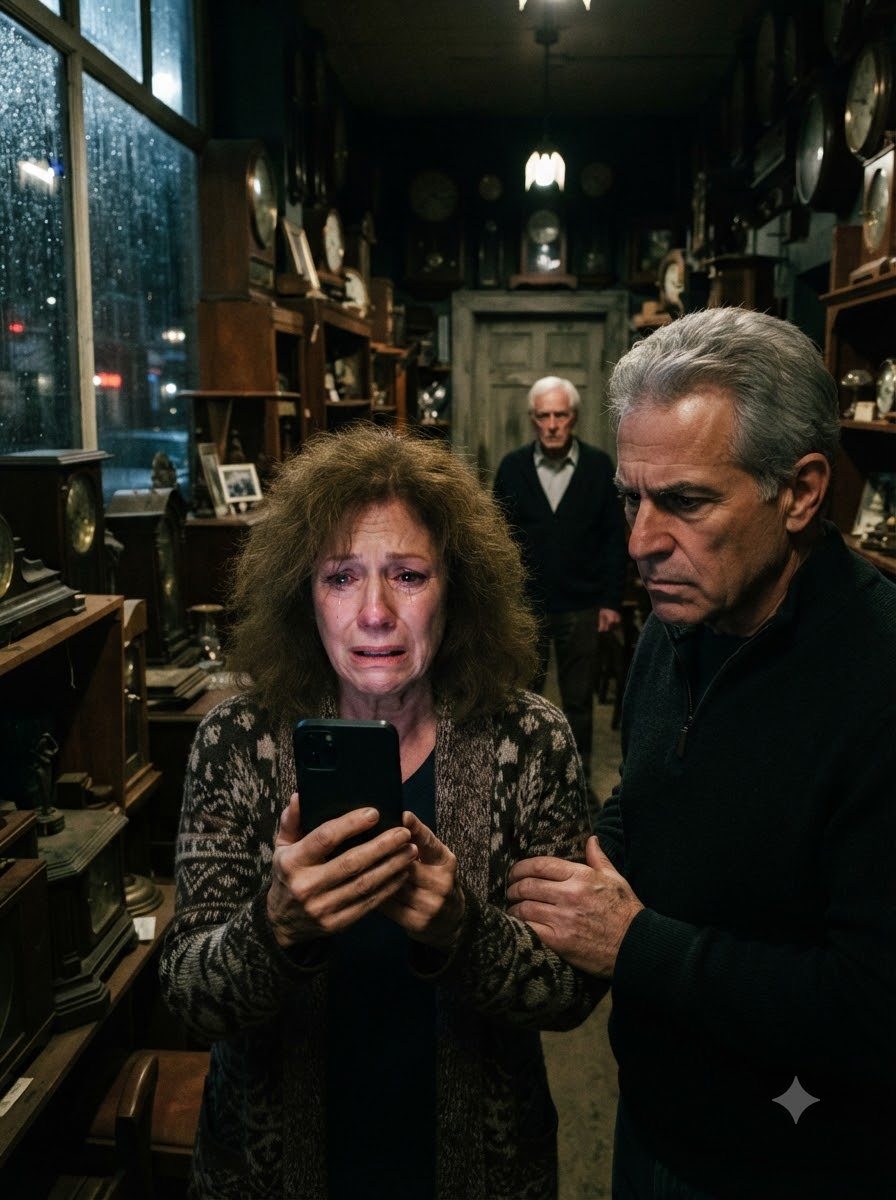
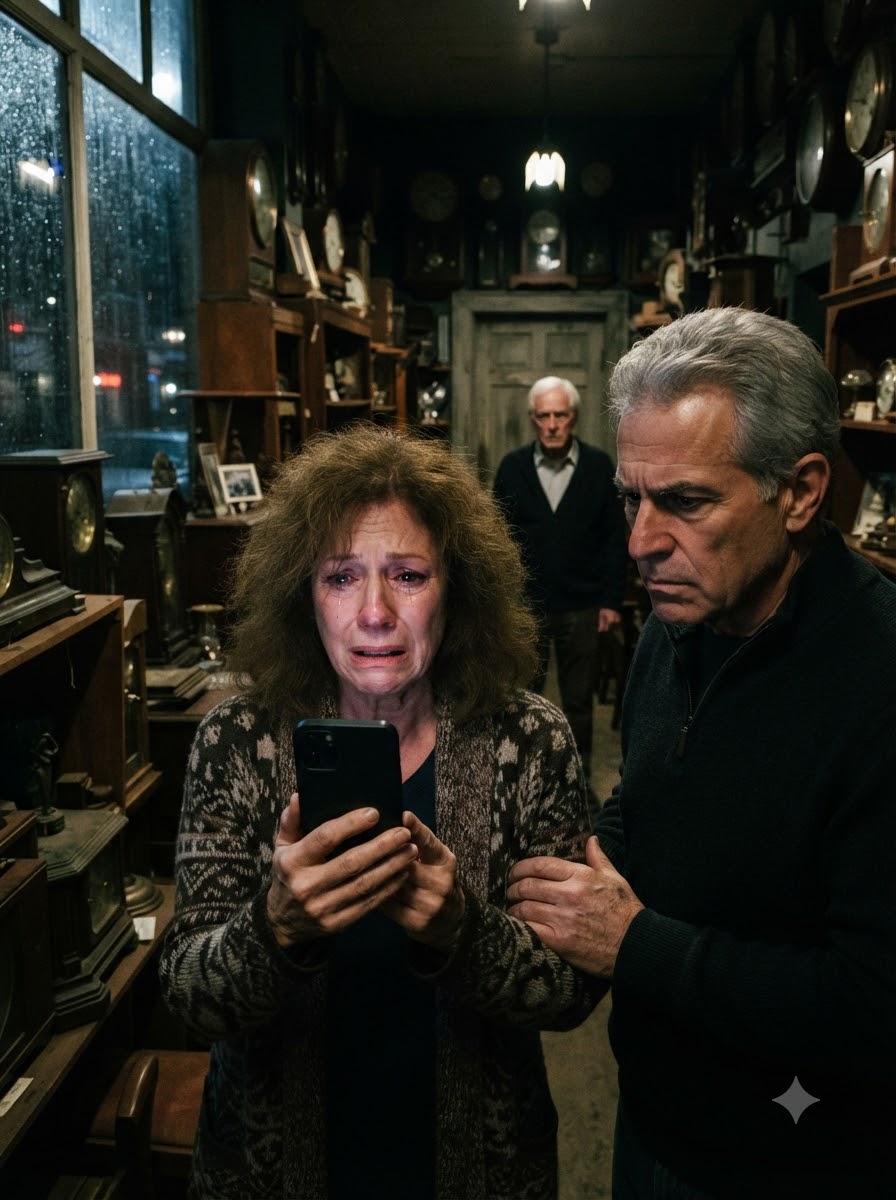
The text arrived while I was polishing a Victorian writing desk.
Mom, don’t come tomorrow. Jess doesn’t want you at the wedding.
I read it once, then again, waiting for the words to rearrange themselves into something less cruel.
They did not.
Behind me, the grandfather clock near the bay window ticked with solemn precision. Its brass pendulum swung through the lamplight, measuring out the seconds of the life my son had just removed me from.
I set down the polishing rag.
The shop smelled of lemon oil, beeswax, and old wood—the scent of every year Thomas and I had spent building Harrison’s Heritage. We had opened the shop in a narrow storefront when Arthur was six. He had grown up beneath its tables, behind its display cabinets, and inside the cavernous wardrobes we restored for customers who wanted history without the dust.
Arthur had once called this place our family’s heart.
Now he was telling me I was not welcome at his wedding.
I typed, “Understood.”
I did not ask why. I did not remind him that I had paid the first deposit on the reception hall. I did not mention the dress hanging in my bedroom closet or the small velvet box I had carried in my purse for three months.
I simply placed the phone facedown on the counter.
Then I walked into the back room.
The velvet box sat inside a locked drawer beneath a stack of invoices. Inside were Thomas’s gold cufflinks, the ones he had worn at our wedding and at Arthur’s college graduation. I had planned to pin them into Arthur’s jacket before the ceremony.
Instead, I carried the box back into the shop and set it beside the old brass keys hanging on their hook.
For a long time, I stood there looking at those keys.
The largest one opened the front door. The smaller one opened the office. The third belonged to the basement, where we stored pieces waiting to be restored. Arthur had been carrying copies since he was seventeen. He had used them to let himself in after midnight, to retrieve forgotten textbooks, to sleep on the old leather sofa when he was too tired to drive home.
I removed every key from the hook.
By midnight, I had packed two boxes.
One held the cufflinks, Arthur’s college jacket, the framed photograph of him standing proudly beside the first grandfather clock Thomas and I had ever restored, and the coffee mug he still used whenever he visited on Sundays.
The other held documents, photographs, and small things he had left behind over the years. Nothing valuable. That was what made it painful.
I wrote one sentence on an inventory card.
You chose where you belong.
The next morning, I drove through cold Massachusetts rain to the townhouse Jessica had selected for their married life. The building was all gray stone, black windows, and sharp landscaping. She liked clean lines. She said old houses made people sentimental and sentimental people were easy to manipulate.
I had laughed the first time she said it.
Now I wondered whether she had been warning me.
Arthur’s wedding was scheduled for three o’clock. I left the boxes beneath the covered entrance, placed the card on top, and drove away before anyone answered the bell.
At Harrison’s Heritage, I called my attorney.
Not to punish Arthur.
To protect what he had suddenly decided was available for sale.
By noon, Margaret Ellis had reviewed the deed, the partnership dissolution papers, and the transfer documents Thomas had signed three years before his death. She confirmed what I already knew but had never imagined I would need to say aloud.
Harrison’s Heritage belonged to me.
Not Arthur. Not Jessica. Not any future child or spouse.
Me.
Thomas had transferred his half of the business to me after his heart surgery. Arthur had witnessed the signature, though he had complained at the time that legal paperwork was “just theater.”
Margaret advised me to change the alarm code, revoke every key, notify the bank, and place the original records in a secure location.
I did all of it.
At 10:18 that night, Arthur called.
I was sitting behind the counter with the shop lights off. The old clock was ticking in the darkness.
“Mom,” he said. His voice was tight. “I need the shop keys.”
“You don’t have them.”
“I know you took them. Jess and I have people coming to look at the property next week.”
The words took a moment to reach me.
“What property?”
A pause.
“Don’t do this.”
“Do what?”
“Act like you don’t understand. The shop. The whole building. We need to move quickly.”
I looked at the darkened windows, at the display case where Arthur had once kept a collection of toy soldiers. The case had been his favorite place in the shop. He had spent hours arranging the soldiers into battles, making tiny alliances and betrayals.
“Who is buying it?” I asked.
“No one is buying it yet. We’re considering options.”
“You said people were coming to look.”
“Potential partners.”
“You own nothing here, Arthur.”
The silence on the line was so complete I could hear him breathe.
Then he laughed once, without humor.
“You’re upset about the wedding. I get it. But this is a business decision. You can’t make emotional choices and then pretend they’re legal.”
“It is legal,” I said. “The deed is in my name.”
“Dad promised me the shop.”
“Your father promised you many things. He did not give you mine.”
“You’re being impossible.”
“No. I’m being clear.”
He hung up.
The messages began before midnight.
You are embarrassing yourself.
Jess says you’re confused.
We need to talk about your ability to manage the shop.
You can’t keep making reckless decisions.
The final message came from an unfamiliar number.
This is Dr. Levin. Family members are concerned about your recent behavior. Please call me.
I saved every message and sent them to Margaret.
At 12:46, headlights swept across the front windows.
Arthur stood outside in his wedding suit, one hand pressed against the glass. His tie was loose, his hair wet from the rain. A white flower still clung to his lapel.
He looked less like a groom than a boy who had been locked out of his own house.
“Mom,” he said through the door. “Please open up.”
I remained in the office.
He knocked again.
“I didn’t mean it like that. Jess was stressed. The seating plan got out of control. Please.”
I did not move.
He waited for nearly fifteen minutes before walking away.
At 3:07 the next morning, my phone rang.
It was Frank Rossi, a retired Boston detective who had helped Thomas years earlier when a dealer tried to sell us a stolen eighteenth-century cabinet. Frank had a talent for noticing what other people dismissed as paperwork.
“Peggy,” he said, “I checked the folder you gave me.”
I sat upright in bed.
“What folder?”
“The copies of those property agreements. The ones you found in your office drawer.”

More From This Author