STORY
My Son Drenched Me at Christmas—Then I Found What He Forged in My Husband’s Trust
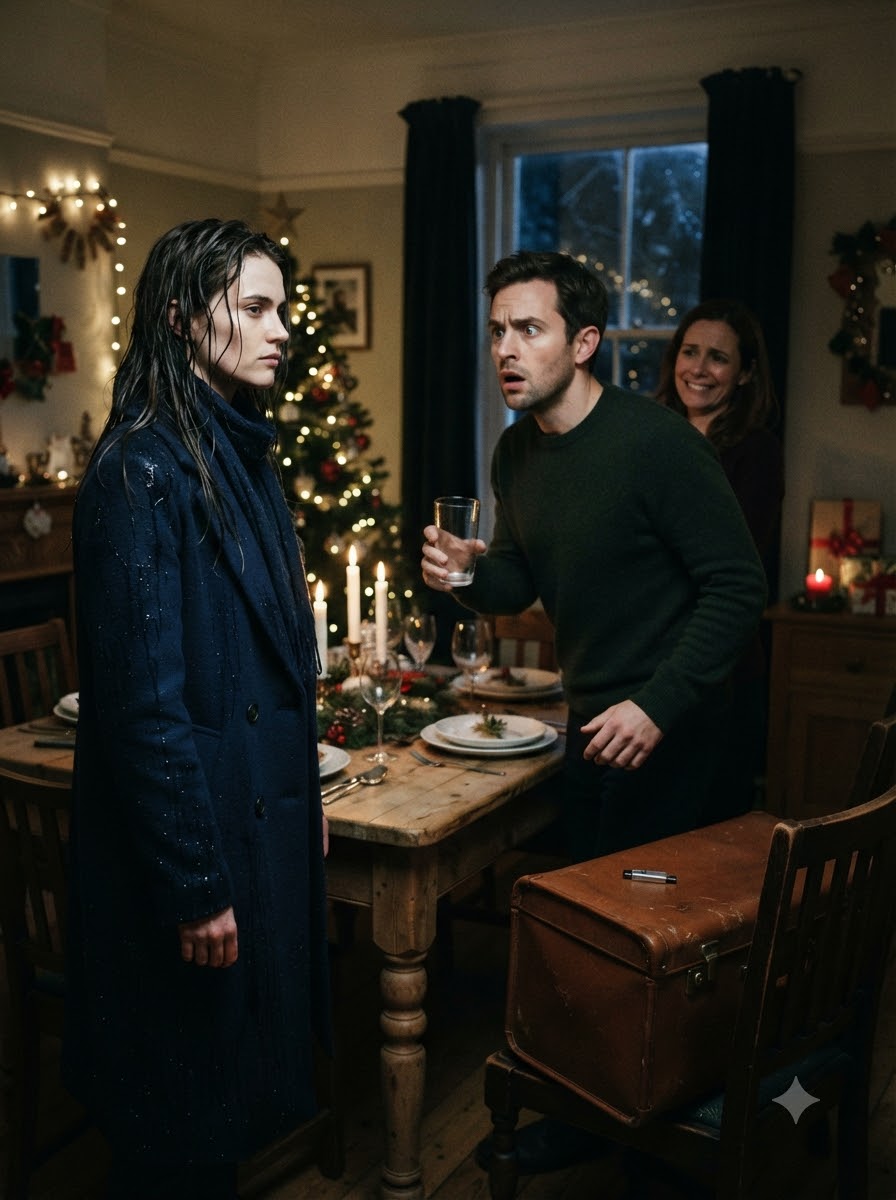
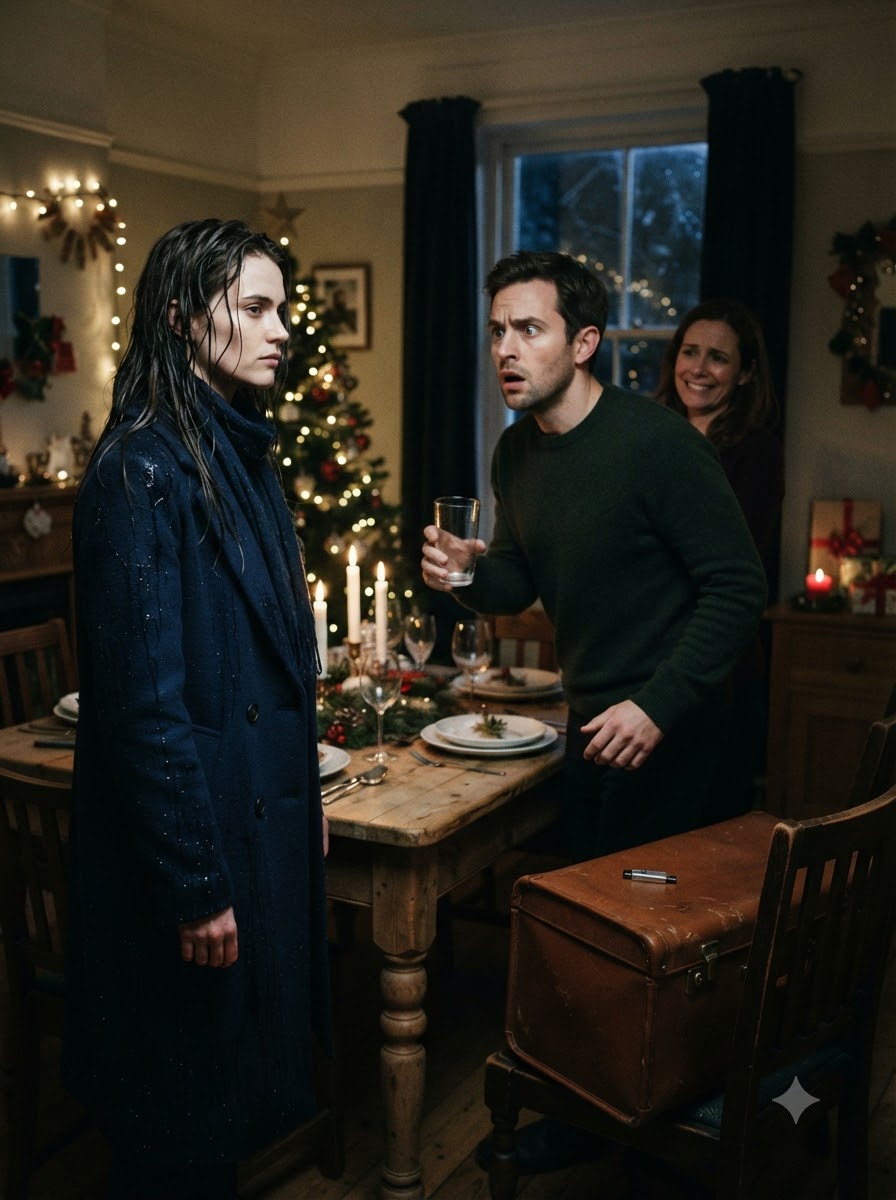
The water hit my face before I understood that Evan meant to throw it.
One moment I was asking for another slice of roast. The next, cold water ran down my collar and into the neckline of my Christmas dress. A piece of ice landed beside my plate.
At the far end of the table, someone gave a startled laugh. Then Juliet laughed too, and the sound spread. My son set down his empty glass and looked away from me.
I took the napkin from my lap and pressed it to my cheeks. My hands were steady. I remember that because I had to lift one of them to straighten the silver hourglass brooch at my throat. Charles had given it to me on our thirtieth anniversary.
“Merry Christmas, everyone,” I said.
Then I walked out of Winter Haven Estate.
Outside, the Newport wind cut through my damp dress. I sat in my car with the heat on high until I could feel my fingers. Through the dining-room windows, I saw Juliet touch Evan’s arm. He pulled away. For an instant I thought he might come after me.
He didn’t.
I drove back to Sealass Inn, where I had been staying since they’d told me the estate was too crowded for overnight guests. At the time, Juliet had blamed a plumbing problem. The windows of the east wing had been lit every night that week.
The innkeeper had left tea outside my door. I carried it in, took off the wet dress, and pulled an old brown suitcase from under the bed. I hadn’t brought it because I expected a Christmas quarrel. I’d brought it because of a letter I’d received eleven days earlier.
It was from a bank I had not heard from in years, thanking me for my approval of a loan against Winter Haven Estate.
I had approved no loan.
Charles and I had bought Winter Haven when Evan was young. After Charles died, I let Evan and Juliet live there under a trust we had established together. The Langford Integrity Trust owned the house and a portfolio meant to maintain it. Evan could draw a salary for managing the property and propose expenses. He could not mortgage the house or move trust money into his business without my written consent.
I was the surviving trustee. I had allowed Evan to handle the monthly paperwork, which he did with increasing confidence and decreasing patience for my questions. I had trusted him to tell me what needed my signature.
When the bank’s letter arrived, I asked him about it. He said there had been a clerical error. Juliet called while I was still on the phone, and he promised to sort it out after Christmas.
I wanted to believe him. I put the letter in my suitcase instead.
Now I spread it on the little desk beside my untouched tea. The loan was for $1.8 million. According to the bank, I had signed the consent form on October 14 at a branch in Newport.
On October 14, I had been in a hospital in Providence, recovering from knee surgery. I still had the discharge papers in my handbag.
I looked at the signature on the bank’s copy. It was close enough to mine to pass at a glance. Whoever made it had copied the long loop on the B. They had also included a small flourish beneath Langford, a habit I had given up after Charles died.
The older signatures they could have copied were in the estate office.
I opened my laptop and plugged in the USB drive Charles had labeled For B if needed. I had watched its recording only once, after his funeral. His face appeared on the screen, thinner than it had been in life, but his voice was clear.
“If a question arises about authority over the trust,” he said, “please read the documents. And Beatatrice, don’t let love for our son make you doubt what you know.”
I stopped the recording there. I remembered the rest.
The trust gave me the right to suspend Evan’s management authority if I found credible evidence that he had used trust assets for himself or acted against my interests. A court would decide any final removal. Charles, who had spent years watching me teach law, had insisted on that distinction.
I was grateful for it now. I needed facts, not an angry decision made in a hotel room.
At nine the next morning, I called Graham Vale, the trust’s financial adviser. I told him about the loan letter and sent him the hospital discharge papers. Then I called Nina Calder, a former student who was now a partner at a Providence law firm.
My third call was to the man who had sat at the head of Evan’s Christmas table, Malcolm Baines.
I knew Baines only as a principal at the investment firm where Evan worked. The night before, I had seen him put down his fork when Evan threw the water. He had not laughed.
“Mrs. Langford,” he said when he answered, “I was hoping you would call.”
I asked him what he had seen.
He took a breath. “Everything at dinner. And something earlier that I’d rather discuss in person.”
By afternoon, Nina had obtained an emergency appointment with the trust’s counsel. Graham had contacted the bank’s fraud department, which agreed to stop any further draw on the loan while it checked the disputed consent. The trust accounts were placed under dual approval. Evan could still pay ordinary bills, but he could not transfer trust funds on his own.
It was less dramatic than the instant ruin Juliet would later describe to her friends. It was also effective.
Graham found three transfers made after the October loan closed. Each went from the trust’s operating account to a consulting company called Harbor Lantern Strategies. Together, they totaled $640,000. The invoices described “heritage development research.” They had been approved by Evan.
Harbor Lantern’s registered address was a suite above a jewelry shop. Its owner was Juliet.
Nina and I met Baines in her office on December 27. He arrived carrying a slim leather folder.
He did not start with the dinner. He told us that Evan had been trying to bring Baines’s firm into a private development deal. Winter Haven and the surrounding acreage were central to it. Evan had described the trust as a family arrangement that would soon be under his sole control.
“Why would he say that?” I asked.
Baines opened the folder. He had printed an email Evan sent him the previous week. Attached was a memorandum from a physician stating that I had begun showing signs of serious cognitive decline. The document said I was no longer able to understand complex financial decisions. Evan had written that he expected “the necessary family authorization” shortly after Christmas.
I read it twice. The physician’s signature was a blurry image pasted at the bottom of the page. The doctor named on the letterhead had treated my knee. He had never assessed my memory.
“I thought you should know,” Baines said quietly. “I should have told you before dinner. Evan asked me to meet you first, and I let him make that seem reasonable.”

More From This Author