STORY
My Son Silenced Me at Dinner—Then My Lawyer Found What Serena Had Forged
No one had asked me about renovations. No one had asked me to move.
I walked into the main house the next morning while everyone was out. My key still worked. On the hall table was a stack of mail, including an appointment card from an assisted-living residence forty miles away. My name was written across the top in Serena’s careful block letters.
I photographed it where it lay. Then I went back to my apartment and called the residence. I told the director that I had not authorized anyone to arrange a place for me. She took the matter seriously. Later that day, she sent Ruth a copy of an inquiry Serena had made, asking how quickly “Mrs. Ward” could be admitted and whether family could handle the paperwork if I became “resistant.”
Ruth put the papers down and looked at me.
“You can make a report about the loan application now,” she said. “We should also decide where you want to live, separate from what David and Serena want.”
I had expected her to tell me what to do. Instead, I had to answer.
I did not want to keep living over the garage while they occupied the rooms Paul and I had built. I did not want to spend the next year wondering whether the door to my apartment had been opened while I was out.
So I told Ruth I wanted to sell.
We did it carefully. The lender closed the application and flagged the attempted use of my identity. Ruth made sure there was no lien against the property. I filed a police report, with the documents attached. She reviewed the rules governing David and Serena’s occupancy, then prepared a written notice ending their permission to live there. The buyers, a couple with two children, agreed to a closing thirty days after notice was served, provided the property was vacant.
I was not going to let a dinner-table announcement substitute for legal notice. Ruth arranged for that to be delivered the next morning.
I signed the sale contract on Friday. The price was fair. The buyers loved the garden, though the husband warned me he knew nothing about hydrangeas.
“Neither did Paul,” I told him. “He learned.”
During those weeks, I answered David’s calls. I watched Sophie twice when school ended early. She had done nothing wrong, and I could not bear the thought of her believing I had suddenly stopped loving her.
David sounded nervous but never mentioned the loan. Once he asked if I was happy living alone in the apartment.
“I’ve been thinking about what comes next,” I said.
“Good,” he replied, with such relief that I had to end the call.
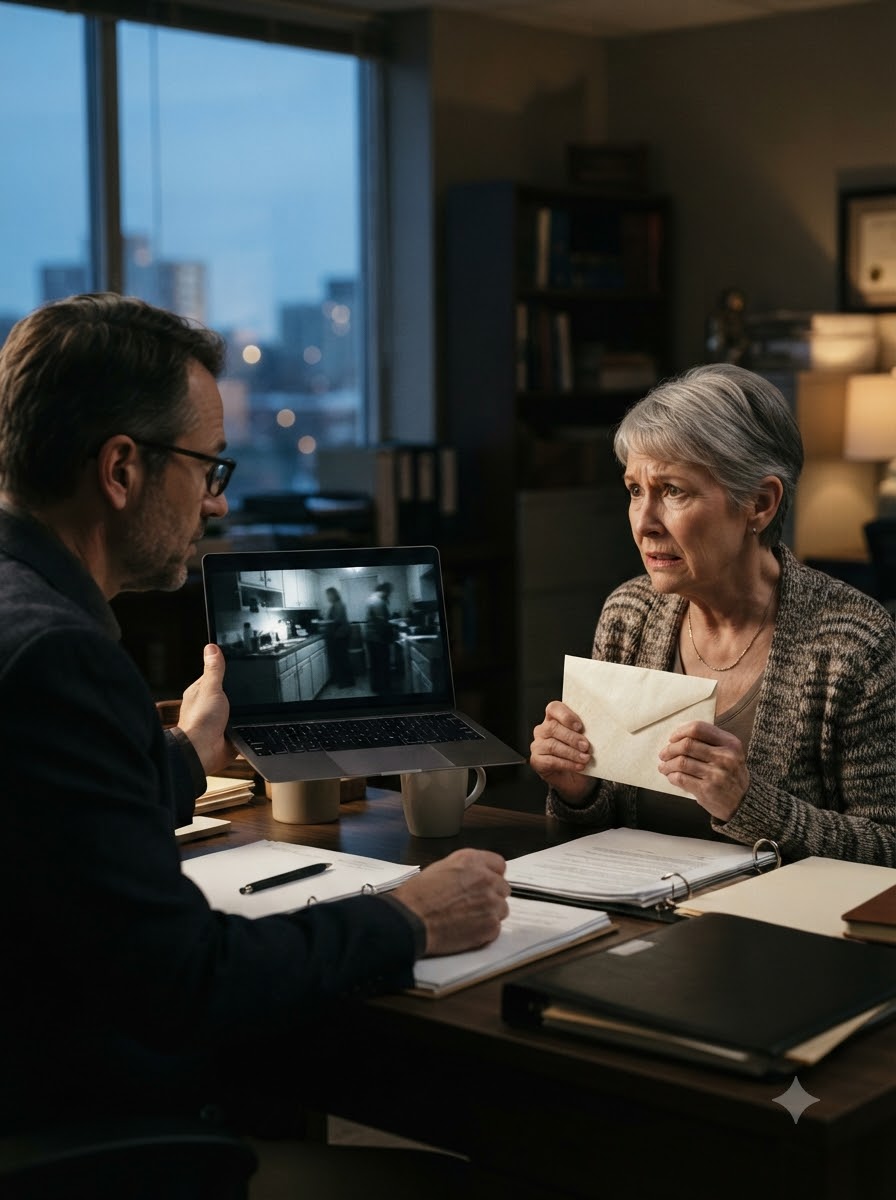
Ruth and I talked about what to put in the envelope. The first page was a copy of the signed sale contract. The second was the notice ending their occupancy. The third was a letter from the lender confirming that the application had been closed after I disputed it. Behind those was the page I most needed David to see: the submission record with his email and Serena’s phone number.
I added a letter of my own. It was short.
I know about the loan application and the residence inquiry. I have made a report and given the documents to my lawyer. Sophie will always be welcome in my life. If either of you wants to speak to me, tell me the truth.
At dinner on Sunday, Serena had set my place at the far end of the table. David’s father-in-law, Martin, passed me the potatoes and asked about my roses. Elaine talked about a friend who had moved into a pleasant retirement community. Sophie showed me a loose tooth. For a few minutes, I could almost believe the evening would end without Serena making an announcement.
Then the plates were cleared, and she stood up.
After I left the envelope on the table, I imagined them reading it as I drove away. I later learned that Serena pulled out the sale contract first and accused me of bluffing. David found the notice and kept reading. By the time he reached the lender’s letter, everyone else had gone quiet.
The phone rang again before I reached my hotel. This time it was David.
“Mom,” he said. “I didn’t know she sent it.”
I parked beneath the entrance lights.
“Your email address is on the application.”
“I gave it to her for paperwork. I didn’t see what she submitted.”
“Did you know she contacted a residence for me?”
He paused. “She was looking at options.”
“Did you know she planned to use my house to borrow money?”
“I thought you’d agreed to help us with renovations.”
I closed my eyes. “Did I ever tell you that?”
“No.”
“Then why did you think it?”
He had no answer.
The next morning, Ruth met me at her office with an investigator she sometimes used for property disputes. We did not need him to prove the house was mine. We needed an accurate account of what had happened with the application. I told him everything I knew and made clear which parts I had only suspected.
By noon, Serena had sent Ruth an email. She called the loan application a misunderstanding and said I had verbally offered to “advance David’s inheritance.” She attached a photograph of a handwritten note in which I supposedly promised to help them “use the house to get settled.”
I recognized the paper. It was from the pad beside my telephone. I recognized the words, too. I had written them after David lost his job: We’ll use the house to get you settled. I had meant they could live there while he found work. Serena had photographed the sentence without the next one, which appeared on the full page in my pad: Stay as long as we all feel comfortable, then we’ll decide together.
Ruth sent a scan of the full page to the lender and the officer handling my report. She also sent it to Serena’s lawyer when he called that afternoon.
Serena changed her account. She said David had misunderstood me, and she had merely filled out an online form to see what might be possible. She said the signature had been “a placeholder.”
That explanation lasted until the lender produced its verification recording. Serena had called pretending to be me. She gave my birth date and answered security questions from documents in my desk. Her voice was clear.
David listened to the recording in Ruth’s office two days later. He had asked to come, and I had agreed only after Ruth said she would be there. He sat across from me, gray-faced, while Serena’s voice said, “Yes, I’m the property owner.”
When the recording ended, he rubbed both hands over his face.
“I knew she was looking into a loan,” he said. “I thought we’d talk to you before anything happened.”
“You told her she could use your email.”
“Yes.”
“And you let her think I would leave.”
He looked up then. “I should have stopped it.”
Ruth asked him whether he had signed or submitted any document in my name. He said he had not. She told him the investigation would have to establish that; a conversation in her office would not settle it.

More From This Author