STORY
On Night Seven of Their Intimacy Challenge, She Refused to Keep Performing
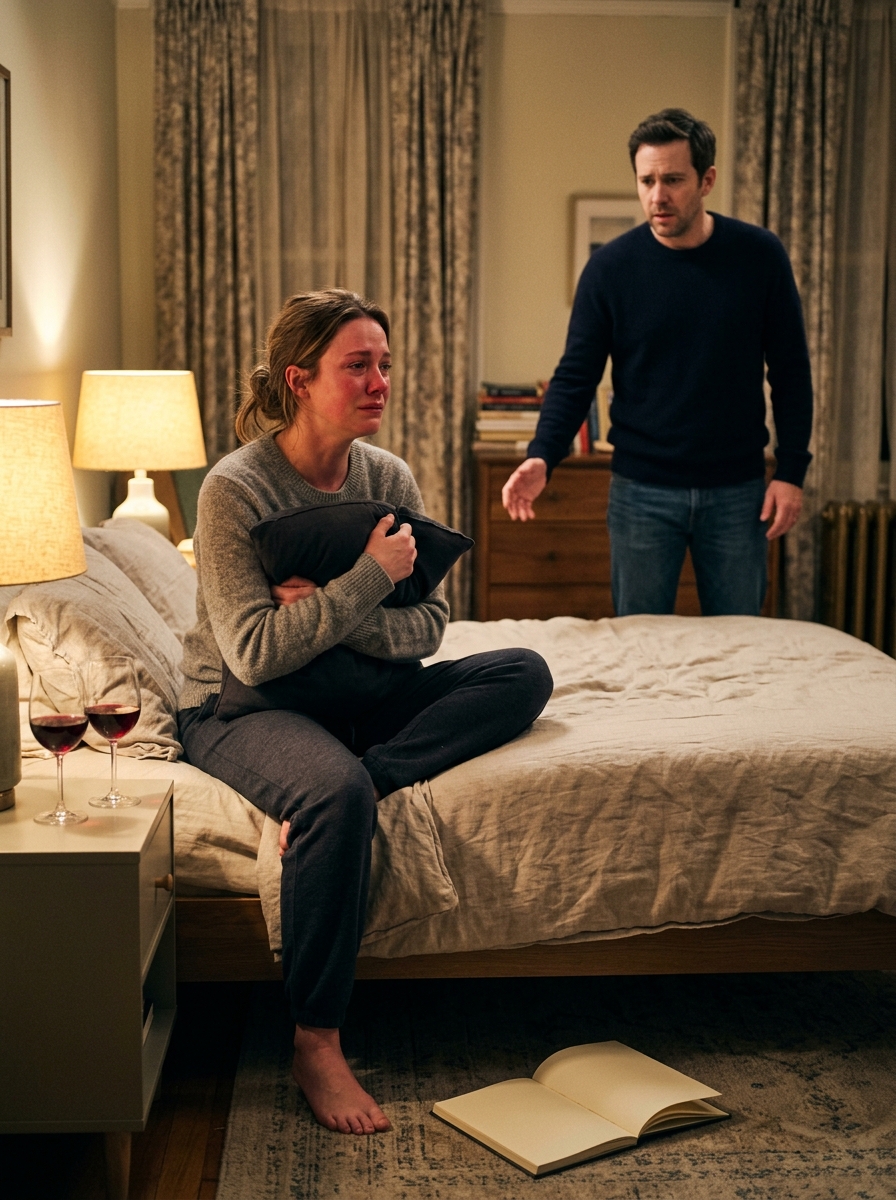
“No,” she said.
“Okay.”
“Stay here.”
He stayed.
It was not a breakthrough. Nothing opened. No buried music rose. She did not suddenly feel the old rush of certainty.
But when she fell asleep against his shoulder, she did not wake with the sensation that she had agreed to something.
***
There were setbacks.
In the third week, Elliot reached for Liora in his sleep. It was an unconscious gesture, a hand moving across the space between them.
She woke and pushed it away.
“Stop.”
He woke immediately.
“I’m sorry.”
She sat up, heart beating hard.
“Don’t do that.”
“I’m sorry.”
“Don’t apologize like I’m a customer who got the wrong order. Listen to me.”
He turned on the bedside lamp.
“I’m listening.”
“I don’t want to be touched when I’m asleep.”
“Okay.”
“Not even if you’re dreaming.”
“Okay.”
She pulled the blanket around her chest.
He sat against the headboard, keeping his hands visible.
After a moment, he said, “I thought we were getting better.”
The sentence hung there.
Liora felt the old alarm rise. He would decide this was proof that progress had been an illusion. She would have to repair his hope before they could return to the original problem.
But Elliot closed his eyes.
“I’m sorry,” he said. “That was not fair to put on you.”
“You’re allowed to be scared.”
“I’m scared that one mistake means I’m unsafe to you forever.”
“You’re not unsafe because you made one mistake.”
“I touched you after you told me not to.”
“While you were asleep.”
“I know.”
She studied him.
“I need you to understand the difference,” she said.
“I’m trying.”
“No. You need to understand it, but you’re allowed to be learning how.”
He nodded.
She lay back down, leaving space between them.
Neither of them slept well, but in the morning the argument did not become evidence against the whole marriage.
That mattered.
***
At the beginning of the fifth week, Liora had a difficult day at work.
A shipment of display panels arrived damaged, her supervisor blamed her for an error she had not made, and one of her closest colleagues announced she was moving to another city. By the time Liora got home, she was carrying the day like a heavy bag.
Elliot had made soup.
She stood in the kitchen doorway and began to cry.
He turned off the burner.
“Do you want comfort or solutions?” he asked.
She laughed through the tears. “I want to be a person who never hears that question again.”
“Fair.”
“I don’t know what I want.”
“Okay.”
He waited.
The old Elliot would have hugged her without asking, then asked what happened, then made a list of ways to address the supervisor. The old Liora would have accepted the hug, resented the list, and said nothing.
Now she took off her coat.
“Can you sit near me?” she asked.
“Yes.”
“Not touching.”
“Yes.”
They sat at the kitchen table while the soup cooled.
After a while, Liora told him what had happened. He listened without offering a response until she finished.
“That sounds awful,” he said.
“It was.”
“I’m sorry.”
“I don’t need you to apologize for my supervisor.”
“I know. I’m sorry you had to be in that room.”
She looked at him.
“That was almost useful.”
“I’ll take almost.”
She smiled.
Later, after dinner, she asked if he would come upstairs.
He did not ask why.
In the bedroom, she changed into pajamas while he brushed his teeth. They got under the covers, facing opposite directions.
“Elliot?”
“Yeah?”
“I want to kiss you.”
His hand tightened around the blanket.
“Okay.”
“I may change my mind.”
“You can.”
She turned toward him.
The kiss was tentative, then warmer. It lasted long enough for her to notice the old reflex in herself: the fear that an affectionate moment created an obligation to continue.
She pulled back.
Elliot did not move closer.
“Do you want to stop?” he asked.
“Yes.”
“Okay.”
She waited for disappointment. It was there, perhaps, but it did not arrive as a punishment. His face remained open.
“Can you stay beside me?” she asked.
“Yes.”
They lay side by side, not touching.
After several minutes, Liora reached across the space and took his hand.
He looked at her.
“Don’t make a thing of it,” she said.
“I won’t.”
“You’re making a face.”
“I’m trying not to smile.”
“That counts as making a thing of it.”
He turned his face toward the ceiling, but she could hear the smile in his voice.
“Understood.”
***
The book remained in the drawer.
One Sunday afternoon, Liora took it out while Elliot was walking the dog. She turned through the pages, expecting to feel anger.
Instead, she felt tired.
The prompts were not monstrous. Some were thoughtful. Some were too polished. One asked couples to name a moment when they had felt “most alive together,” as if the answer might be waiting in a sealed envelope.
The book had not ruined them.
They had brought their existing fears to it and used its language to sharpen them.
On the last page, there was a line to complete:
**By day thirty, I hope we will have learned—**
Liora found a pen.
She wrote: **That neither of us can be graded into wanting.**
Then she closed the book.
When Elliot returned, he found it on the table.
“I thought you didn’t want to make it a thing,” he said.
“I don’t.”
“You wrote in it.”
“I did.”
He picked it up and read the sentence.
For a moment, she wondered whether he would defend the challenge. Instead, he nodded.
“That’s fair.”
“Not everything has to be fair.”
“No. But that is.”
She sat down.
“I don’t want us to spend the next six months proving we can recover.”
“What do you want?”
“I want to choose the marriage without promising you a particular outcome.”
Elliot lowered himself into the chair opposite her.
“Does that mean you’re choosing me?”
“It means I’m choosing to keep showing up. I’m choosing to tell the truth sooner. I’m choosing to find out whether desire can grow again when it isn’t being chased.”
He looked at the book.
“And if it doesn’t?”
“Then we’ll have to be honest about that too.”
He absorbed the answer slowly.
“I can live with that,” he said.
“Can you?”
“I don’t know.”
She waited.
“But I would rather live with an honest uncertainty than a fake success.”
The sentence did not resolve anything. It did not promise that their bodies would remember what their hearts had forgotten. It did not guarantee that the next month would be gentler.
Still, something in Liora loosened.
Not desire, exactly.
Permission.
***
On what would have been the thirtieth night, neither of them opened the workbook.
They ordered Thai food and ate on the floor because the dog had stolen one of the dining chairs and refused to move. Elliot told her about a man at work who had submitted an expense report for “emergency emotional support snacks.” Liora laughed so hard she nearly dropped a noodle.
After dinner, they cleaned the kitchen together.
It was late when they went upstairs.

More From This Author