STORY
She Inherited the Farmhouse for Nine Dollars—Then the Walls Revealed Her Siblings’ Secret
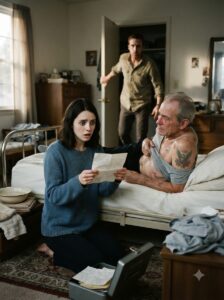
Brooke’s voice sharpened. “You’re imagining things.”
“I saw you.”
“You’re sick, Dad.”
“No,” he said. “I’m old. There’s a difference.”
The recording ended with a crash.
I listened to every file.
There were twelve.
The second layer of the truth was worse than the money.
Dad had not simply discovered that Mason and Brooke were stealing. He had learned that they had been trying to have him declared incompetent.
A doctor’s report in the cash box stated that Mason had asked for a mental-capacity evaluation without telling Dad. A draft petition, prepared by Brooke’s attorney, sought control over Dad’s finances and property.
The petition claimed Dad was paranoid, forgetful, and unable to manage his affairs.
The evidence they intended to use included his complaints about voices in the walls.
They had planned to make his fear sound like dementia.
But Dad had found the source of the whispers.
The old farmhouse had a service passage between the kitchen and the dining room, sealed decades earlier. Sound traveled through the narrow space. Someone could stand on the other side of the wall and hear everything spoken in the kitchen.
The people who had been whispering were Mason and Brooke.
They had been meeting inside the house while Dad slept, using a loose basement window to get in.
Dad had installed a motion camera near the cellar stairs.
The final envelope held still photographs.
Mason climbing through the window.
Brooke carrying a file box.
Brooke removing papers from Dad’s desk.
Mason standing in the kitchen with a crowbar.
The last photograph showed them beside the wall where I had found the cash box.
They had not discovered the hidden compartment.
Dad had moved it to the kitchen after hearing them searching his office.
At the bottom of the box was a flash drive and a letter addressed to Mr. Whitaker.
I drove back to town with the evidence beside me.
Mr. Whitaker listened without interrupting. When I finished, he took off his glasses and wiped them.
“Your father came to me six weeks before he died,” he said. “He told me he had proof of financial abuse and attempted coercion. He instructed me not to act unless they tried to sell the farm.”
“Why didn’t he tell me?”
“He believed you were safest if they thought you knew nothing.”
That sounded like Dad.
“What happens now?”
“Now,” Mr. Whitaker said, “we protect the evidence and let them make the next mistake.”
The next mistake came three days later.
Mason and Brooke arrived at the farmhouse in separate cars.
I watched them from the upstairs window. Mason carried a toolbox. Brooke had a folder under her arm.
They knocked once and walked in.
I stepped into the hallway.
“You don’t have permission to be here.”
Mason stopped.
Brooke looked past me toward the kitchen.
“We’re here to help clean out Dad’s things.”
“You can leave.”
“We’re co-heirs,” Mason said.
“No. You’re beneficiaries of other assets. This house belongs to me.”
“Not until the estate closes.”
“It has closed.”
Brooke’s expression hardened.
“You found something.”
Mason turned toward her.
“Found what?”
She ignored him. “Clara, our father was sick. He made arrangements he didn’t understand. We can still fix this quietly.”
“By selling the land?”
“You have no idea what you’re talking about.”
I took out my phone.
The recording of their voices played through the kitchen.
Mason’s face drained.
Brooke stared at the phone, then at me.
“That’s fabricated,” she said.
“It’s your voice.”
“Anyone can imitate a voice.”
Mason stepped forward. “Give me the phone.”
I moved back.
He stopped when a voice came from the doorway.
“Try it, Mason.”
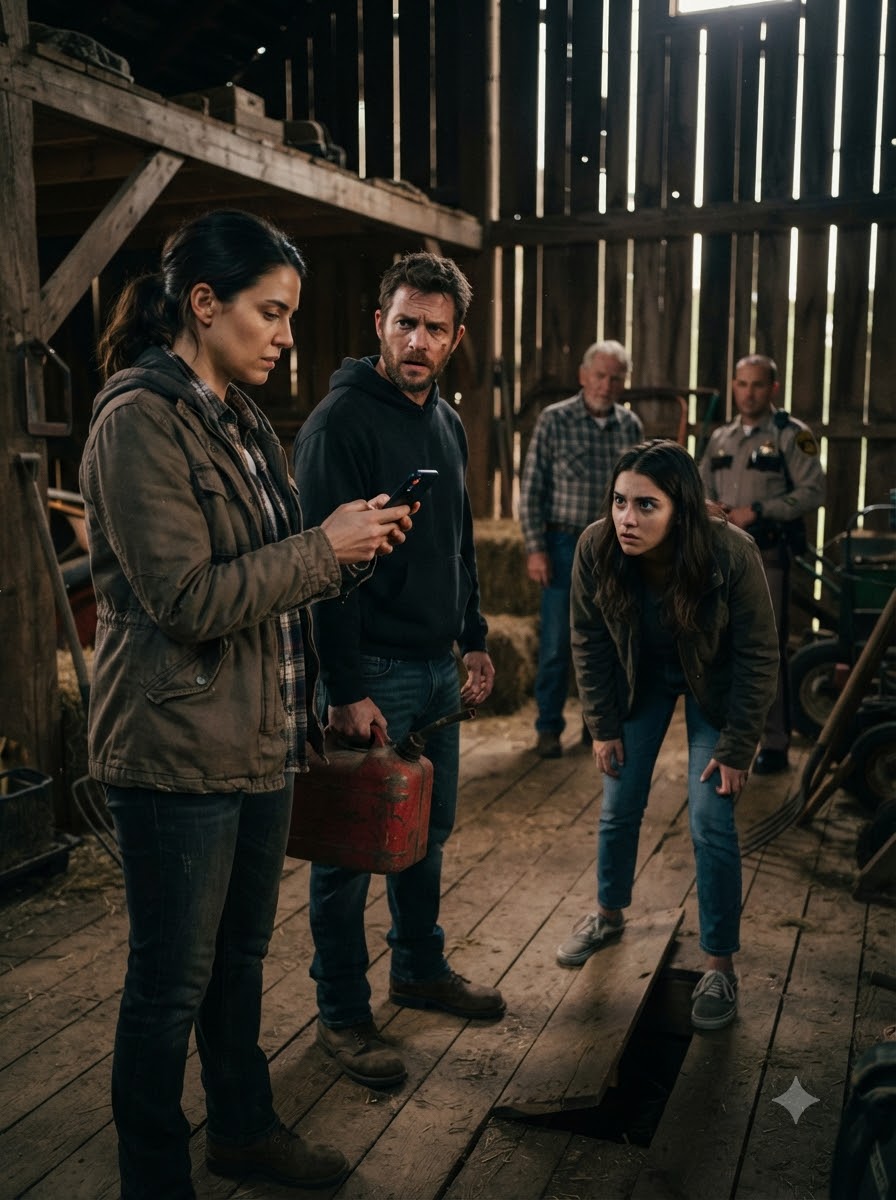
Mr. Whitaker stood there with a county sheriff and a woman I recognized from the bank.
The sheriff was Deputy Ellis, who had grown up two roads from Hollow Creek. The woman was Marlene Voss, the branch manager at First Cumberland Bank.
Marlene held a folder.
“Your father gave me permission to release copies of the estate records,” she said. “The original financial documents are also secured.”
Brooke’s face went white.
Mr. Whitaker nodded toward the folder.
“The bank has confirmed that Mason withdrew forty-eight thousand dollars from the estate account using a forged authorization. They also confirmed that Brooke deposited twenty-eight thousand dollars into a personal account the same week.”
Mason laughed, but the sound broke halfway through.
“This is ridiculous. Dad gave us that money.”
“Then why did you forge his signature?” Marlene asked.
“I didn’t.”
“The handwriting expert says you did.”
Brooke turned on Mason.
“You told me Dad signed it.”
“And you told me the jewelry was yours,” he snapped.
Her hand flew to the pearls.
Mr. Whitaker removed the inventory list from his briefcase.
“The pearls belong to the estate. So do the bracelet and ring.”
Brooke’s fingers closed around the necklace.
“You’re threatening me over jewelry?”
“No,” I said. “We’re telling you it was never yours.”
The sheriff stepped toward her.
“Please remove the items and place them on the table.”
Brooke looked at me with pure hatred.
“This is what you wanted, isn’t it? You always believed you deserved more.”
“I wanted the truth.”
“You were jealous,” she said. “You were always jealous because Mom trusted us with important things.”
“Mom trusted you to inventory her belongings,” I said. “You sold them and lied about the price.”
Mason pointed at me.
“She manipulated Dad. She fed him all this nonsense.”
Mr. Whitaker’s voice stayed calm.
“The recordings were made before Clara knew anything. The photographs were timestamped. The bank records are independently verified. The development agreement bears your signatures.”
Mason’s mouth opened.
Nothing came out.
I handed Deputy Ellis the flash drive.
“There’s more,” I said.
The deputy plugged it into his laptop.
The screen filled with photographs from the motion camera. Mason and Brooke entered the farmhouse six times over three months. In one image, Mason held Dad’s office key. In another, Brooke stood beside the bed while Dad slept.
The final recording played.
Dad’s voice was weak but steady.
“If anything happens to me, the people responsible are Mason and Brooke. They will say I was confused. I am not confused. I am afraid of what they will do when they believe the house is theirs.”
The kitchen became silent.
Brooke began crying.
Not softly. Not with shame.
She cried the way she had cried at Mom’s funeral when the minister mentioned sacrifice, checking to see who was watching.
“You don’t understand,” she whispered. “We were drowning.”
Mason stared at her.
She continued, “The business failed. We owed money. Dad had more than he needed.”
“You stole from him,” I said.
“We were family.”
“You tried to have him declared incompetent.”
“That was Mason’s idea.”
His head snapped toward her.
“You signed the papers.”
“Because you said it was temporary!”
“You were there when we went through his desk.”
“You told me there was nothing important in it.”
Their story collapsed between them.
Not dramatically.
Not all at once.
It came apart in small, ugly pieces, each accusation exposing another lie.
Deputy Ellis arrested Mason for financial exploitation, forgery, and burglary. Brooke was arrested for conspiracy and theft. She tried to remove the pearls first, but Marlene stopped her.

More From This Author