STORY
The Cabin Had One Bedroom. By Midnight, She Was Asking Her Husband for Two.
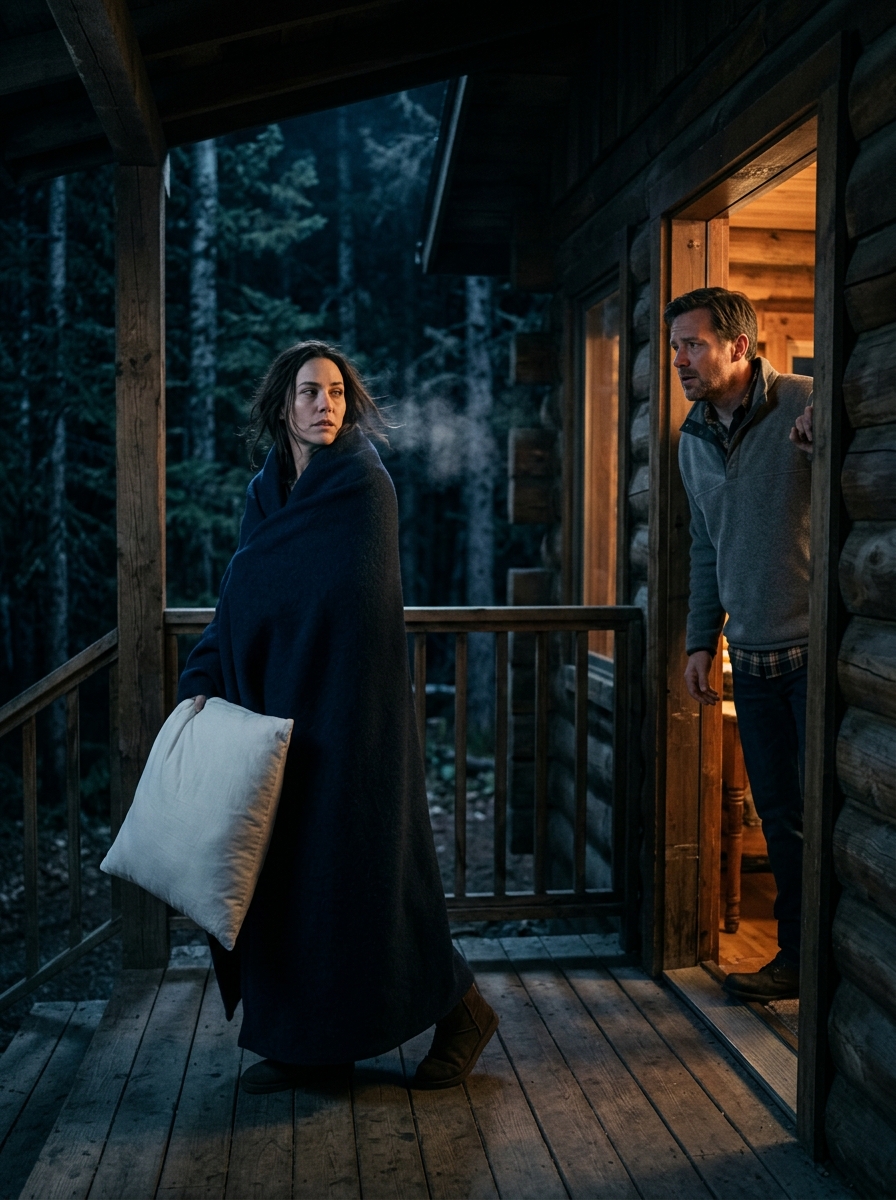
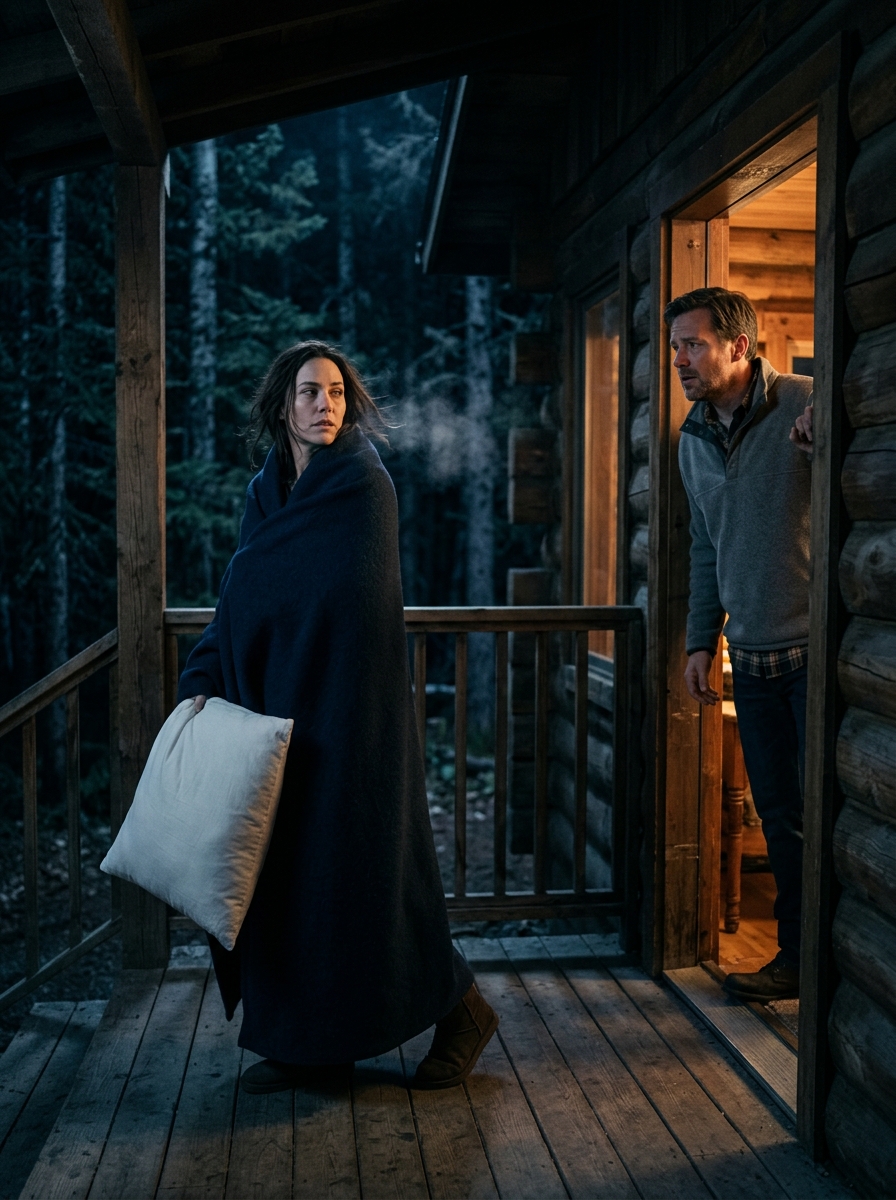
“Is the second bedroom the beginning of something,” Owen asked, “or the polite version of the end?”
Mara stood on the unheated porch of a remote cabin with a pillow under one arm and a blanket wrapped around her shoulders. Beyond the railing, the woods were a black wall. There was no traffic, no neighbor’s television, no refrigerator hum from another room.
Nothing softened his question.
“I need it to be the reason we don’t end,” she said.
Owen looked down at his hands.
They had driven four hours to this one-bedroom cabin because their sex life had dwindled into a subject they discussed more often than they participated in. Owen had found the rental, bought groceries, packed firewood, and described the weekend as “a chance to reset.”
No expectations, he had promised.
But expectations had ridden up with them in the car. They were folded into the new sheets, waiting in the wineglasses, reflected in the single bed positioned beneath a window overlooking the lake.
Mara had felt them while Owen unpacked.
He touched the small of her back as he passed behind her in the kitchen. He kissed the side of her neck while she sliced bread. He pulled her feet into his lap when they sat by the fire.
None of those things was wrong. Once, she had loved how naturally Owen reached for her. Lately, each touch seemed to come with a silent question she was expected to answer.
Would this lead somewhere?
Was tonight finally the night?
Did she still want him?
By eleven, Mara had felt so observed that she volunteered to carry the trash to the shed in the dark. When she returned, Owen had turned down the bed.
She had picked up a pillow and walked outside.
Now he sat at the small pine table, still wearing the sweater she had bought him two Christmases ago. At forty-four, he had silver beginning at his temples and the same serious mouth she used to kiss just to interrupt him.
“You’ve been thinking about separate rooms,” he said.
“Yes.”
“How long?”
Mara stepped inside and closed the door against the cold. “A few months.”
“A few months.”
“I didn’t know how to say it.”
“You just said it.”
“Because there’s nowhere left to go.”
Owen flinched.
“That came out wrong.”
“No, I think it came out exactly right.”
He stood and crossed to the sink. The cabin was so small that two strides took him away from her, and two would have brought him back. He turned on the faucet, although there was nothing in the sink to wash.
Mara watched water run over his fingers.
“I’m not asking to move out,” she said.
“You’re asking not to sleep beside me.”
“I’m asking for a place where my body isn’t automatically shared space.”
The faucet stopped.
Owen turned. “Have I ever ignored you when you said no?”
“No.”
“Have I ever tried to make you do something you didn’t want?”
“No. That isn’t what I’m saying.”
“Then tell me what you are saying, because right now I feel like you’ve quietly recast me as some man who won’t leave you alone.”
Mara sat across from the chair he had abandoned.
She wanted to protect him from that interpretation. She had spent years protecting him from it, which was part of how they had reached this cabin without ever having the necessary conversation.
“You stop when I say no,” she said. “But then you go quiet. Or you say it’s fine in that voice that means it isn’t. Sometimes you roll away. Sometimes you clean the kitchen like the plates have personally betrayed you.”
Owen’s face reddened. “I’m allowed to be disappointed.”
“Yes.”
“I’m allowed to have feelings about being rejected by my wife.”
“Yes, you are. But I started feeling responsible for making those feelings go away.”
“I never asked you to.”
“You didn’t have to ask.”
The fire shifted behind the screen with a dry crack.
Mara rubbed the edge of the blanket between her fingers.
“A no began to feel expensive,” she said. “So I stopped giving clear ones. I’d say I was tired or that we should wait until Saturday. Then Saturday would come, and I’d find three errands. Or I’d stay at my desk until you fell asleep.”
Owen stared at her. “You knew I was waiting.”
“Yes.”
“And you let me.”
There it was—the part that belonged to her.
Mara nodded. “I did.”
***
They had been married thirteen years.
For most of those years, they had thought of themselves as unusually compatible. They could travel without fighting, assemble furniture without insulting each other, and spend an entire Sunday making soup while listening to the same album twice.
Then Owen’s design firm gave up its office lease. His drafting table moved into their dining room. Mara was already working from the small room at the back of their house, editing technical manuals for a medical publisher.
Their days began happening within earshot of each other.
At first, it felt intimate. Owen brought her coffee between meetings. Mara wandered out to show him terrible sentences from the manuscripts she edited. They ate lunch together and took late-afternoon walks.
Gradually, the togetherness lost its edges.
Owen would knock on her office door and come in before she answered. He would lean over her chair to kiss her, then ask why her shoulders tightened. When Mara went to the kitchen, he often followed, continuing a conversation she thought had ended.
At night, he wanted to sit close. In bed, he reached for her even in his sleep.
Mara began inventing reasons to leave the house.
She bought groceries three items at a time. She volunteered to pick up prescriptions they could have had delivered. She took long showers and read in the parked car after appointments.
Owen saw only that his wife was retreating, so he reached for her more.
She retreated farther.
Neither of them named the pattern.
Instead, they argued about frequency. They discussed stress, sleep, hormones, date nights, and the effect of screens in the bedroom. They listened to one relationship podcast in the car and stopped it halfway through when the hosts became unbearably cheerful.
Once, Owen suggested scheduling intimacy.
Mara agreed, then grew anxious as the scheduled night approached. She canceled with a headache.
After that, Owen refused to schedule anything.
“I don’t want an appointment,” he had said. “I want you to want me.”
She had not known how to explain that being required to demonstrate spontaneous desire made her feel as if someone were standing over a seed and demanding that it sprout.
So when Owen proposed the cabin, Mara said yes.
She had hoped a different place might produce a different version of her.
Instead, the silence had stripped away every excuse.
***
Owen took the bedroom that first night because Mara insisted.
She lay on the narrow couch beneath a quilt patterned with red canoes. The cushions separated under her hip, and the fire burned down faster than she expected. She could hear Owen turning over through the thin wall.

More From This Author