STORY
My Daughter’s Back Named Her Husband—Then the Surgeon Turned Pale
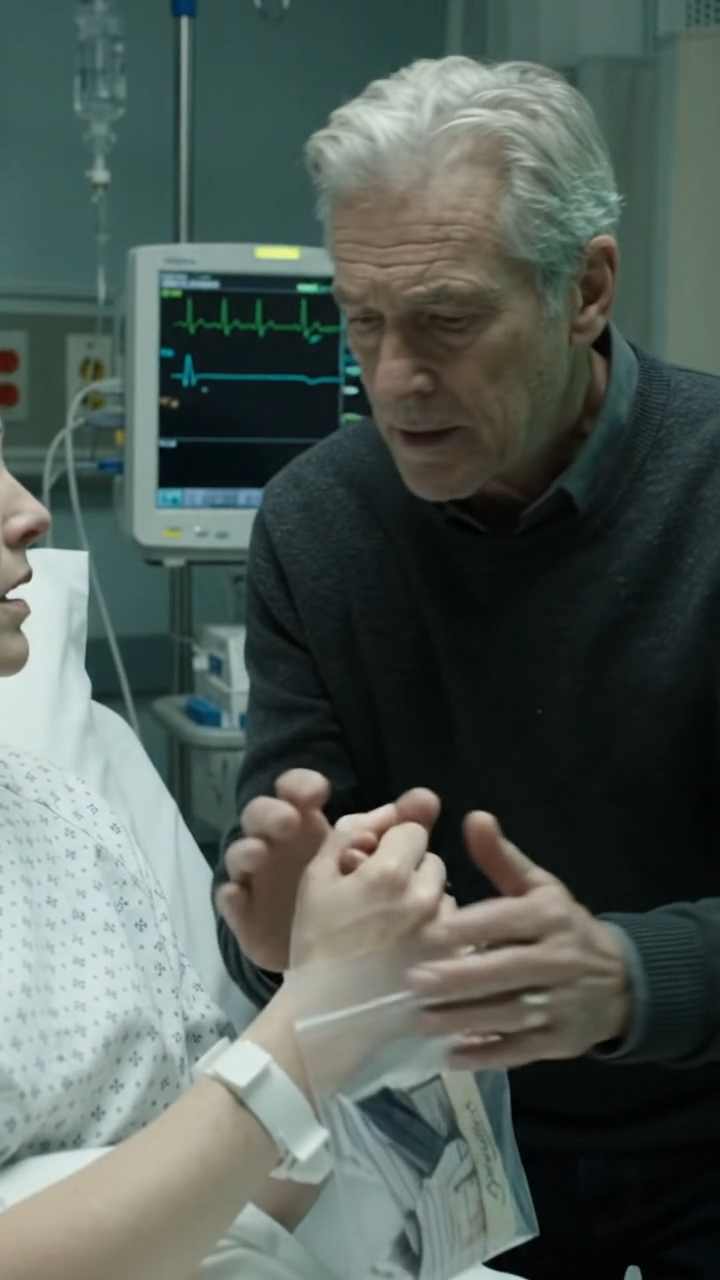
The recording began with the scrape of a chair across tile.
Then Emily’s voice came through the cracked phone speaker.
“I know what both of you did.”
A man answered, but the first words were muffled by movement. I leaned closer, trying to separate the voice from the rustle of fabric.
Alan stepped toward me.
“That phone should be turned over to the police.”
“It will be.”
I closed my hand around the evidence folder before he could reach it.
The nurse who had pressed the security button moved between Alan and the door. She was young, but her voice remained steady.
“Hospital security is on the way, Doctor.”
Alan stared at her as though she had committed an act of betrayal.
On the phone, Emily spoke again.
“You forged my father’s signature. You falsified the competency report. And you thought I would never check.”
This time, the answering voice was clear.
It belonged to Daniel.
“Lower your voice.”
My stomach tightened.
Daniel had married Emily six years earlier. He was polished, attentive, and always ready with the correct gesture. He remembered birthdays. He sent flowers to nurses after my final surgery. He called me Dad only after asking permission.
I had mistaken performance for character.
Emily continued on the recording.
“You borrowed against the house without telling me. You moved money out of the trust. Alan signed a report saying I was medically unfit to manage my own affairs.”
Alan’s face emptied of expression.
I looked at him. “A competency report?”
“Richard, you don’t understand the context.”
The recording answered for him.
Daniel said, “Mercer needed the money. I needed his signature. Everyone got what they wanted until you started digging.”
Alan reached for the phone.
I stepped back.
The trauma-room doors opened behind him. Two security officers entered, followed by the charge nurse.
Alan raised both hands and gave a humorless laugh.
“This is absurd. I called Richard. I brought Emily here. Does that sound like the behavior of someone trying to harm her?”
It was the question of a man who had rehearsed his innocence.
I looked at the order sheet again.
“How did you authorize her sedative before she arrived?”
“A clerical error.”
“Why did she enter through the private service corridor?”
“I don’t control transportation.”
“Why did she look at you when she begged me not to tell him she was alive?”
Alan’s composure cracked.
“She is disoriented. You know what those drugs do.”
“I know exactly what those drugs do.”
I had prescribed the same class of medication hundreds of times. The dose on Emily’s chart was larger than necessary but not immediately fatal. It was enough to weaken her, blur her memory, and make any statement she gave seem unreliable.
That was not treatment.
It was control.
Emily moved on the bed, and the monitor accelerated. I went to her side.
“Dad,” she whispered.
“You’re safe. Security is here.”
Her gaze shifted toward Alan again.
“He brought me.”
Alan shook his head. “She means I brought her to the hospital.”
Emily swallowed painfully.
“No. Before.”
The room became very quiet.
I asked the nurse to call the police and place an officer at every exit. Then I told security not to let Alan leave.
Alan drew himself up.
“You have no authority to

More From This Author