STORY
My Daughter Sent a Realtor to My Kitchen—Richard Found Her Court Filing
The first thing the realtor measured was the space where my husband used to stand while I baked bread.
She stretched her tape measure across the kitchen cabinets, called out a number, and entered it on her phone. Tyler stood beside her, photographing the window over the sink.
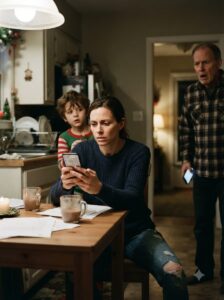
“Grandma,” he said, “Mom says you’re getting forgetful. We’re selling the house before you burn it down.”
I was holding a loaf pan with both hands. Behind him, the oven timer had eleven minutes left. On the counter sat my listing agreement, marked with a yellow sticky note that said SIGN HERE.
The woman with the tape measure looked up. “I’m sorry, Mrs. Bell. I thought your family had discussed this with you.”
“We haven’t,” I said.
Tyler was twenty-six. I had paid his college tuition, attended his graduation, and spent more Sunday afternoons cooking for him than I could count. He gave the realtor a reassuring smile, as if she were the one who needed comfort.
“Grandma has good days and bad days,” he told her. “It’s all under control.”
Outside, Brenda’s silver Mercedes SUV idled at the curb. My daughter had not come into my house in eight months, not even when I had pneumonia in January. Now she had sent her son through it with a stranger.
“Just sign,” Tyler said, tapping the sticky note with his pen. “Mom already put down a deposit at Meadowbrook Care Home. It’s a shared room, but they have activities.”
I set the loaf pan on the stove. “Did you ask me where I wanted to live?”
He sighed. “This is exactly what Mom said you’d do.”
The sliding door to the screened porch opened.
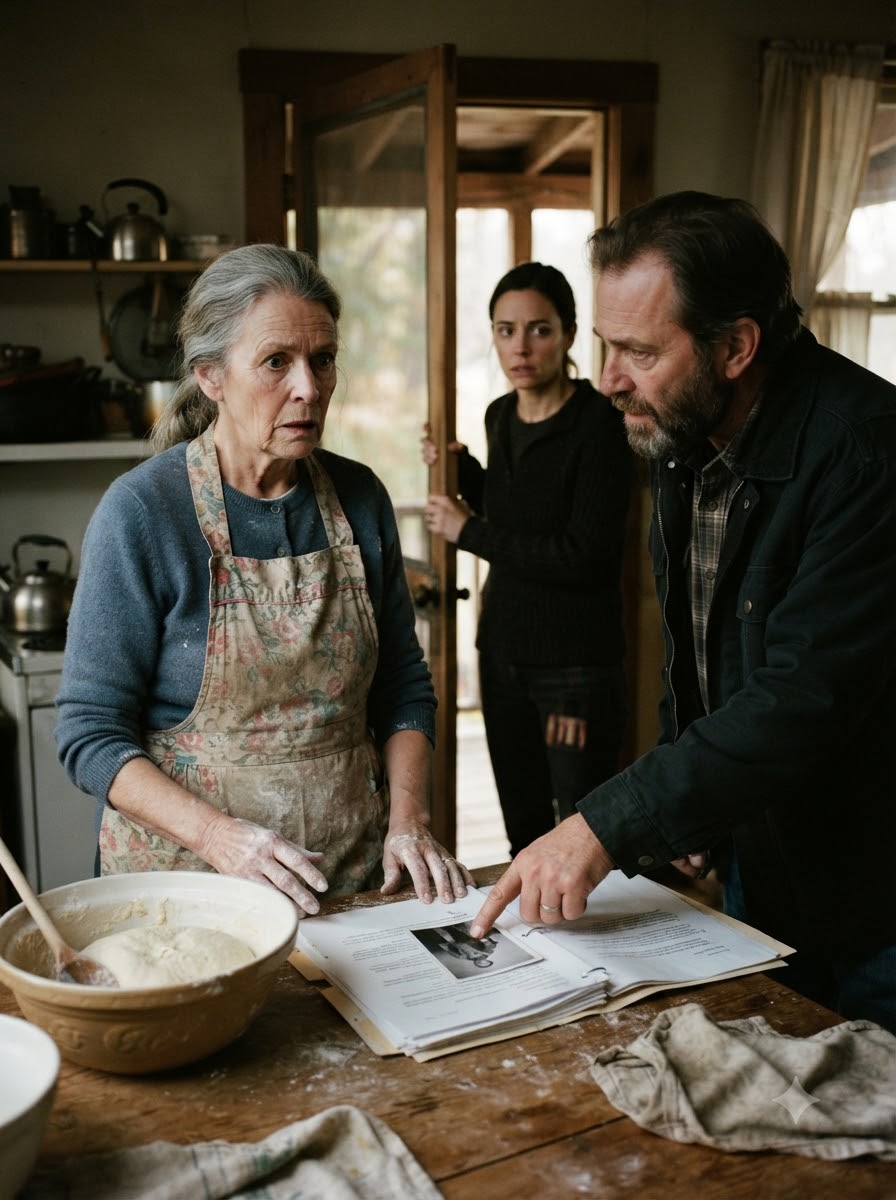
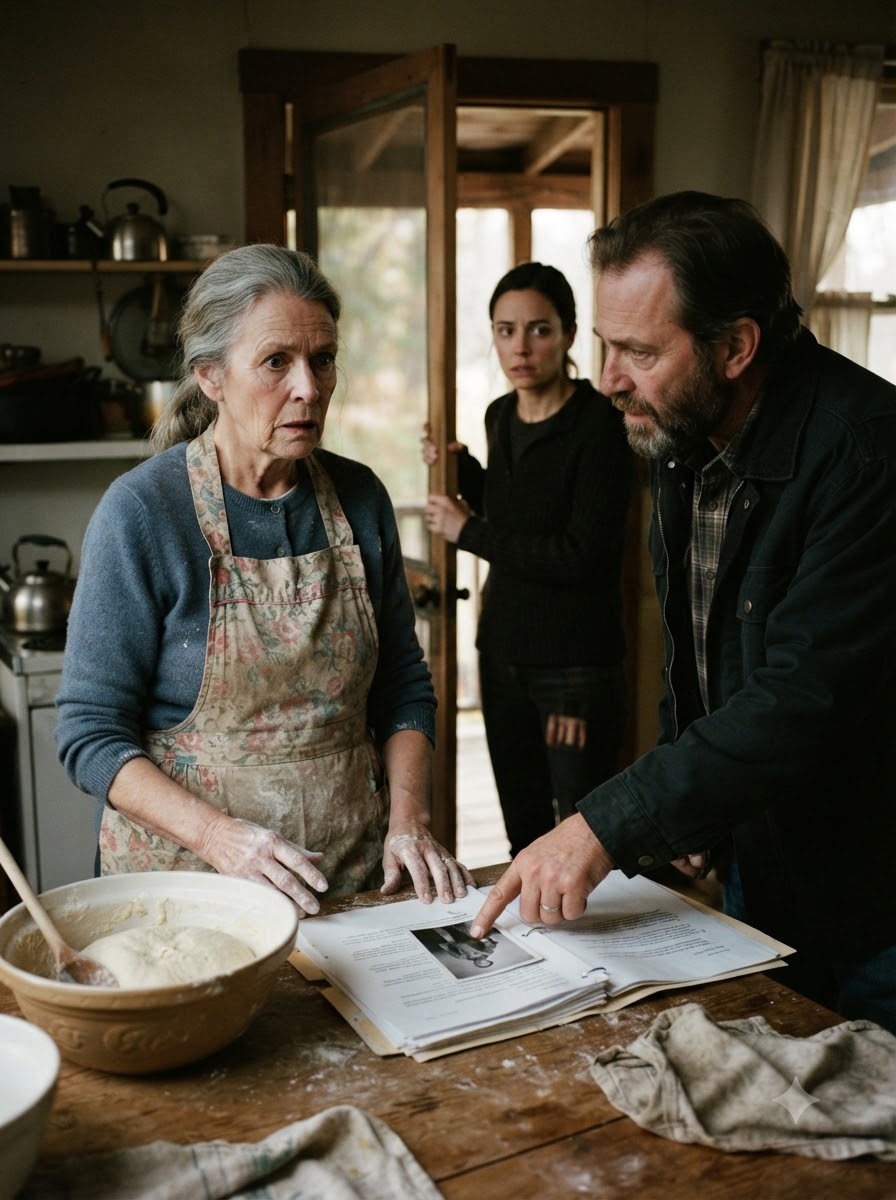
My younger brother Richard came in wearing his reading glasses. He had spent thirty years as a state prosecutor and most of the previous hour at my porch table, reading the power-of-attorney papers Tyler had dropped off two days earlier.
He held up a page he had printed from the Secretary of State’s website.
“Tyler,” he said, “before your grandmother signs anything, why don’t you call your mother inside and explain how Notary Seal Number 44912 was stamped six months after that notary died?”
Tyler stopped tapping his pen.
The realtor slowly lowered her tape measure.
For the first time that morning, nobody tried to tell me I was confused.
Two days earlier, Tyler had arrived with a bakery box and a folder. I had been glad to see him. When I opened the door, he hugged me quickly, then went straight to my kitchen table.
“Mom asked me to bring copies,” he said. “Just routine planning stuff.”
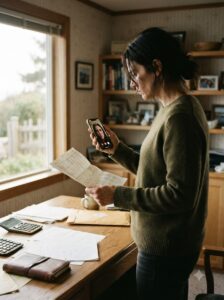
The folder held a durable power of attorney naming Brenda as my agent, a medical authorization, and a photocopy of my driver’s license. My signature appeared on the first page. I knew the shape of it, but not the moment it had been made. The pen strokes looked stiff, as though someone had traced them.
I asked Tyler where the papers had come from.
“Mom’s lawyer,” he said.
I asked for the lawyer’s name. He couldn’t remember it.
After he left, I called Richard. He came over that evening with his reading glasses and a yellow legal pad. He didn’t make the mistake of reassuring me before he had looked.
“Did you sign this?” he asked.
“No.”
“Then we start there.”
We examined each page under the dining room lamp. The document was dated the previous October, on a Tuesday when I had spent the afternoon at the county hospital with Richard for his cataract consultation. He still had the parking receipt. I had the appointment reminder and the photograph I took of him squinting at the cafeteria menu afterward.
The notary’s name was Miriam Sloane. Richard checked the public notary registry, then found an obituary. Miriam had died the previous April.
He called a former colleague to ask how best to report a suspected forged notarization. Then he told me not to warn Brenda yet.
“I’m not keeping you in the dark,” he said. “I want to know what they’ve already done before they know we’re looking.”
It was hard advice to follow. My daughter’s handwriting used to cover the refrigerator. Her childhood drawings were still in a box upstairs. I wanted her to call and say Tyler had misunderstood everything.
Instead, she sent the realtor.
After Richard asked about the seal, Tyler reached for the folder in his hand. Richard laid his palm on it first.
“Leave it on the counter,” he said.
“You can’t keep my papers.”
“They’re copies you brought into Margaret’s house.”
The realtor folded her tape measure. “Mr. Bell, I was told there was a valid power of attorney.”
“There isn’t,” I said.
She looked from me to Tyler. “Then I’m leaving. I’ll document why.”
Tyler called Brenda. I heard him say, “You need to come in.”
A minute later the front door opened hard enough to strike the wall. Brenda crossed the hallway in cream-colored trousers and a dark blazer. She had my mother’s eyes and none of her patience.
“What is going on?” she demanded.
Richard placed the verification page beside the forged document. “That’s what we’re asking.”
Brenda glanced at the pages. “I didn’t prepare those. Tyler picked them up.”
Tyler stared at her. “You gave them to me.”
“I gave you a folder. I didn’t notarize anything.”
It was the fastest I had heard them speak to each other in months, and the first time they had sounded afraid.
Brenda turned to me. “Mom, you agreed to this last fall. Maybe you don’t remember.”
“I was with Richard at the hospital on the date printed there.”
“You could have signed later.”
“Then why does the notary say I signed in front of her that day?” I asked.
Brenda looked at Richard. “You’ve been filling her head with this.”
Richard took off his glasses. “Miriam Sloane died in April. The state record and her family’s obituary agree. If you have an explanation, give it to the investigators.”
The realtor spoke before Brenda could answer. “I need to know whether I should call my managing broker.”
“Yes,” Richard said. “And please keep your photographs, messages, and the file you were sent.”
Brenda’s face tightened. “Nobody is calling investigators over a paperwork mistake.”
I glanced at the photographs still open on Tyler’s phone. “You came to sell my house.”
“We came to help you,” she said. “You left a burner on in February.”
“In February I was home recovering from pneumonia. You didn’t visit.”
“Mrs. Bell,” the realtor said gently, “I’m going to step outside and make my call.”
Tyler followed her with his eyes. He knew a witness was leaving with her own record of the morning.
When the door closed, Brenda picked up the listing agreement. “Fine. We’ll wait. But Meadowbrook has the deposit, and if you refuse the room, that money is gone.”
“Whose money?” I asked.
She set the agreement down.
Richard said, “That’s our next question.”
My husband, Walter, had collected clocks for forty years. After he died, I kept them because the sounds of the house changed without him. Tyler had photographed six of them before I came out of the kitchen that morning. Brenda said it was for insurance.

More From This Author