STORY
Alicia Wanted My Bedroom for Her Parents—My Lawyer Found Another Plan
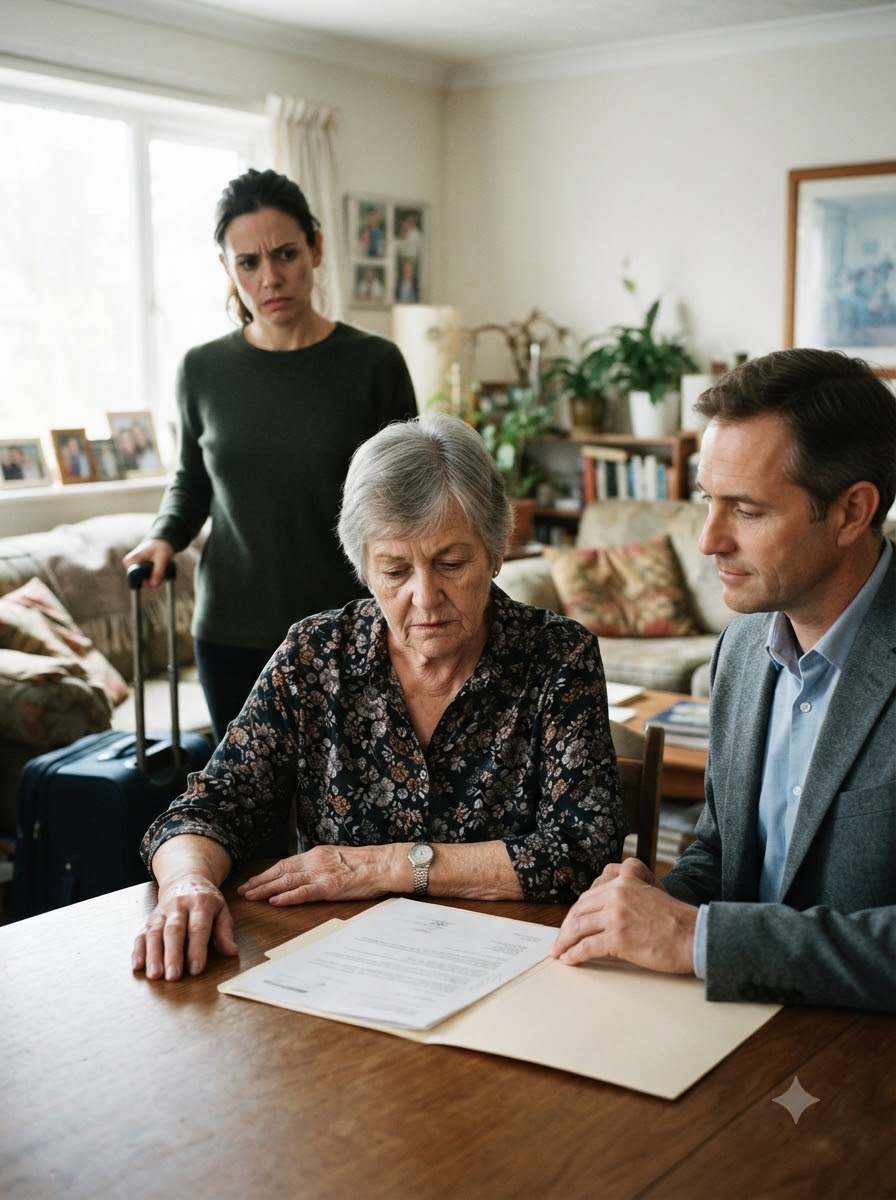
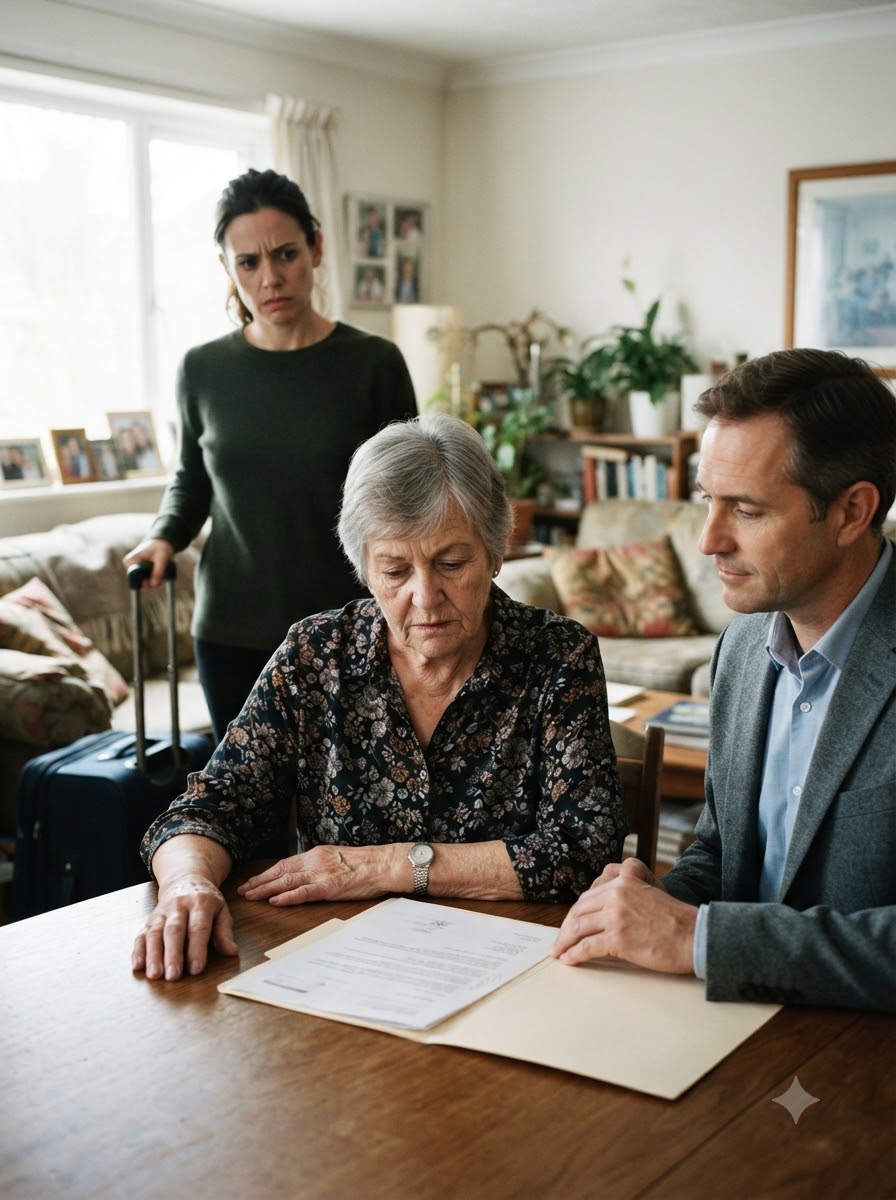
Alicia told me her parents were moving into my bedroom while I was standing over a pot of roast beef.
She did not ask whether they could stay. She did not ask where they would sleep. She did not even pretend the decision belonged to me.
“My parents will be here Sunday,” she said.
I turned down the stove. “For a visit?”
“For good.”
The kitchen seemed to shrink around us.
Alicia leaned against the counter, arms folded, wearing the expression she had begun using whenever she wanted me to understand that my opinion no longer mattered.
“They can’t afford their rent anymore,” she continued. “Fernando and I talked about it. They need a place to live.”
I looked toward the staircase. “There are two guest rooms upstairs.”
“They’re small.”
“They’re bedrooms.”
“My parents are older. They need the master bedroom.”
I stared at her.
“My bedroom?”
Alicia gave an impatient sigh. “Don’t make this difficult, Mrs. Bennett. You can move into the maid’s room.”
The room off the laundry area was barely large enough for a twin bed and a dresser. It had no proper window, only a narrow pane near the ceiling. The washing machine vibrated through the wall whenever it ran.
I had not called it the maid’s room in decades. Arthur and I had used it for storage before our son, Fernando, was born.
Now Alicia was offering it to me as though she were assigning a kennel to an aging dog.
“That bedroom belongs to me,” I said quietly.
“No, it belongs to the household.”
“I own this house.”
Her mouth tightened.
The house had been in my name and Arthur’s since 1981. We had bought it before Sacramento became expensive, when the neighborhood was mostly modest ranch homes and orange trees. We paid for it over forty years. We repaired the roof ourselves. We saved for the windows. We went without vacations, new cars, and many things other couples considered necessities.
Arthur died in that bedroom five years earlier.
His reading glasses were still in the top drawer. His rosary hung beside the lamp. One of his sweaters remained folded over the bench at the foot of the bed because I could still imagine his shoulders inside it.
That room was not merely large.
It was the last place in the world that still felt like ours.
“Alicia,” I said, “your parents can stay for a few days while they make arrangements. But they are not moving into my room.”
She laughed.
It was not a nervous laugh. It was the small, cruel sound of someone who had already decided you could be defeated.
“You’re almost seventy,” she said. “Why do you need a balcony, a private bathroom, and a walk-in closet?”
“I need my home.”
“You need to stop being selfish.”
At that moment, Fernando walked in through the back door.
He had heard enough to know what we were discussing. He set his briefcase down and looked from Alicia to me.
“Mom,” he said, “please don’t start.”
I felt something crack inside me.
“Your wife just told me to surrender my bedroom.”
“She didn’t mean it like that.”
“She said I should sleep beside the laundry.”
Alicia moved closer to him. “I told her your father-in-law and mother-in-law need a comfortable room. They’re older than she is.”
“I’m right here,” I said.
Fernando rubbed his forehead. “We’ll figure it out.”
“No,” I said. “You will not figure out my bedroom.”
He looked embarrassed rather than angry. That somehow hurt more.
“Mom, Alicia’s parents have nowhere to go.”
“They can stay in the guest room.”
“They need privacy.”
“So do I.”
Alicia took his arm. “This is exactly what I’ve been talking about. She makes everything about herself.”
Fernando looked at me with the same tired expression he had used for years whenever Alicia was unkind.
“Please, Mom. Don’t make us choose.”
I looked at my son, the boy Arthur and I had raised, and realized the choice had already been made.
He simply did not want to admit it.
After they went upstairs, I stood beside the stove until the roast burned.
The smell filled the kitchen, thick and bitter. I turned off the oven and sat at the table without eating.
I thought about the first year Fernando and Alicia moved in.
Fernando had said it would be temporary. They were saving for a down payment, he told me. They needed six months.
I had opened the door because the house felt unbearably empty after Arthur’s death. Having my son nearby seemed like a gift.
At first, Alicia behaved as though she understood that.
She brought pastries on Sundays. She asked about Arthur. She hugged me whenever Fernando was watching and told visitors how generous I was.
Then the changes began.
She replaced my blue curtains with gray ones without asking. She moved Arthur’s photographs from the hallway to a box in the garage. She told me the living room looked “like a memorial chapel” and threw away several of his old magazines.
One afternoon, I found his handwritten recipe cards in the trash.
They were stained and curling at the corners, but they were his handwriting. He had written our Thursday pot roast recipe on the back of an old insurance envelope. His Thanksgiving stuffing was on a grocery receipt.
I knelt beside the trash can and gathered them carefully.
Alicia stood in the doorway.
“They’re old papers,” she said.
“They belonged to Arthur.”
“Arthur is dead.”
The words landed with such force that I could not speak.
She walked away, leaving me on the floor with his recipes pressed against my chest.
After that, she began controlling the house more openly.
My friend Olivia stopped visiting because Alicia said our laughter disturbed her. The living room television became Alicia’s television. The main bathroom became “hers” because she needed more storage. She complained when I cooked food with garlic and told me my perfume smelled old-fashioned.
Whenever I objected, Fernando gave me the same answer.
“Alicia is just trying to feel at home.”
But it was not her home.
It was mine.
The next morning, I woke before sunrise and went downstairs for coffee. Alicia had left her phone on the kitchen island while she showered.
I did not intend to look at it.
Then the screen lit up.
A message appeared from her mother.
Did you tell the old woman about the room?
Another message followed before the screen went dark.
If she refuses, remind her Fernando will leave with you. That fool will do anything not to end up alone.
My hand tightened around the coffee mug.
The phone lit again.
And make sure she signs whatever papers you bring. Once we have the house, she can be placed somewhere suitable. A nursing home is cheaper than keeping her here.
I read the words twice.
Then I took out my own phone and photographed every message.
My heart pounded so hard I could hear it.
For years, I had wondered whether I was imagining the cruelty. I had blamed grief, age, and my own sensitivity. I had convinced myself that Alicia was stressed and Fernando was caught in the middle.

More From This Author