STORY
My Daughter Called Me Dependent—Then the Bank Played Her Secret Recording
The first thing Rachel did was point toward the garage.
Not the guest room. Not the small office where I had been sleeping on a narrow daybed for nearly two years. Not even the basement, which was dry and heated and already stacked with Christmas decorations.
The garage.
“You can put your things out there tonight,” she said.
She stood beneath the kitchen pendant lights wearing a cream sweater and gold earrings, the same outfit she had worn to a neighborhood charity dinner. Her hair was smooth. Her lipstick was fresh. She looked like a woman in control of her life.
Behind her, the twins were asleep in their booster seats at the kitchen island. Lily’s cheek rested on one arm. Noah had a smear of tomato sauce across his chin.
Mark was at the sink, rinsing wineglasses.
I had been standing near the refrigerator with a basket of folded towels against my hip.
“I’m sorry?” I said.
Rachel exhaled as if I were deliberately making the evening harder.
“We need the space, Mom. The new au pair arrives Monday, and she’ll need the guest room. You can sleep in the garage until we figure out something permanent.”
The garage door stood open behind her. Cold air slipped into the kitchen. I could see the metal shelving, the lawn mower, two bicycles, and the old recliner Mark had promised to donate three summers earlier.
“Sleep in the garage,” I repeated.
“It’s insulated,” Mark said without turning around.
Rachel shot him a warning glance.
“I’m not asking you to leave,” she said. “I’m asking you to be flexible. You’ve been living here rent-free for almost two years.”
The words landed harder than the cold air.
Rent-free.
I looked at the twin children I had fed, bathed, rocked, and carried through fevers. I looked at the kitchen where I had cooked five nights a week. I looked at the hand-painted wooden sign above the mudroom that said blessed.
Then I looked at my daughter.
“I’ve contributed,” I said.
Rachel’s mouth tightened. “You get Social Security.”
“That isn’t what I said.”
“No, but it’s what you mean. You’ve had your own money the entire time. You could have helped more.”
Mark stopped rinsing the glass.
I placed the towels on the island.
“More?”
Rachel folded her arms. “This is exactly what I’m talking about. You keep score.”
“No,” I said quietly. “I keep records.”
For the first time, something flickered across her face.
It was gone quickly, replaced by a tired smile.
“Mom, please don’t turn this into a scene.”
“I’m not the one sending my mother to sleep beside a lawn mower.”
“You’re being dramatic.”
“I am sixty-nine years old.”
“And I’m forty-two with two children, a full-time job, and a husband who travels half the month. We are all under pressure.”
“You told the women at church you took me in because I could no longer manage alone.”
Rachel’s eyes hardened.
“That was not meant to hurt you.”
“You told the preschool mothers I was dependent.”
“You were dependent on us for housing.”
“I moved here because you said you needed me.”
She glanced at Mark.
He looked at the floor.
That was when I understood the truth. Rachel had not brought me into the house because she needed help. She had brought me in because help was expensive, and I was cheaper than daycare, a housekeeper, a cook, and a financial cushion.
The garage suddenly seemed less like an insult and more like a warning.
They thought I had nowhere else to go.
Rachel pushed a folded blanket toward me.
“At least take this,” she said.
I stared at it.
“Where are my things?”
“In the guest room.”
“Not anymore.”
She had already packed them. My clothes were in two plastic storage bins. My medicine was in a grocery bag. My framed photograph of Thomas had been wrapped in a bath towel.
She had even removed the little blue ceramic bird I kept on the nightstand.
I picked up my purse.
“Where are you going?” Rachel asked.
“Home.”
Her face changed.
“You don’t have a home.”
I looked directly at her.
“I do.”
My apartment had been gone for eighteen months, but the lease had never been the only thing that made it mine.
The next morning, before sunrise, I left with one suitcase, Thomas’s photograph, and a folder full of receipts.
I did not slam the door.
I did not wake the twins.
I kissed their foreheads while they slept and whispered that Grandma loved them. Then I walked through the mudroom, past the family photographs where I was barely visible, and stepped into the dark.
My first stop was the bank.
I had been too ashamed to examine my accounts closely while living with Rachel. Whenever a statement arrived, I opened it quickly, checked the balance, and placed it in a drawer. I knew my Social Security deposit came in on the second Wednesday of every month. I knew Rachel had asked me, shortly after I moved in, to put certain household bills on autopay.
“It’s easier if everything comes from one account,” she had said.
At the time, I had agreed.
The first two months, the charges seemed ordinary. Half the groceries. The twins’ daycare deposit. Rachel’s car insurance.
Then came the emergency card.
Rachel had said it was only for household emergencies because Mark’s credit score had been damaged by an old business loan.
“Just put me on as an authorized user,” she said. “I won’t touch it unless something happens.”
Something had happened, apparently, every month.
The charges included restaurants, salon appointments, new clothes, online shopping, and a weekend hotel in Nashville. Rachel had not used it for emergencies. She had used it to maintain the appearance of a woman whose finances were under control.
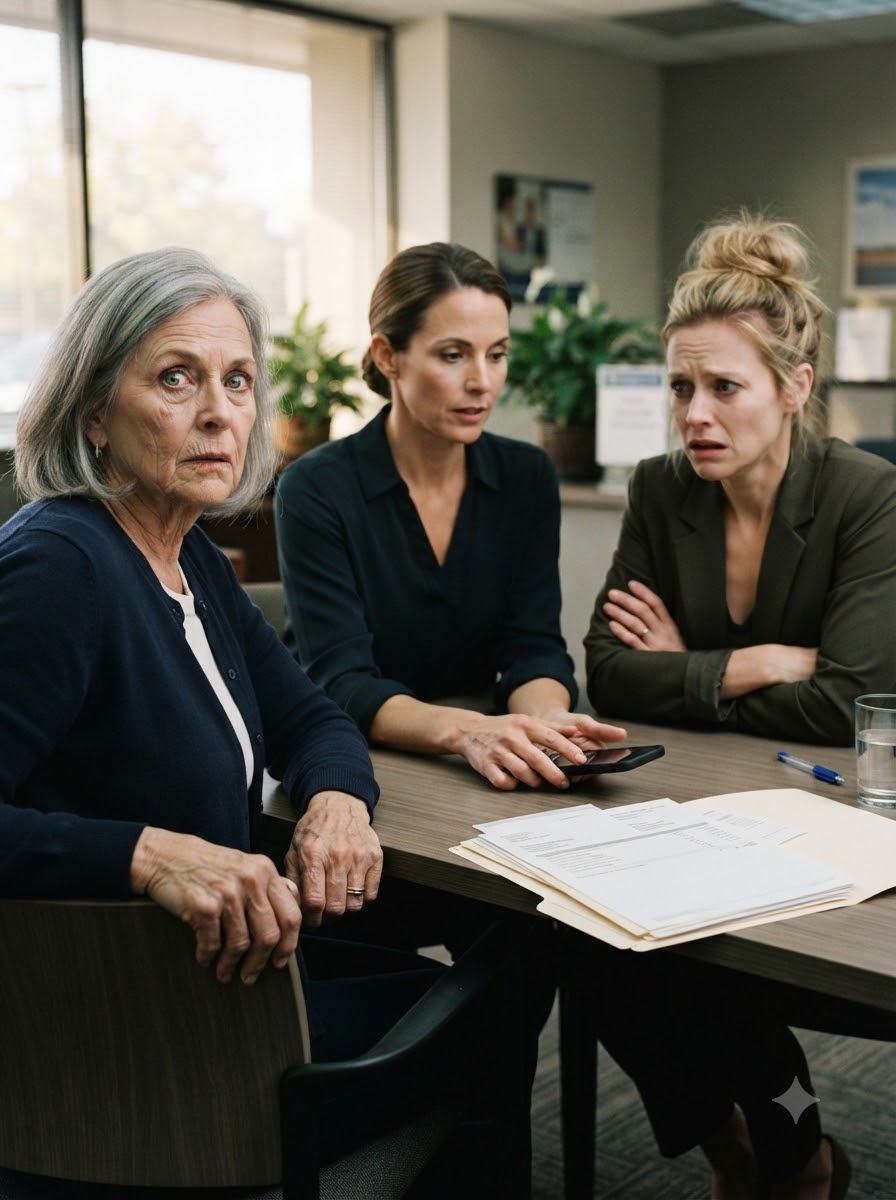
I sat in the bank office while a young woman named Denise printed six months of transactions.
Then twelve.
Then eighteen.
By the time she finished, my hands were shaking.
“Your Social Security deposits are going into your account,” Denise said. “But there are several recurring transfers to another account.”
“Whose account?”
She looked at the screen.
“Rachel Ellis.”
My daughter had not merely been using my money to pay bills. She had arranged for four hundred dollars from every monthly deposit to transfer directly into her personal checking account.
“That started when?” I asked.
“Three days after your first deposit following the move.”
I closed my eyes.
The amount was not enormous. That was how Rachel had made it invisible. Four hundred dollars at a time. A little taken from a woman who was supposedly too dependent to live alone.
Denise printed everything.
I called the bank’s fraud department. Because I had originally authorized Rachel to access the household account, the representative explained that the transfers might not qualify as unauthorized theft. But I could revoke all permissions, stop every payment, and open a new account immediately.
“Do you have evidence that she misrepresented the purpose?” the representative asked.
“I have eighteen months of bank statements.”
“That helps.”
I took the papers home to Carol’s apartment.
My sister opened the door wearing slippers and a red robe. She looked at my suitcase, then at my face.

More From This Author