STORY
My Daughter-in-Law Called Me Her Maid—Then the Bank Played Her Voice
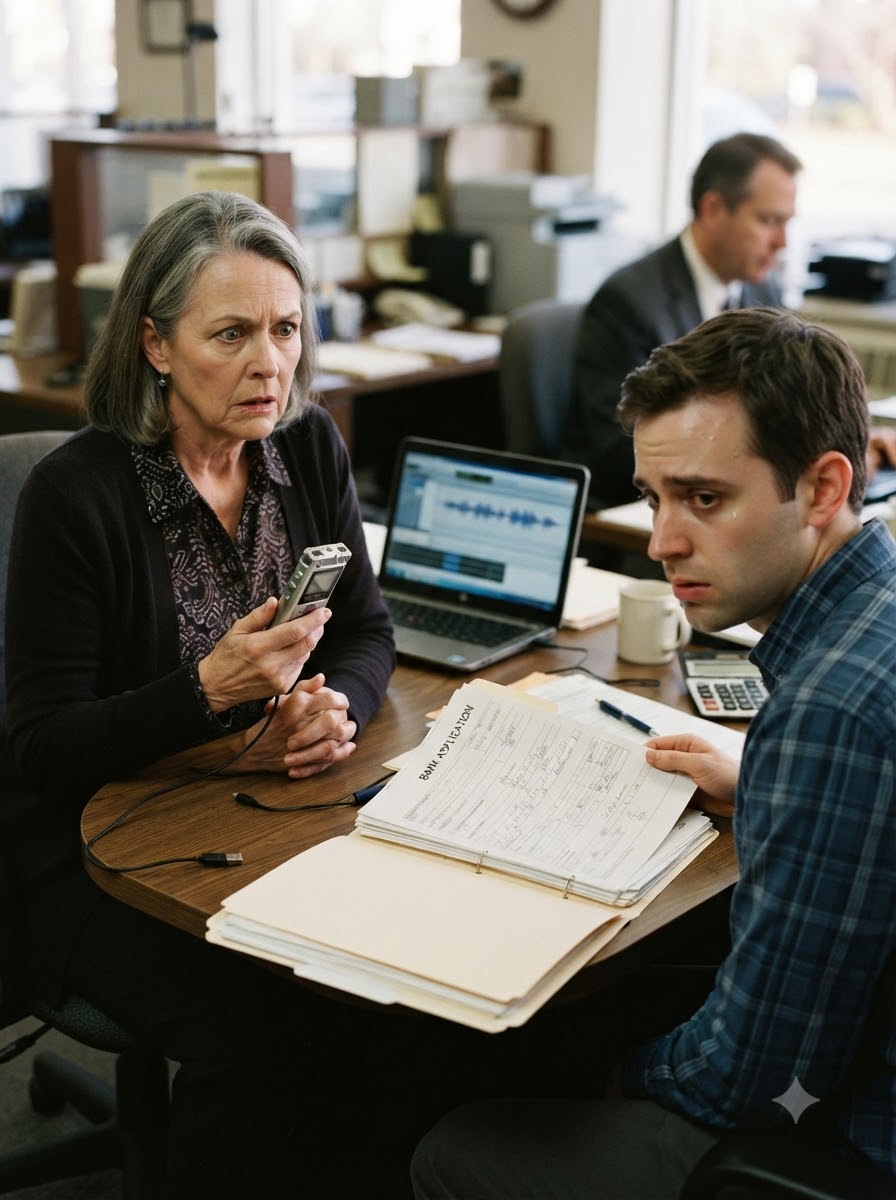
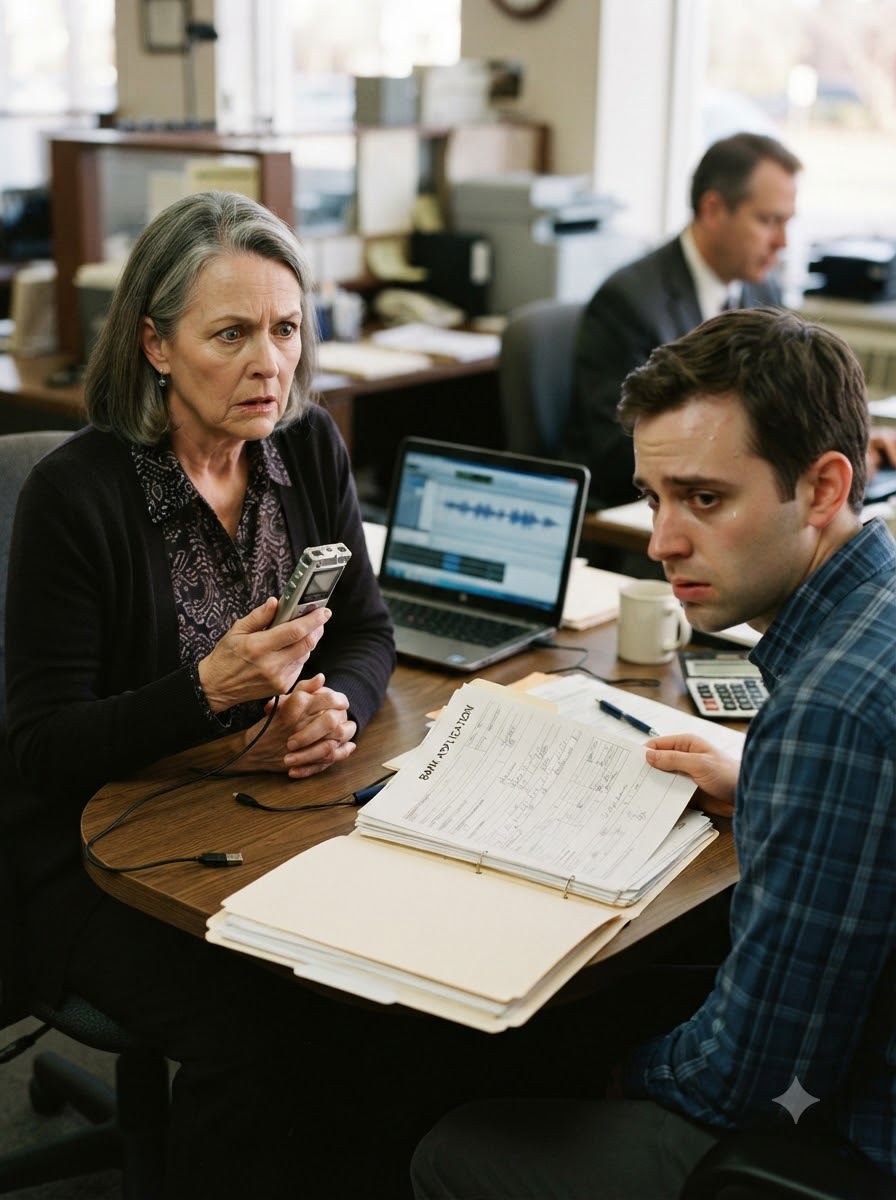
The pot roast was cooling on the counter when my daughter-in-law aimed her phone at me.
I was setting the Sunday table in my own dining room, smoothing the white napkins and placing the good plates I had inherited from my mother.
Tara stood in the doorway, smiling at her screen.
“Our live-in maid,” she said. “At least she’s good for something.”
I thought I had misheard her.
Then her phone chimed.
She had already posted the video.
My son was in the living room, close enough to hear. I opened the app and found the clip. There I was in my faded blue apron, bending over the table while Tara’s caption ran across the bottom.
OUR LIVE-IN MAID. AT LEAST SHE’S GOOD FOR SOMETHING.
Derek had left the first comment.
A laughing emoji.
That small yellow face hurt more than Tara’s words.
A stranger can insult you and remain a stranger. But when your only child sees you humiliated and decides to join in, the ground shifts beneath your feet.
I looked toward the living room.
Derek was staring at the television, pretending not to notice me.
“Dinner’s ready,” Tara called cheerfully.
Something inside me went still.
I did not argue. I did not ask her to remove the video. I did not give Derek an opportunity to tell me I was being sensitive.
I took off my apron, collected my purse and coat, and walked out.
“Where are you going?” Derek asked as I reached the door.
I closed it without answering.
A year earlier, Derek and Tara had moved into my house to save for a place of their own. They said they needed six months. Perhaps nine.
They took the two upstairs bedrooms and the hall bathroom. Their furniture filled my garage, forcing me to leave my car outside. Tara rearranged my living room because my things looked “dated.” Derek installed a television on the wall without asking.
I cooked because I enjoyed cooking.
Then I cooked because they expected dinner.
I washed a load of their clothes once as a favor. Soon their laundry basket appeared in the basement every Tuesday morning.
I gave Tara an extra debit card linked to my household account so she could buy milk, bread, paper towels, or ingredients for meals.
Little accommodations became routines. Routines became obligations.
Still, I told myself family made sacrifices.
That night, I checked into a bed-and-breakfast on the edge of town. My room had pale curtains, a brass lamp, and a small balcony overlooking bare maple trees.
I expected to cry.
Instead, I opened my banking app.
I intended only to block Tara’s debit card. But before I did, I looked at the transaction history.
The grocery purchases had grown steadily over the past several months. There were charges at department stores, a cosmetics boutique, restaurants I had never visited, and a home décor shop where Tara once bought a six-hundred-dollar rug she claimed she had found on clearance.
There were also repeated cash withdrawals.
Two hundred dollars.
Three hundred.
Five hundred.
Always below the daily limit.
My stomach tightened.
I downloaded six months of statements. The total was more than $11,000.
I blocked the card, changed every banking password I had, and requested alerts for any new transaction.
Then I noticed a monthly payment labeled Northstar Financial.
It was not a company I recognized.
The payment was only $147, small enough to disappear among utilities and insurance bills. It had been withdrawn on the same date for four months.
I called the bank’s fraud number.
The representative told me Northstar appeared to be servicing a personal loan.
“I don’t have a personal loan,” I said.
She transferred me to a fraud specialist named Calvin.
Calvin asked a series of questions, then grew quiet.
“Mrs. Bennett, the payment is attached to a loan account opened in your name last August.”
“For how much?”
“Twelve thousand five hundred dollars.”
The room seemed to tilt.
“Where was the money deposited?”
“I can’t see that from this side. You’ll need to contact the lender. I strongly suggest checking your credit reports tonight.”
I sat at the small desk until nearly two in the morning.
There were two accounts I had never opened.
The Northstar loan was one.
The other was a recently approved home-improvement line of credit for $48,000. No funds had been drawn yet, but my house was listed as security.
My house.
The home my husband, Alan, and I had spent twenty-seven years paying off. The home that became mine when cancer took him six years earlier.
I called the number on the credit report.
The line-of-credit application listed my address, birth date, Social Security number, and annual pension income. It also listed an email address that was not mine.
The lender agreed to freeze the account.
“Was the application signed in person?” I asked.
“No,” the woman said. “It was completed electronically.”
“Can you send me a copy?”
“I can send it to the email address we have on file.”
“That address belongs to whoever stole my identity.”
There was a pause.
“Then you’ll need to make a formal identity-theft report.”
By dawn, I understood that the video had not been the betrayal.
It had merely opened my eyes.
At eight fourteen, Tara texted.
Why is my card being declined? I’m standing here with a full cart.
A minute later:
Did you forget to transfer money?
Then:
CALL ME NOW.
I drank my coffee while the phone rang.
Before driving home, I stopped at my bank. Calvin had arranged for me to meet the branch manager, who printed records and replaced my cards.
Security footage showed Tara making several of the cash withdrawals.
That was the first piece of physical proof.
The second was waiting in my mailbox.
Among the envelopes was a letter from Northstar Financial marked PAYMENT NOTICE. It had already been opened and resealed with clear tape.
Someone in my house had been intercepting my mail.
I put it in my purse.
When I entered the house, Tara charged down the hallway.
“What was that this morning?” she demanded. “I looked like an idiot at checkout.”
I hung my coat on its hook.
“I canceled the card.”
Derek emerged from the living room. He looked exhausted, though it was not yet noon.
“Mom, you can’t just do that,” he said. “How are we supposed to buy groceries?”
“With your own money.”
Tara folded her arms. “This is about the video, isn’t it?”
“This is about my money.”
“It was a joke.”
“I didn’t find it funny.”
“Everyone knew I was joking. You always take things personally.”
She had insulted me publicly, stolen from me privately, and somehow my sensitivity was the problem.
I held out my hand.
“Give me the card.”
She dug through her purse and slapped it onto the entry table.
“There. Happy?”
“No,” I said. “But I am finished paying for people who mock me.”
That afternoon, I made one bowl of soup.
Derek lingered in the kitchen while I ate, waiting for me to offer him some. I did not.
I left their laundry where it sat. I washed only my dishes and moved their mugs, shoes, magazines, and unopened packages into a basket outside their bedroom.

More From This Author