STORY
My Son Silenced Me at Dinner—Then My Lawyer Found What Serena Had Forged
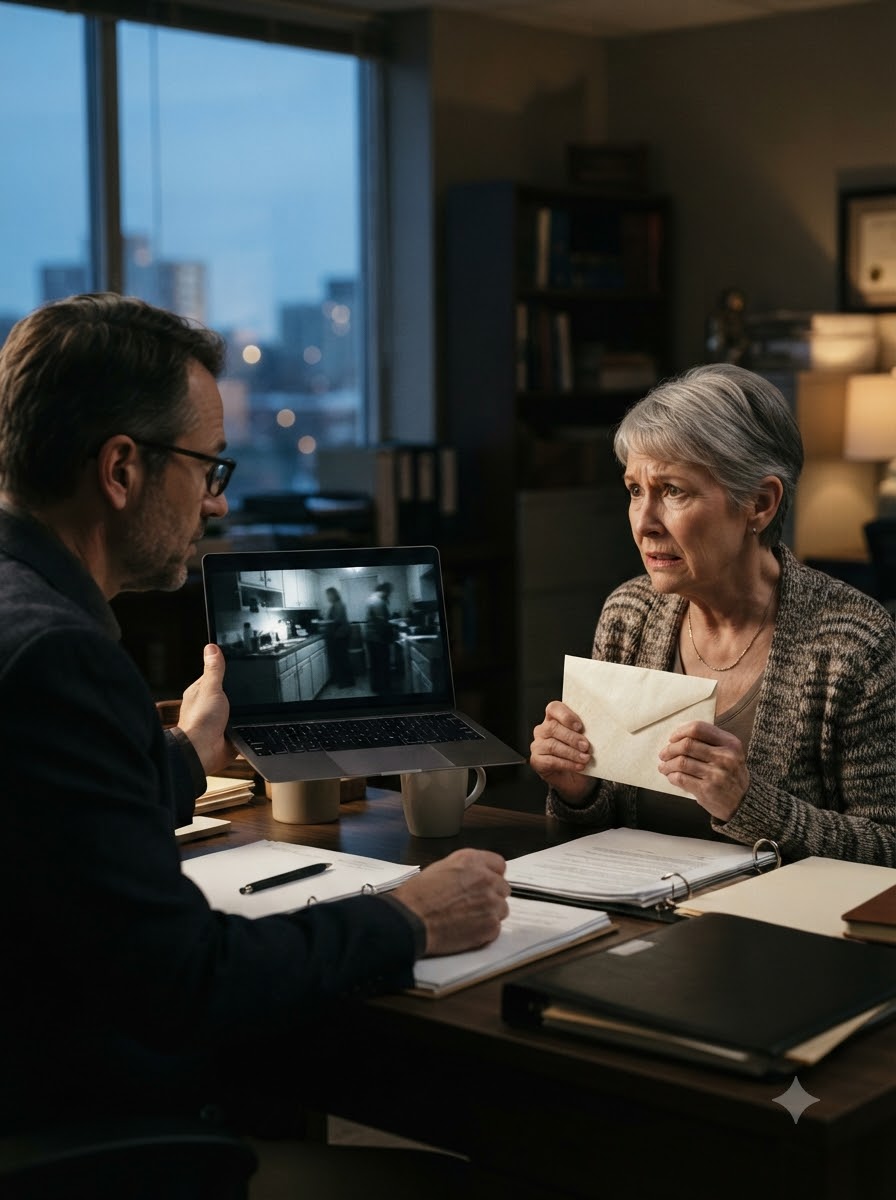
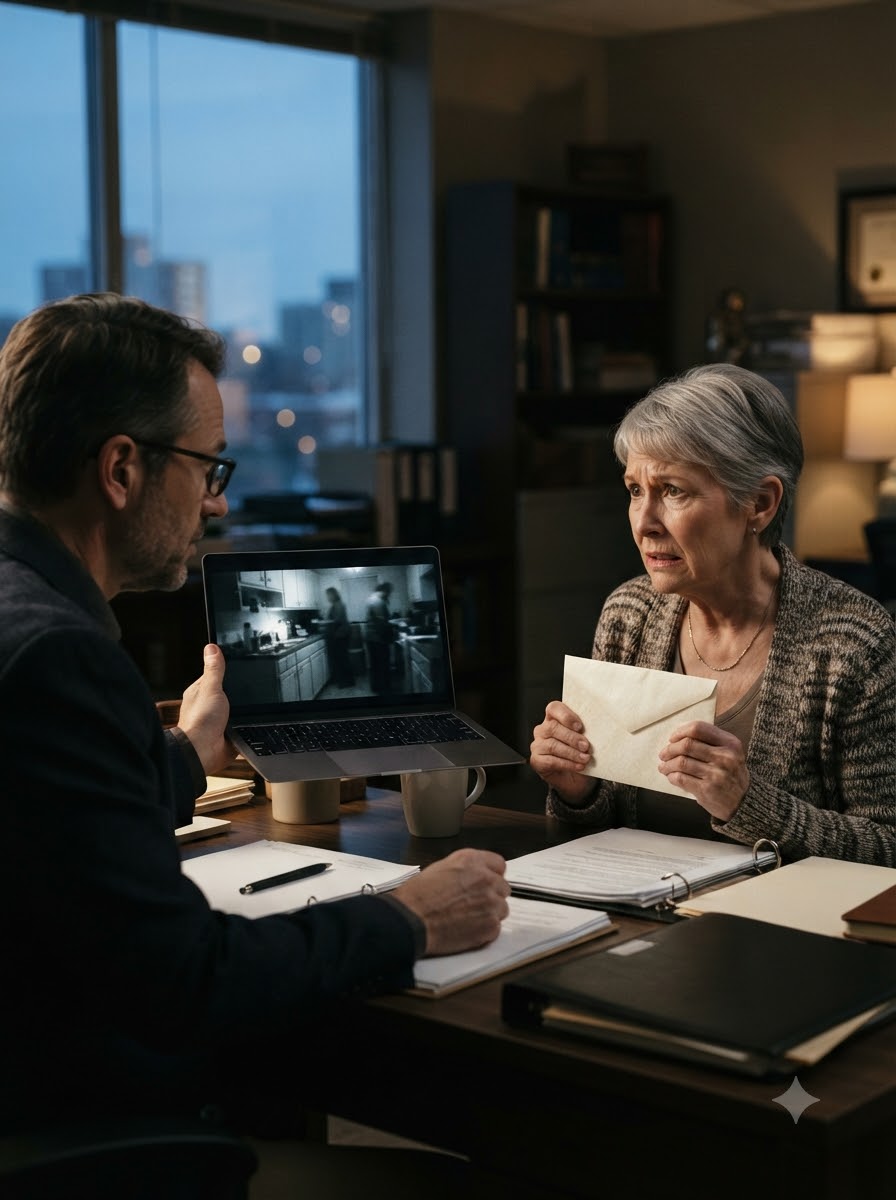
Serena waited until the plates had been cleared before she told me I was no longer welcome in my house.
She stood beneath the dining-room chandelier with one hand on the back of David’s chair. My son sat beside her, staring at a spot on the tablecloth.
“We need a home that belongs to our little family,” she said. “From now on, we need you to call before you come over. And it would be best if you made other living arrangements.”
I looked at David. He did not lift his eyes.
For forty-three years, that house had been my living arrangement. My husband, Paul, and I had bought the lot when it was mostly weeds and a sagging fence. We spent weekends scraping paint, laying tile, and arguing cheerfully over where the kitchen window should go. Paul died six years ago. I still lived in the small apartment above the garage, but the house had remained in my name. When David, Serena, and little Sophie needed room after David lost his job, I had given them the run of the main house.
Serena’s mother, Elaine, had come to dinner too. She folded her napkin and offered me a sympathetic smile that did not reach her eyes.
“You might enjoy a quieter place, Margaret,” she said.
I had one prepared sentence, and I had to grip my napkin to keep my voice steady enough to say it.
“I’ve already made arrangements.”
I reached into my bag, took out an ivory envelope, and laid it between the candle and the bowl of hydrangeas Serena had cut from my garden.
Then I kissed Sophie on the top of her head, put on my coat, and left.
The cold air felt clean. Halfway down the street, my phone rang.
Serena.
“What was that?” she demanded. “You think you can embarrass us in front of everyone?”
“Read the papers,” I said.
“I’m looking at them. A sale contract? Is this some kind of threat?”
“No. It’s a sale contract.”
I heard her breath catch. Behind her, David said something I could not make out.
“In thirty days,” I told her, “the buyers take possession. Read the last page before you call me again.”
I ended the call and pulled over because my hands had begun to shake.
Three weeks earlier, I had carried a peach cobbler through the back door, wrapped in the same cream kitchen towel I had used since David was a boy. He had given me a key to the main house when they moved in.
“This is your home too, Mom,” he had said.
I was about to call out when I heard Serena in the living room.
“Your mom just lets herself in again.”
“I’ll talk to her,” David said.
“You always say that. She needs to understand she isn’t the priority here anymore.”
Elaine’s voice followed. “If she would just move out sooner, everything would be easier.”
I stood with the warm dish burning my fingers through the towel. Then David spoke.
“Give me until Sunday,” he said. “I’ll get her to agree.”
I backed out without making a sound. In my car, I sat long enough for the cobbler to cool.
I could have dismissed some of what I’d heard as frustration. Three adults had been sharing space on one property for nearly a year. We had all stepped on each other’s toes. But David had never mentioned asking me to leave, and the certainty in his voice frightened me more than Serena’s anger.
That night I took the deed from the fireproof box under my bed. I had checked it after Paul died, but I read it again at the kitchen table. The house and the garage apartment were mine alone. There was no mortgage. There was no agreement giving David and Serena ownership or a permanent right to stay.
The next morning, I found a letter in the mailbox addressed to me from a lender I did not know. It thanked me for my interest in a home-equity line of credit and asked for one final document before an application could be reviewed.
I had not applied for a loan.
I called the number on the letter. The woman who answered would tell me little until I proved who I was. Then she said an application had been started online, secured by my house. The amount was $180,000.
“Nothing has been approved or released,” she assured me.
I asked her to freeze the application and send me copies of every document submitted in my name. After I hung up, I called my lawyer.
Ruth Calder had handled Paul’s estate. She listened without interrupting, then told me not to confront anyone until we had the records.
“Bring the letter,” she said. “And Margaret, don’t sign anything they put in front of you.”
I went to her office that afternoon. By then the lender had emailed a packet. The application listed my address, my date of birth, and an estimate of the property’s value. Attached to it was a page called “owner consent.”
My name was typed at the bottom. Beneath it was a scrawl meant to be my signature.
It did not look like mine. Paul used to tease me that I signed my name the same way I stitched a hem: small, tight, and impossible to hurry. The mark on that page was big and slanted.
Ruth enlarged the scan. In the corner was a faint line that had survived the copy: a file name, beginning with “S_HOME.”
“Do you recognize it?” she asked.
I did. Serena’s laptop printer assigned that prefix to anything she scanned. I had helped her clear a paper jam a month earlier and seen it on the screen. It was a lead, not proof. Ruth said so plainly.
She requested the lender’s full records and advised me to check my credit. Then she asked a question I had been avoiding.
“Who has access to your personal papers?”
I thought of my desk in the garage apartment. I locked the outside door when I went out, but David had a spare key for emergencies. In the past year, Serena had fetched my passport from the desk when I needed it for a trip. She knew where I kept things.
I went home and found the drawer disturbed. My tax folder sat beneath my medical files instead of on top. The birth certificate inside it was turned backward. None of that would prove anything to a stranger, but I knew how I kept that drawer.
On the third day, Ruth obtained the lender’s submission log. The application had been sent from the internet connection at my address. The contact phone number belonged to Serena. The backup email was one David had used for years.
The sight of his email hurt more than the false signature.
Ruth would not let me jump to conclusions. “It tells us they were involved with the application,” she said. “It doesn’t tell us exactly what each of them knew.”
The lender sent one more attachment that evening: a draft explanation for how the loan proceeds would be used. It said the money would fund renovations before “transfer of occupancy to son and daughter-in-law.” Beneath that was a note saying the owner had agreed to move to “senior accommodation” once work began.

More From This Author