STORY
My Brother Sold My Federal Laptop—Then the Buyer Played His Voice Note
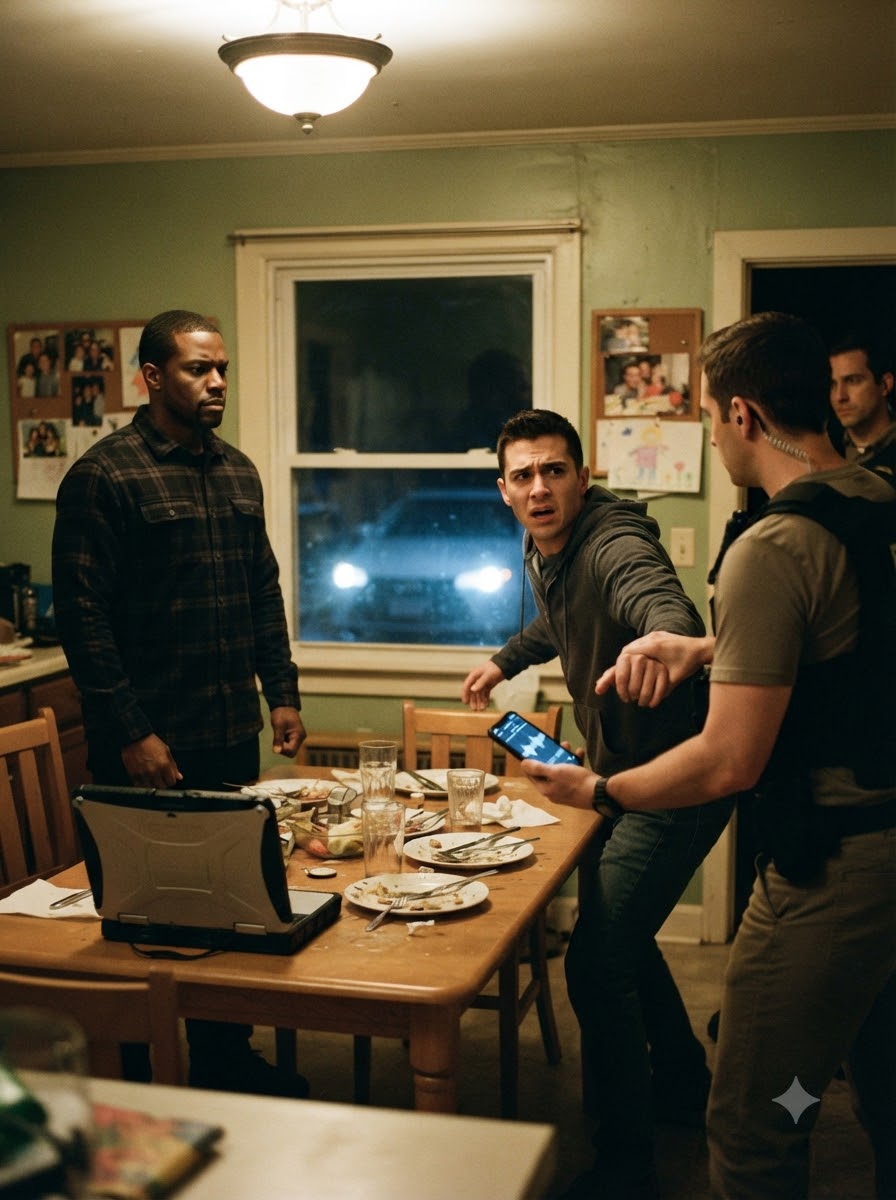
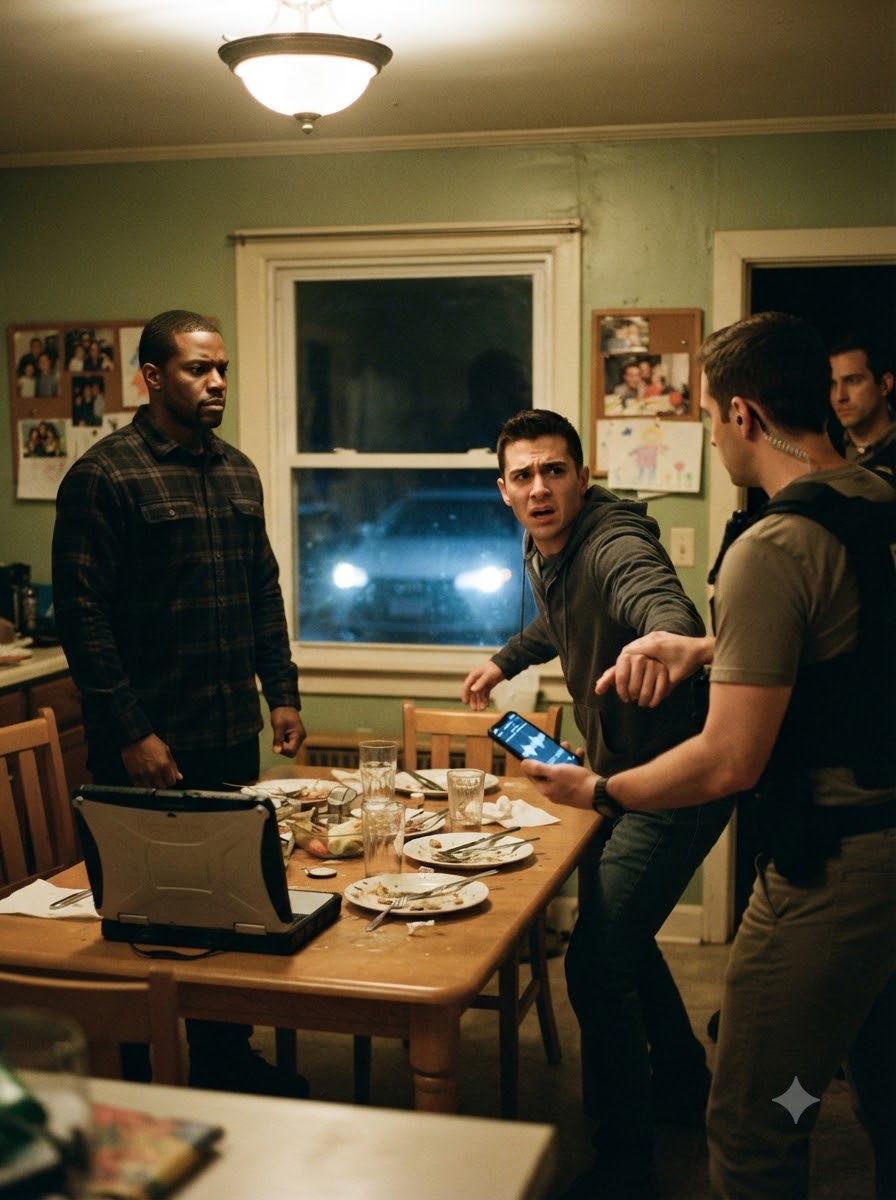
My brother sold my government-issued laptop for five hundred dollars in the middle of Sunday dinner and laughed when I objected.
“Relax, Marcus,” Derek said, lifting his glass. “I finally got rid of that worthless brick.”
My cousins laughed. Jake reached across the table and high-fived him.
My mother closed her eyes as if I were already embarrassing her.
“Please don’t make a scene,” she said.
My father kept cutting his roast.
Derek leaned back in his chair, pleased with himself. “Buyer picked it up this afternoon. Cash. Easiest five hundred I’ve ever made.”
He thought he had sold an old computer.
He had no idea the machine was federally tracked.
I placed my napkin beside my plate and stood.
“Where are you going?” Mom asked.
“To make a call.”
Derek grinned. “He’s going to report me to the computer police.”
More laughter followed me into the hallway.
I shut the dining-room door and called my supervisor.
“I need to report a compromised asset,” I said.
Daniel Cho’s voice changed instantly.
He had been relaxed when he answered. Now every word was clipped and precise.
“Which asset?”
I gave him the identification number from memory.
There was a long pause.
“Marcus, tell me that device is still in your possession.”
“It isn’t.”
“When did you last physically verify it?”
“Friday evening.”
“Who removed it?”
“My brother.”
Another pause.
“Does he know your credentials?”
“No.”
“Does he have contact information for the person who bought it?”
“I assume so.”
“Do not warn your brother. Do not contact the buyer. Stay where you are.”
“What’s happening?”
“We’re activating the response protocol. Send me your location.”
I did.
Then Daniel said, “Marcus, listen carefully. Is your brother still there?”
“Yes.”
“Do not let him leave.”
The call ended.
Three weeks earlier, Derek had let himself into my apartment using a spare key I had given him for emergencies.
I was working at my dining table that afternoon, covering an overnight incident for a federal cybersecurity team. The laptop sat beside two encrypted drives and a hardware authentication token.
The machine was ugly by design.
Matte-black casing. Reinforced corners. Locked ports. Tamper seals. A metal asset plate fixed to the underside. It weighed almost twice as much as an ordinary laptop and made a faint click when its security module engaged.
Derek had stared at it.
“That your personal laptop?” he asked.
“It’s assigned to me.”
He picked up one of the encrypted drives.
I took it from him immediately.
“Don’t touch anything on this table.”
He raised both hands. “Sensitive.”
“Yes.”
“How much does something like that cost?”
“I don’t know.”
He looked at the laptop again. “Looks old.”
“It does what it needs to do.”
I should have recognized the interest in his face.
Derek had spent the previous year pretending his online electronics business was thriving. He posted photographs of leased cars, expensive lunches and shipping pallets stacked in a warehouse he rented by the month.
Our mother called him an entrepreneur.
Our father asked him for investment advice.
At family gatherings, Derek told stories about revenue, expansion and “building something from nothing.”
The truth was less impressive.
His suppliers were demanding payment. Customers were filing disputes. His payment processor had frozen a large portion of his funds after complaints about counterfeit accessories.
He had asked me to build him a new website for free.
When I refused, he mocked me at my parents’ anniversary dinner.
“You’re on computers all day,” he had said. “How hard can it be?”
“My work has nothing to do with online retail.”
Derek looked around the table. “Everybody, Marcus is specialized.”
They laughed because he made it sound ridiculous.
That was how my family worked.
Derek’s confidence counted as proof of success. My silence counted as failure.
He owned a large house with two mortgages and drove cars he didn’t own outright, so my mother introduced him as “my successful son.”
I rented a one-bedroom apartment and couldn’t discuss most of my work.
I was Marcus, the quiet one who “did something with computers.”
When I returned to the dining room, Derek was pouring himself another drink.
“Well?” he asked. “Finished tattling?”
I sat down.
“You need to give me the buyer’s information.”
His smile widened.
“No.”
“Derek.”
“The money is already spent.”
“I didn’t ask for the money. I asked who has the laptop.”
My father finally looked up.
“Marcus, enough. It was wrong of him to take it, but it’s a computer. Sort it out tomorrow.”
“It belongs to the federal government.”
The room went still for half a second.
Then Derek snorted.
“Sure it does.”
“It has government property labels on it.”
“I saw a sticker.”
“You saw several warnings.”
“Anybody can buy stickers.”
Rachel, Derek’s wife, had barely touched her dinner. She stared down at her plate.
“Derek,” she whispered, “maybe you should tell him.”
His head snapped toward her.
“Stay out of it.”
Rachel flinched.
That caught my attention.
So did the purple shadow near her wrist, partly hidden by her sleeve.
Derek looked back at me.
“You know what your problem is? You think because you sit behind a computer all day, everybody has to follow your little rules.”
My phone vibrated against my thigh.
A secure notification filled the screen.
DEVICE BEACON ACTIVE.
LOCATION CONFIRMED.
The tightness in my chest eased.
Derek noticed.
“What?” he asked.
Headlights swept across my parents’ windows.
One vehicle stopped outside.
Then another.
Derek’s smile vanished when someone knocked three times at the front door.
My phone buzzed again.
Daniel had sent five words.
DO NOT LET HIM LEAVE.
My father pushed back his chair.
“Who on earth is that?”
Derek stood first.
“I should go.”
I moved into the doorway.
“No.”
He stared at me as if I had finally said something interesting.
“Get out of my way.”
There was another knock.
A voice called from outside.
“Federal agents. Mr. and Mrs. Hale, please open the door.”
My mother went white.
Derek lunged toward the kitchen.
Rachel stood so abruptly that her chair toppled backward.
“He has the key fob,” she said.
Derek froze.
Everyone looked at her.
She pointed toward his pocket.
“For the storage unit. That’s where he met the buyer.”
Derek’s face twisted.
“You don’t know what you’re talking about.”
Rachel backed away from him.
“Yes, I do.”
The knocking came again, harder.
My father opened the front door.
Four people entered. Two wore dark jackets with agency lettering. One was a local detective. The fourth was Daniel.
He looked at me first.
“Are you safe?”
“Yes.”
Then he faced Derek.
“Derek Hale?”
Derek forced a laugh. “This is insane. My brother called federal agents over an old laptop?”
Daniel showed his credentials.
“We’re investigating the theft and transfer of government property and the potential compromise of a protected information system.”
“I didn’t steal anything. Marcus gave it to me.”
“No, I didn’t,” I said.
Derek pointed at me.
“He’s lying because he’s jealous.”
“Jealous of what?” Rachel asked.
The question landed harder than she intended.
Derek turned on her. “Shut up.”
The local detective stepped between them.
“Keep your hands where I can see them.”

More From This Author