STORY
He Called Their Bedroom Dead—Then He Told His Wife What He Could Still Hear in Her Podcast
Elias had read some of them too.
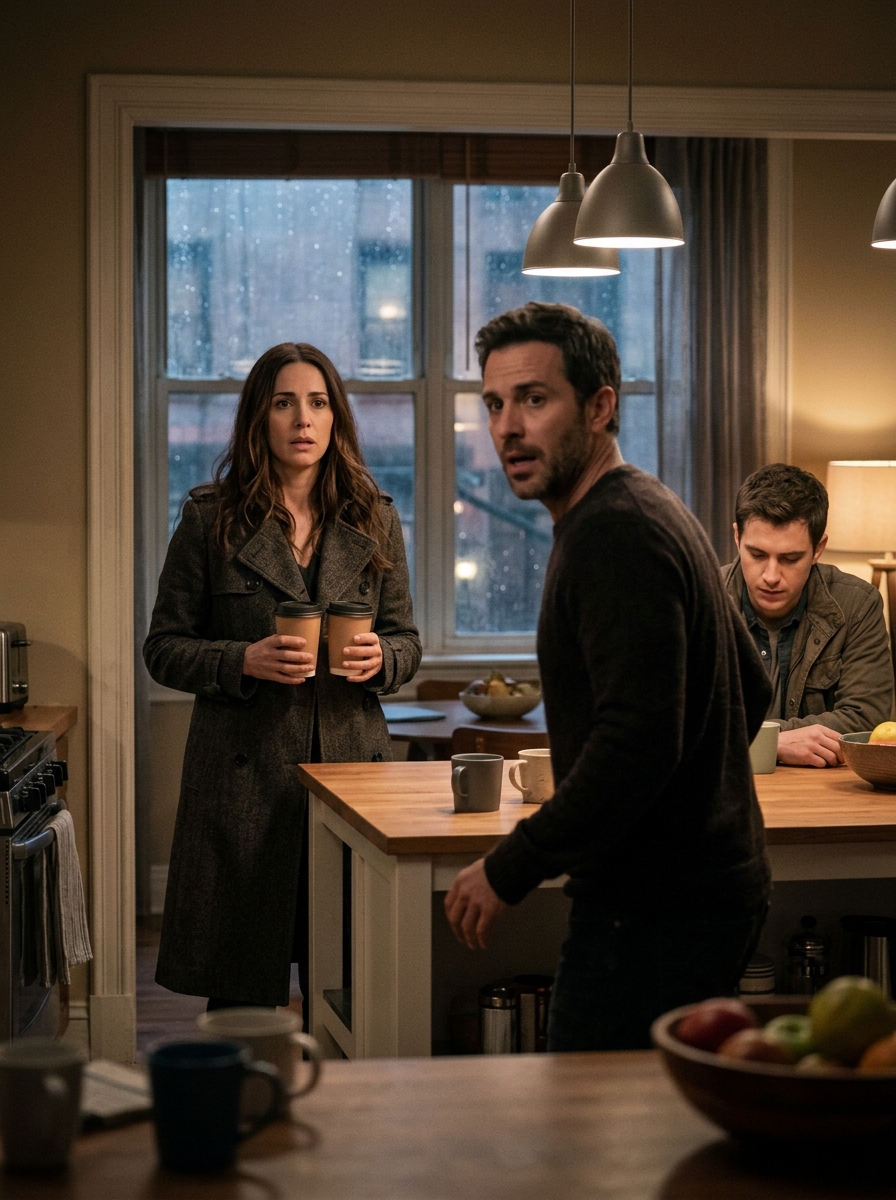
“I heard a clip in the hardware store,” he said. “A guy two aisles over was playing it for his brother. He said, ‘This is exactly what I’m talking about.’ And I was standing there listening to my own words come out of your voice.”
Celia looked down.
“I didn’t know that.”
“You didn’t ask.”
“You could have told me.”
“I did.”
“You said the show was getting too personal.”
“I said I couldn’t make love with a microphone between us.”
Her face burned. “You never said that.”
“I said it in the kitchen. You told me I was jealous of your work.”
She remembered that too, though not the exact order of the conversation. She had been angry because the episode had finally given the podcast momentum. She had a sponsor meeting that afternoon. Elias had been standing by the refrigerator with one hand on the door.
He had said, “I don’t know what belongs to us anymore.”
She had heard, *I don’t like your career.*
She had said, “You don’t get to punish me because people care about what I make.”
Elias had closed the refrigerator.
“I wasn’t punishing you.”
“What would you call this?”
He had not answered.
Celia had assumed the silence meant she was right.
“How long after that did you stop wanting me?” she asked.
Elias’s expression shifted.
“That’s not what happened.”
“Then tell me what happened.”
“I wanted you. I just didn’t know how to feel wanted by you.”
She looked away.
The kitchen, which had always been the safest room in the house, seemed suddenly full of invisible equipment. Microphones in the corners. Cameras behind the cabinets. An audience sitting quietly at the table.
“I thought you didn’t find me attractive anymore,” she said.
“I know.”
“You knew?”
“I could tell.”
“And you still said nothing?”
“I thought you wanted an explanation that would make you innocent.”
The words struck cleanly.
Celia stepped back from the counter. “That’s what you think of me?”
“I think you’re good at making pain meaningful. I think you can make almost anything useful. I didn’t know what would happen if I gave you this.”
“This?”
“This,” he said, gesturing between them. “The real version. The version where I was angry that you used my most frightened question to build a career moment. The version where I still loved you and wanted you and didn’t trust the room we were in.”
She wanted to say he was being dramatic. She wanted to say every writer used life as material. She wanted to say he had enjoyed the money the episode made.
Instead, she said, “You let me think I was unwanted for two years.”
“I know.”
The repetition made her furious.
“Stop saying that.”
“What should I say?”
“Something that makes it less true.”
“I can’t.”
***
Celia went into the studio the next morning before sunrise.
The building was nearly empty. Her producer, Priya Shah, had left three messages asking whether the rescheduled interview should happen at ten or eleven. Celia ignored them and sat in front of the editing computer.
She opened Episode Sixty-Two.
The first few seconds were music: soft piano, the sound she had chosen because she wanted the story to feel intimate rather than sad. Then her own voice began.
“Sometimes the most dangerous question in a marriage is not, ‘Do you love me?’ It’s, ‘Do you still want the life we’re living?’”
She stopped the audio.
She had always liked that opening.
She listened again.
The episode was less disguised than she remembered. She had changed the city but not the setting. She had kept the blue quilt, the crooked lamp, the question on the edge of the bed. She had even described Elias’s habit of rubbing his thumb across the side of his index finger when he was trying not to look afraid.
No listener could have identified him from the details alone.
But Elias had never been a listener.
He had been inside the moment.
Celia pressed play.
Her voice moved through the old scene, confident and composed. She sounded compassionate toward the fictional husband. She sounded wise about the danger of confusing routine with desire.
She did not sound like someone who had asked the other person whether he wanted to be included.
A knock sounded against the open door.
Priya stood in the hallway with a paper bag of breakfast sandwiches.
“You’re here early,” she said.
Celia paused the episode. “I need to take something down.”
Priya stepped into the room. “What?”
“Episode Sixty-Two.”
Priya’s eyebrows lifted. “Why?”
“Because it wasn’t mine to publish.”
“Did someone complain?”
“My husband.”
Priya set the bag on the desk. She was thirty-five, sharp-eyed, and had been working with Celia for four years. She knew when Celia was about to cancel an interview, change an entire season, or accept a project that would leave her exhausted for months.
“Is this about Elias?” Priya asked.
“Yes.”
“Did he listen to it?”
“He was in it.”
Priya was quiet.
“He gave me permission,” Celia said, though the sentence sounded weak even to her. “Not explicitly. But we talked about it. I told him I was changing the details.”
“That isn’t the same thing.”
“I know.”
“Do you?”
Celia flinched. Priya immediately looked sorry, but she did not take the question back.
“I thought the story was mine,” Celia said.
“Was it?”
Celia looked at the editing timeline. The green audio track ran beneath the waveform of her voice. She could see where she had cut out the hesitation before Elias’s question. In real life, he had paused for almost twenty seconds before speaking. She had removed the silence because it slowed the episode.
She had edited his fear into a clean entrance.
“No,” she said.
Priya pulled out a chair. “You don’t have to decide this minute.”
“I do.”
“Why?”
“Because I’m recording the live anniversary show tonight.”
“That show is about the episode.”
“I know.”
“The sponsor is attached to that episode.”
“I know.”
“You can’t make a decision because you’re ashamed.”
Celia turned toward her. “What if shame is the part of me that still knows the difference between a confession and an apology?”
Priya sat back.
Neither woman spoke for a while.
The show had become Celia’s work, but it had also become the way she understood herself. Every difficult thing could be examined. Every argument could be turned until it showed its hidden structure. She had called that honesty.
Sometimes it was.
Sometimes it was just distance with good lighting.
She opened the platform dashboard. Episode Sixty-Two had been downloaded 1.8 million times. Its sponsor segment had brought in enough money to cover the renovation of the house. It had led to the book proposal she was still negotiating. It had made listeners trust her.
The episode had also taught Elias that a private sentence could become public property while he was asleep.
She clicked the archive settings.
A confirmation box appeared.
*Are you sure you want to remove this episode?*
Celia stared at the words.
Then she closed the window.
***
That evening, she did not go straight home.

More From This Author