STORY
My Wife Scheduled Our Intimacy Under “Hawthorn Reconciliation.” Then She Told Me What the Appointments Were Really For
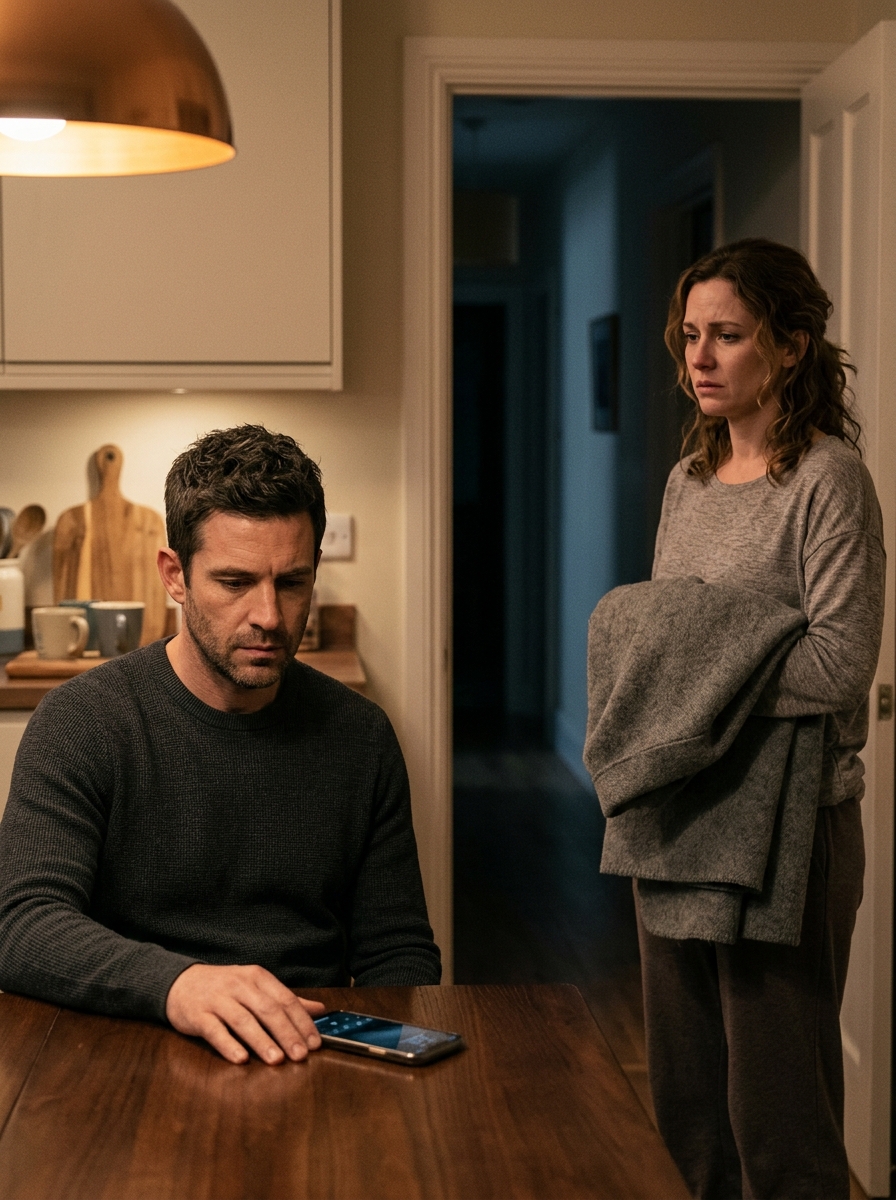
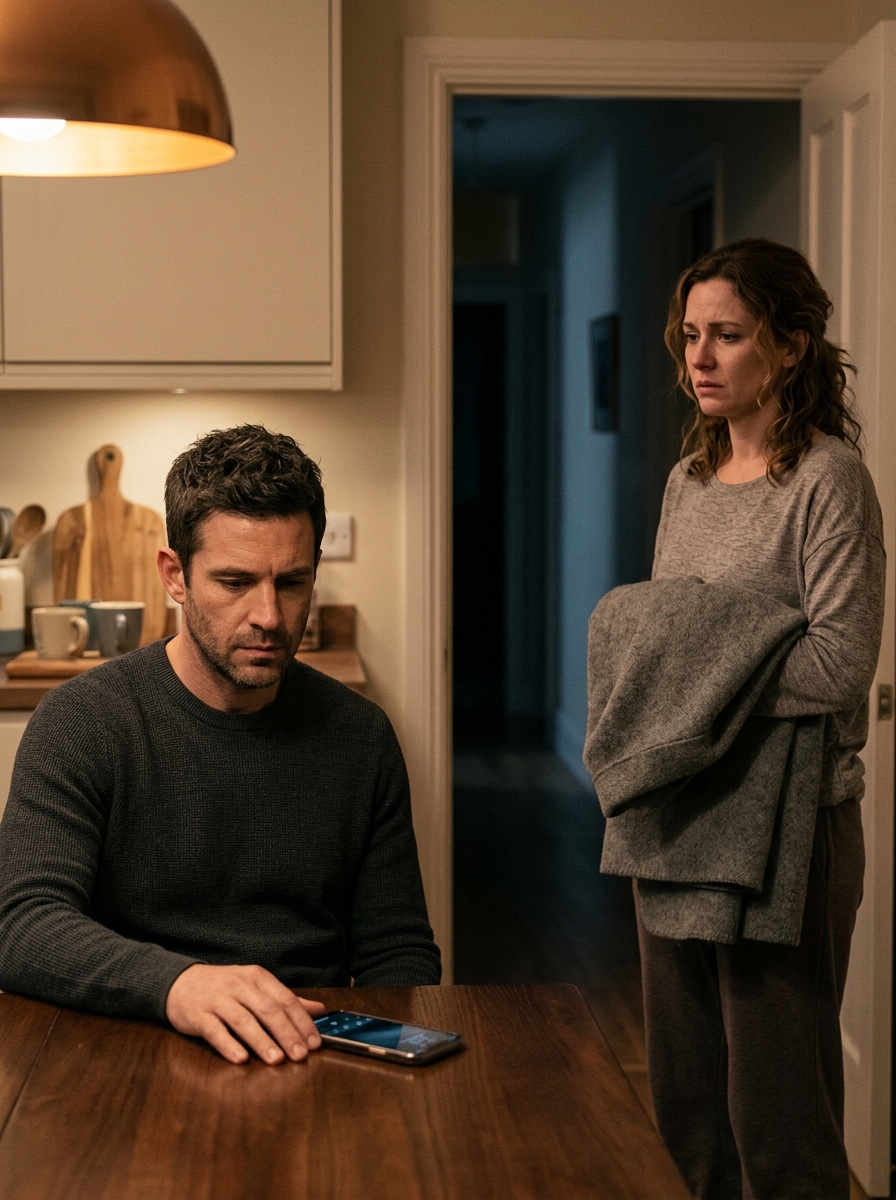
By the time Tess came back from the guest room with a folded blanket, Jonah had already refreshed the shared calendar three times.
The evening entry was gone.
Not moved. Not renamed. Gone.
“I canceled it,” she said.
“I saw.”
“I’m not sleeping in there because I’m trying to punish you.” She tucked one corner of the blanket under her arm. “I’m sleeping in there because I don’t trust either of us to pretend tonight is normal.”
Jonah sat at the kitchen table with his phone faceup beside him. The screen had gone dark, but he could still see the calendar in his mind: four months of Hawthorn Reconciliation entries, spaced one or two weeks apart. Some were on Thursdays. Some were on Sundays. One had been on his birthday.
He had thought that night was a gift.
Tess leaned against the counter. She was still wearing the navy blouse she used for work at the botanical foundation, the one with the loose cuff she was always pushing back from her wrists.
“Tell me what the code means,” he said.
“You already know.”
“I know what it means at your office.”
“Hawthorn is a restricted grant account. Reconciliation is the process of comparing what was promised with what was actually spent.”
Jonah let out a short, humorless laugh. “That sounds about right.”
Her expression changed. “That isn’t what I meant.”
“Isn’t it?”
“No.” She set the blanket on the chair. “It was the only project name boring enough that you wouldn’t open it and ask questions.”
“That’s not an answer.”
“It was a private label on a shared calendar, Jonah. It didn’t have to be a confession.”
“It was our marriage.”
“It was time I was trying to protect.”
“From what?”
She looked down at the table between them. “From disappearing.”
The answer landed softly. That made it worse.
***
They had built the shared calendar for practical reasons.
When they moved into the house, Jonah had created separate colors for bills, appointments, family obligations, and home repairs. Tess had added a category for things that needed to happen before they became emergencies. Furnace inspection. Annual physical. Replace smoke-detector batteries. Renew car registration.
The calendar had begun as a way to keep their lives from becoming a series of shouted reminders.
For eight years, they had used it to manage almost everything except the part of their marriage that most needed language.
Their intimacy had not vanished all at once. It had thinned.
At first, there had been long evenings when they were too tired to do anything except order food and watch half a documentary. Then there had been the weeks when Tess’s work became frantic because a donor had challenged the foundation’s use of restricted funds. Then Jonah’s company had lost a major contract, and he spent three months taking every shift he could get at the commercial bakery where he managed production schedules.
They were both busy. They were both tired. They still loved each other.
That combination had allowed them to avoid the obvious.
Jonah had noticed the distance before Tess did, or at least before she admitted noticing it. He had started counting.
Not intentionally. He would simply lie awake and realize it had been eleven days. Or eighteen. Once, nearly a month.
He never kept a written record. He didn’t need one. His body had become a quiet ledger.
When Tess finally initiated something, he felt so relieved that he tried not to show it. His restraint made him stiff. His stiffness made her cautious. Her caution made him more aware of every pause.
The whole thing became a room they both entered carefully and left embarrassed.
The first time they argued about it, they were cleaning up after dinner.
Tess had said, “You know you’re allowed to tell me you miss me without making it sound like I’ve failed an exam.”
Jonah had been rinsing a plate. “I didn’t say you failed anything.”
“You said you don’t know how long you can keep living like roommates.”
“I said I don’t know how long I can keep pretending it doesn’t hurt.”
“They’re not the same sentence.”
“They’re close enough.”
She had dried her hands on a dish towel and stared at him.
The frightening part was that he had not been angry. He had been honest.
The more frightening part was that she had heard the honesty as a demand.
Now, sitting across from each other beneath the warm kitchen lights, they were both looking at that old moment from opposite sides.
“You told me you were lonely,” Tess said.
“I was.”
“I believed you.”
“Then why did you hide this?”
“Because believing you didn’t mean I knew how to fix it.”
“I didn’t ask you to fix it.”
“You didn’t have to.” Her voice stayed level, but her fingers had started worrying at a loose thread on the blanket. “You told me you missed being wanted. You told me you were tired of being the only one who noticed we weren’t touching. I heard that as information. Then I heard it as a countdown.”
Jonah looked away.
“I never gave you a countdown.”
“No. You gave me the look that said the countdown had already begun.”
He wanted to deny that. He wanted to say she was interpreting every ordinary disappointment as pressure. But the memory came back before the defense did: Tess declining an invitation to bed, Jonah saying “Of course,” and then spending the next hour putting dishes away with the force of a person trying to prove he could do everything alone.
He had not raised his voice.
He had made her feel the weather change.
***
The calendar entries had started four months earlier, after a Sunday morning fight.
Jonah remembered the fight differently from the way Tess did.
He remembered making coffee. He remembered Tess standing by the window, wearing one of his old T-shirts and scrolling through her phone. He remembered asking whether she wanted to go for a walk.
She had said, “I don’t know. Maybe later.”
He had asked, “Do you want to spend time together, or do you mean maybe later in the day?”
Tess had looked at him. “What kind of question is that?”
“A clear one.”
“It doesn’t feel clear.”
He had felt the old embarrassment rising in his chest. “I’m trying to understand whether you actually want to be around me.”
She put the phone down.
“You’re asking me to prove something.”
“I’m asking you to answer.”
“I don’t know what answer won’t become evidence.”
The fight had ended with Jonah leaving the room. He went to the hardware store and wandered the aisles for forty minutes, studying drill bits he did not need.
When he came home, Tess was at the kitchen table with her laptop open.
She did not tell him that she had made the first Hawthorn entry that day.
The title was “Hawthorn Reconciliation: 8:30–10:00.”
The notes read: “Protect the window. No phones. No postmortem.”
She had stared at it for several minutes before saving.
“It was supposed to be a container,” she said now. “That’s the word I used in my head.”
“For sex.”
“For possibility.”

More From This Author