STORY
Maya’s Lunch Was Dumped—Then Her Father’s Missing Payment Exposed the Principal
Credits had been moved from a district hardship fund into individual accounts. Then those accounts had been charged for “meal reversals.” The money had moved in circles, creating the appearance of legitimate corrections.
But every adjustment carried a user ID.
A.RIVERA.
Alan Rivera.
Carol’s user account.
Brenda’s husband.
I felt the room change.
Brenda had not been stealing only cash.
Someone had been using the district’s hardship fund to cover the gaps, shifting public money to conceal private theft.
Dr. Price stared at the screen.
“Who is Alan Rivera?”
“My husband,” Brenda said.
“Why is his account making adjustments in this system?”
“He helps with technology.”
“He isn’t an employee,” Carol said.
Brenda glared at her.
“He was contracted last year.”
“His contract ended in June,” Dr. Price said.
The computer showed adjustments through the current week.
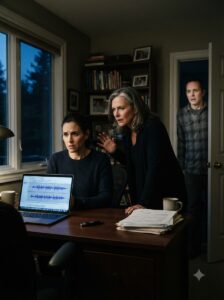
I asked Carol to open the login history.
The system displayed access from an external device at 11:18 p.m. on Sunday night. The login came from an IP address associated with a home internet account registered to Alan Rivera.
Another login appeared Monday at 3:44 p.m., two minutes after Brenda accepted Daniel’s envelope.
I took photographs of every screen.
Brenda lunged toward the monitor.
Dr. Price caught her wrist.
“Don’t touch it.”
For the first time, Brenda looked afraid.
“You’re all twisting this,” she said. “Alan had access because we were trying to fix a software problem. The hardship fund transfers were authorized.”
“By whom?” I asked.
“By the district.”
“Show us the authorization.”
Carol opened the approval records.
There were no signatures.
No board minutes.
No purchase orders.
Just typed initials in a field labeled APPROVED_BY.
A.P.
Alan Price.
Dr. Price sank into his chair.
Brenda turned toward him.
“You said it was fine.”
“I said you could correct temporary discrepancies.”
“You knew about the cash.”
“I knew there were accounting errors.”
“You told me to keep the balances from escalating.”
“That is not the same thing.”
“It is exactly the same thing!”
Their argument unfolded over us, stripped of the polished language they had used minutes earlier.
Dr. Price had noticed the cafeteria deposits did not match meal counts. Brenda had told him the system was unreliable. Carol had warned him that her sister was entering cash payments manually. He had instructed them to “stabilize the accounts” before the district finance review.
Brenda and her husband had used the access to take cash.
Dr. Price had used the hardship fund adjustments to keep parents from seeing the full extent of the shortage.
The missing money had grown until it could no longer be hidden without sacrificing children like Maya.
They had chosen her because eleven dollars and fifty cents was small enough to make her look responsible for the humiliation.
It was not small to her father.
It was not small to the child standing beside a trash can.
And it was not small to me.
The district police liaison arrived forty minutes later, followed by the superintendent and two investigators from the county auditor’s office.
Brenda tried to leave through the side door.
The security officer stopped her.
“You can’t detain me,” she said.
“No one said you were under arrest,” the officer replied. “But you’re not taking any records with you.”
She looked at Carol.
“You’re my sister.”
Carol was crying now.
“I know.”
“You’re destroying this family.”
Brenda’s voice cracked.
Carol wiped her cheeks. “You destroyed it when you made me choose between lying and losing my job.”
The county investigators seized the desktop computer, the paper receipt books, the locked drawer, and the external hard drive used for backups.
They found carbon copies of cash receipts in a box beneath Brenda’s desk.
Several had been stamped PAID.
The matching entries in the system had been voided.
Daniel’s receipt was among them.
Five ten-dollar bills had become an official fifty-dollar payment, then a void, then nothing.
But the paper existed.
So did the video.
The boy who had recorded the cafeteria had sent the clip to his mother, who forwarded it to the superintendent. Another camera outside the school showed Daniel handing Brenda the envelope Monday afternoon.
A third camera captured Brenda carrying a deposit bag to her car without entering the district’s secure deposit room.
The witnesses arrived one by one.
Mr. Lewis confirmed that Daniel had told him he was paying fifty dollars.
The teacher in the cafeteria confirmed that Brenda had refused Maya a meal despite knowing Daniel had promised payment.
The cashier who worked the afternoon shift said Brenda had instructed staff to direct parents with cash to her personally instead of the district payment window.
By evening, the school board had placed Brenda, Carol, and Dr. Price on administrative leave.
By the end of the week, the district announced that the total loss had exceeded thirty-eight thousand dollars. The original eleven thousand four hundred and eighty dollars represented only the voided cash receipts. The rest had been drawn from the hardship fund through unauthorized adjustments.
Brenda was charged with theft, fraud, and tampering with public records.
Carol was charged with computer misuse and conspiracy, though her attorney later negotiated a cooperation agreement. She testified that Brenda had organized the cash collection system and that Dr. Price had directed her to hide the growing discrepancies.
Dr. Price resigned before the board could fire him. The district’s insurance covered part of the missing money, and the rest was recovered through the sale of property held by Alan Rivera’s business.
Parents received refunds.
Every student account was audited.
Families whose children had been denied meals were given written apologies and credit reversals. The district also changed its policies: no cafeteria employee could accept unrecorded cash, every payment generated an immediate receipt, and parents could view a complete transaction history online.
The superintendent asked me to join the oversight committee.
I declined the paid position but agreed to help with the audit.
I also wrote a check covering every remaining negative elementary lunch balance.
It came to less than three thousand dollars.
The district had spent more than ten times that amount trying to hide the theft.
A week after the investigation began, I returned to the cafeteria with Emma.
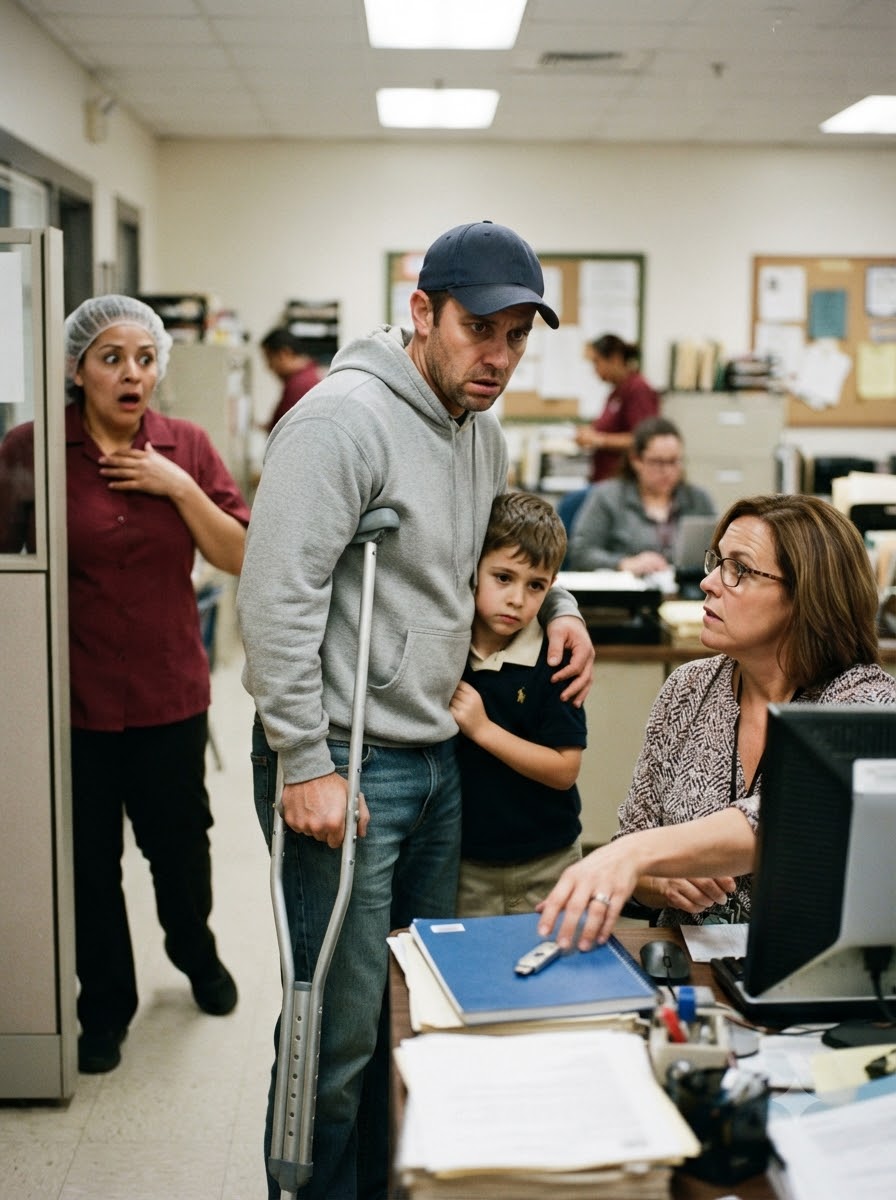
Maya was sitting at her usual table. Her father was with her, leaning on his cane. He had brought a paper bag from home filled with homemade cookies, each one wrapped in wax paper.
When he saw me, he stood.
“I don’t know how to thank you,” he said.
“You don’t have to.”
“I do.”
He looked toward Maya, who was eating a hot lunch without fear.
“She thought she had done something wrong.”
I sat beside them.
“Children believe adults because they have to. That’s why adults have to be careful.”
Emma opened her milk.
“Mom made the principal show her the computer,” she told Maya.
Maya smiled.
“Did you really know what the codes meant?”
“Sort of.”
Emma leaned closer. “My mom knows everything about computers.”
“I do not know everything,” I said.
Emma nodded seriously. “Just the important parts.”
Maya reached into her backpack and handed me a folded piece of paper.
It was a drawing.
Four children sat at a cafeteria table beneath a bright yellow sun. In front of them were four full lunch trays. Behind them stood a large trash can with a red X over it.
At the top, in crooked blue letters, Maya had written:
NO ONE EATS ALONE.
I looked at the picture for a long time.
The money was recovered. The guilty adults were exposed. The records were corrected.
Those things mattered.
But the part I remembered most was not the spreadsheet or the locked drawer or Brenda’s face when the cameras were mentioned.
It was Emma pushing her tray across the table.
A child had been told she did not deserve her lunch.
Another child answered by making room.
That was how dignity returned—not with an apology from the people who had taken it, but with someone deciding it could not be taken at all.

More From This Author