STORY
My Brother Took Mom’s House—Her Sewing Tin Held the Real Evidence
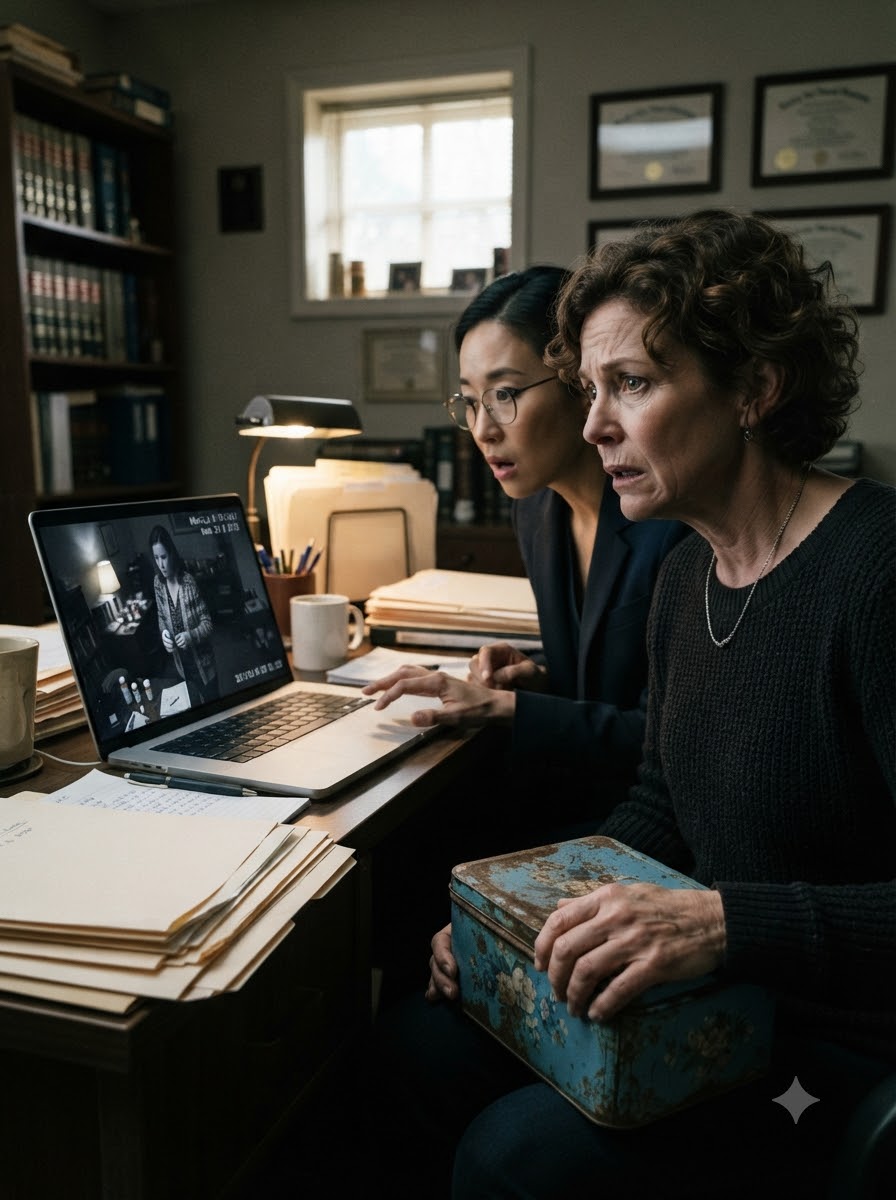
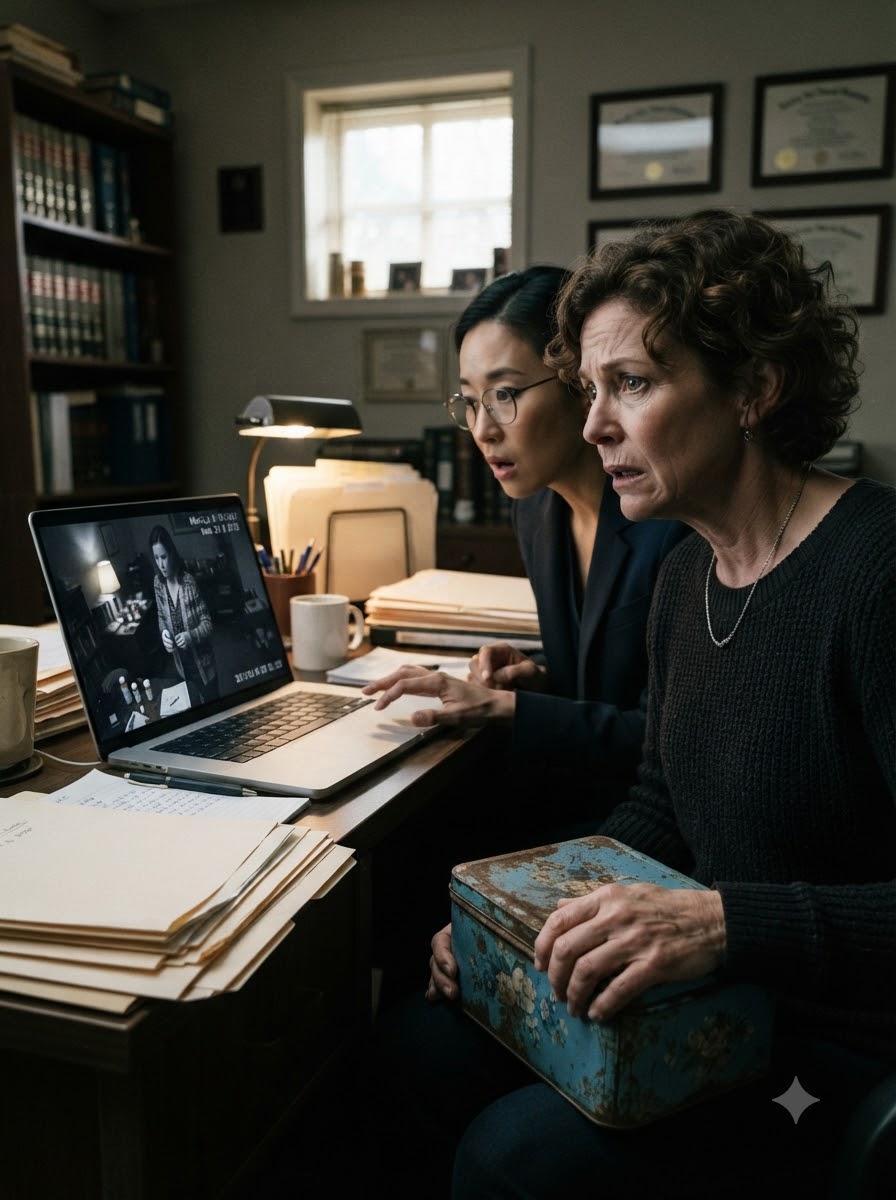
Two hours after my mother’s funeral, Greg parked a U-Haul across her driveway and started carrying her life out through the front door.
He did not ask me to help. He did not ask whether I was ready.
He simply walked past me with Mom’s oak lamp tucked beneath one arm and announced, “The movers will be here tomorrow for the rest.”
His wife, Monica, stood in the hallway with a cardboard box balanced against her hip. She looked freshly made up, as if she had come from a brunch instead of a funeral. Her black dress was immaculate. Mine was wrinkled at the sleeves from three days of sleeping in it.
She held out the box.
“Your things,” she said.
I stared at the contents. Mom’s old sewing tin. Three photo albums. A chipped ceramic bird. Her recipe cards tied with a yellow ribbon.
That was all.
Greg dropped the lamp into the back of the truck and brushed dust from his hands.
“Mom updated her will last month,” he said. “I get the house and the savings account. You get the sentimental items.”
The words landed harder than the funeral had.
For seven years, I had lived ten minutes from Mom’s little brick house. I drove her to dialysis every Tuesday, Thursday, and Saturday. I sat beside her at cardiology appointments while Greg called from Scottsdale and asked whether she was “still comfortable.”
I cooked meals without salt. I replaced the broken furnace thermostat. I paid the heating bill when her pension came up short. I learned which pills made her nauseated and which television programs helped her sleep.
Greg came once a year, usually around Christmas, and left with an envelope.
Mom had called those payments “help with his business.”
I had called them what they were: money she gave him because she could not bear to disappoint her son.
Now he was taking the house.
Monica shifted the box toward me. “There’s no reason to make this ugly.”
I almost laughed.
The driveway was full of Mom’s furniture. Her dining table. Her grandfather clock. Her winter coats. Her silverware. Her life was being dismantled while the flowers from her funeral still sat beside the front steps.
“What did she leave me?” I asked.
Greg’s expression hardened. “Don’t start.”
“I’m asking what the will says.”
“You’ll get a copy from the attorney.”
“Which attorney?”
He looked at Monica.
She said, “A local estate lawyer. Everything was done properly.”
Three weeks before Mom died, Greg and Monica had flown in from Arizona. Mom had been heavily sedated with morphine by then. Her kidneys were failing, her heart was weak, and most of the day she drifted in and out of sleep.
Greg told me they wanted to “say goodbye.”
Instead, they spent nearly six hours in Mom’s study with the door locked.
When I knocked, Monica told me Mom was resting.
I heard voices inside. I heard a chair scrape. Once, I heard Mom say something that sounded like, “I don’t understand.”
Greg opened the door only after I threatened to call hospice.
He stood between me and the room.
“Family matters,” he said.
I remembered that now as he slammed the U-Haul ramp shut.
The sound echoed through the quiet neighborhood.
“Take your albums and go home,” he said. “You’re grieving. You’re not thinking clearly.”
I carried the box to my car.
The rusted blue sewing tin sat on top.
Mom had kept it for as long as I could remember. It was rectangular, decorated with faded flowers, and permanently stained near the clasp. Inside, she stored needles, buttons, bits of thread, and the tiny brass key to her old cedar trunk.
She had not let me touch that tin in years.
At the hospice, the night before she died, Mom had pressed something cold into my palm. Her fingers were thin and trembling.
“My locket,” she whispered.
I thought she meant the gold heart she always wore around her neck. I opened it and found a tiny brass key folded inside the photograph of my father.
“Keep the tin locked,” she had said.
I asked what was inside.
Her eyes moved toward the hallway, where Greg was speaking with a nurse.
“Not until the lawyer,” she whispered. “Promise me.”
I had promised.
Now Monica had placed the tin in my box as casually as if it were a set of used napkins.
I put the box in the passenger seat, drove to the end of the street, and pulled over.
My hands shook as I took the key from my locket.
The sewing tin’s clasp resisted. I had to press my thumb against the rusted hinge while turning the key. Finally, it clicked open.
Under spools of thread and a pincushion were two envelopes, a black plastic SD card, and a square of felt glued over the bottom.
The tin felt heavy because it had a false lining.
I lifted the felt with the tip of the key.
Beneath it lay a thick packet of legal documents tied with white string. The first page bore Mom’s name, the address of the house, and a bold heading:
IRREVOCABLE LIVING TRUST.
The date was 2021.
I read the first paragraph twice.
The house had not been hers to give away.
It had been transferred into a trust three years earlier.
I kept reading.
The trust named me as trustee and beneficiary of Mom’s residence. Greg was not named anywhere in the document except in a section that specifically stated he was excluded from control of the property.
My pulse began to pound.
The second envelope was addressed to the probate judge.
The handwriting was Mom’s.
The SD card had a strip of masking tape across it. On the tape, Mom had written: STUDY CAMERA—DO NOT ERASE.
For several minutes, I sat in the car without moving.
Then I drove straight to the office of the attorney who had handled Mom’s trust in 2021.
His name was Harold Bennett. Mom had mentioned him often, but Greg had insisted he was “retired.”
The office was in a converted house downtown. A woman at the front desk told me Mr. Bennett was not taking walk-ins.
I placed the trust document on the counter.
“I’m Elaine Mercer,” I said. “This belongs to my mother, Carol Mercer. She died two hours ago.”
The woman glanced at the first page and went pale.
“Please wait.”
Harold Bennett came out of a back room wearing suspenders and reading glasses. He was eighty if he was a day, but he moved with startling speed when he saw the papers.
“Where did you get this?” he asked.
“From my mother’s sewing tin.”
He took the trust into both hands.
“This is the original.”
“Greg says she changed her will last month.”
“Did she?”
“He says she left him the house and the savings account.”
Bennett looked at me over the tops of his glasses.
“Your mother could not revoke this trust with a will. The house was transferred into it. She could not give away what she no longer owned personally.”
“Then what did Greg make her sign?”
“I don’t know yet.”

More From This Author