STORY
My Daughter Banished Me From My Own Lake House—Then I Opened the Blue Folder
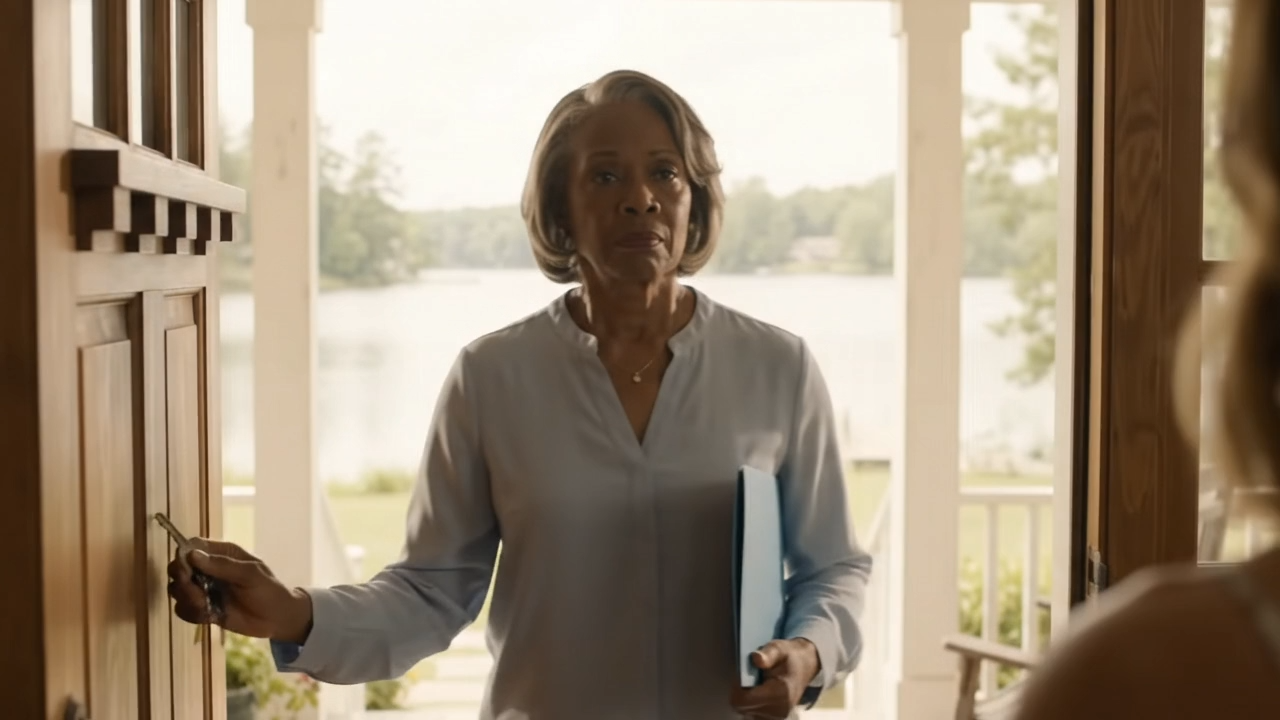
The blue folder landed on the dining table with almost no sound.
That was what everyone remembered later—not a slammed door, not shouting, not some dramatic crash of dishes. Just Dorothy May Hastings setting a thin folder beside a bowl of potato salad while the Fourth of July music continued playing softly from the deck.
Lorraine stared at it.
Kevin came in from the kitchen wiping his hands on a towel. His parents remained near the sliding doors, uncertain whether they were supposed to greet Dorothy or pretend they had not heard Lorraine tell her mother she was not supposed to be there.
Dorothy looked around the room.
Samuel had wanted this exact kind of afternoon.
Children running between the water and the house. Food covering the long table. Damp towels hanging where they should not. Too many shoes near the door. Adults calling across rooms because nobody could remember where they had left the bottle opener.
The scene should have made her happy.
Instead, she had been removed from it.
Lorraine recovered first.
“Mom, can we talk outside?”
“No.”
Dorothy said it gently.
That unsettled Lorraine more than anger would have.
Kevin stepped closer. “Dorothy, nobody meant anything by this. It’s just crowded this weekend.”
Dorothy turned her eyes toward him.
“Is it?”
He glanced toward his parents.
His mother suddenly became very interested in rearranging napkins.
Lorraine lowered her voice. “Please don’t make this uncomfortable.”
Dorothy almost smiled.
Three years of widowhood had taught her that people often called a situation uncomfortable when what they meant was that the person they had hurt had finally stopped making the injury convenient for them.
She opened the folder.
The first page was the closing statement from the lake property. Beneath it were records she had kept with the discipline of a nurse charting medication: property taxes, insurance, utilities, contractor invoices, maintenance receipts.
Then she lifted the warranty deed.
Lorraine’s expression changed before Dorothy said a word.
Kevin leaned over the table.
“What is all this?”
Dorothy laid the deed flat, although she kept the printed details facing herself.
“This,” she said, “is the part of the conversation you apparently forgot.”
Lorraine swallowed.
“Mom—”
“The lake house belongs to me.”
Kevin straightened.
Nobody spoke.
Dorothy continued in the same tone she had once used with frightened patients who needed facts more than reassurance.
“Samuel dreamed about this place. We planned it together. After he died, I kept paying for it. I handled the contractors. I dealt with the permits. I paid the taxes. I insured it. The deed is in my name.”
Lorraine looked toward the windows, where several teenagers were laughing on the dock.
“We know that.”
“Do you?” Dorothy asked.
Lorraine’s face tightened. “Of course we do.”
“Then why did you tell me there wasn’t enough room for me?”
The question was so simple that Lorraine had nowhere to hide inside it.
She tried anyway.
“We weren’t trying to exclude you.”
Dorothy glanced at her.
“You left a voicemail telling me not to come.”
“That isn’t what I meant.”
“It is exactly what you said.”
Kevin sighed, the sound of a man who had expected a minor family disagreement and was irritated to discover paperwork on the table.
“Look, Dorothy, everybody knows it’s your property legally. But this is

More From This Author