STORY
My Son Called Me Dead Weight—Then His Key Stopped Working
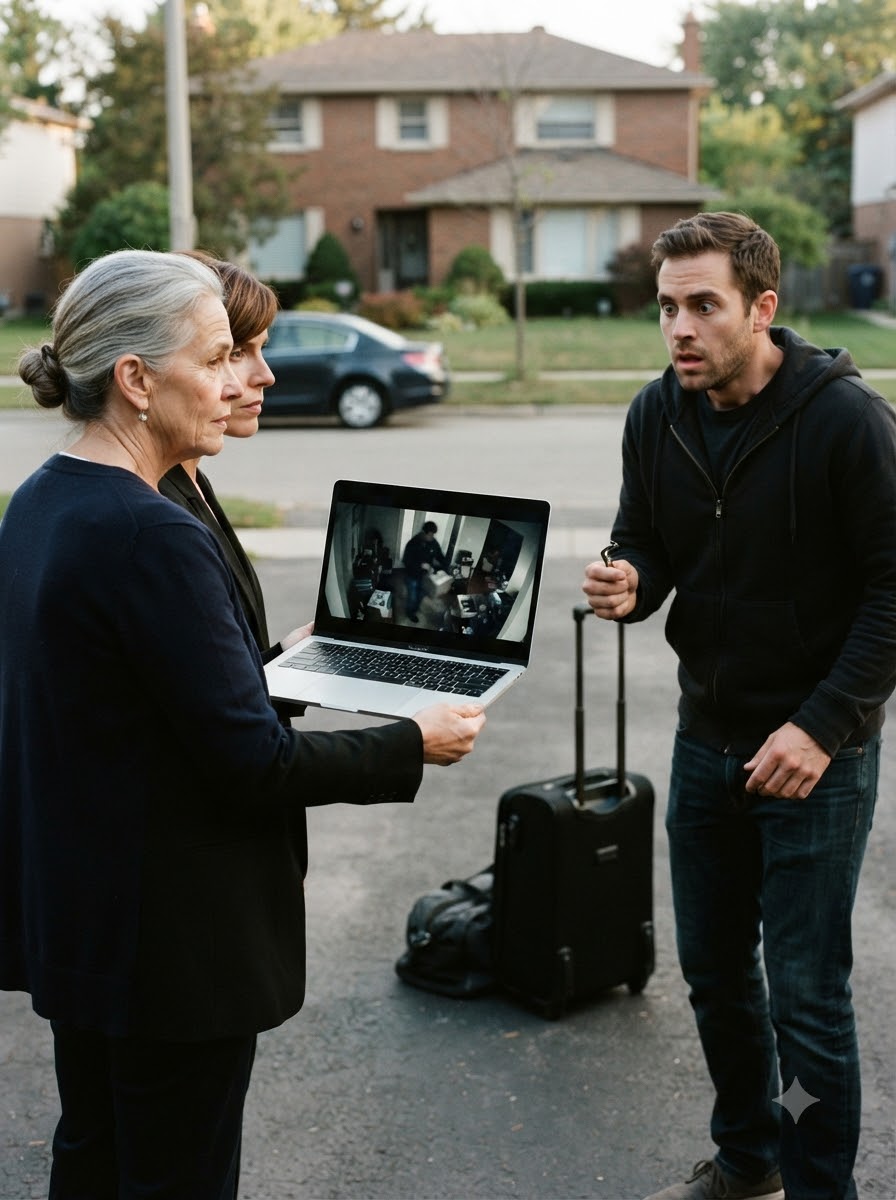
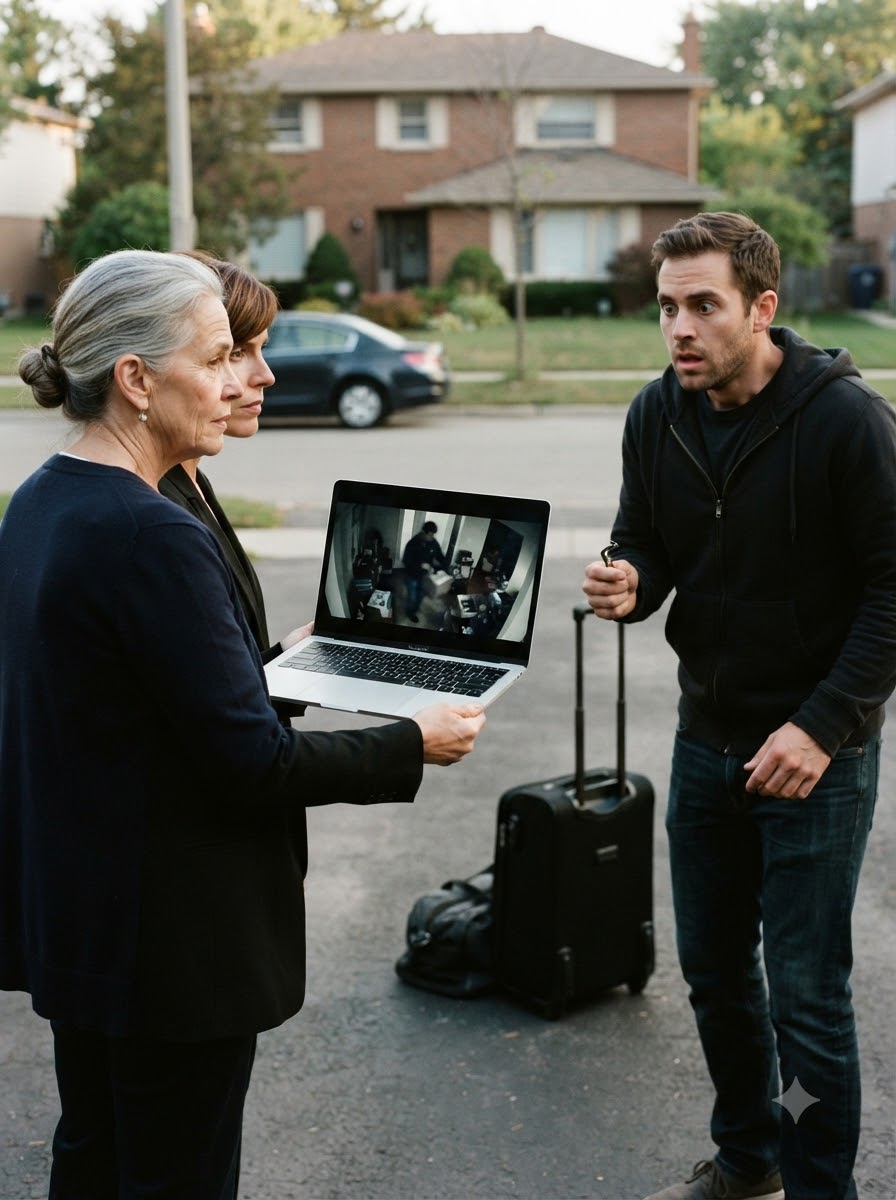
The key went in, but it would not turn.
Daniel stood on the porch in the same navy shirt he had worn on the flight home, his face still tanned from two weeks in Italy and France. One hand gripped the handle of a silver suitcase. The other twisted the key harder, as if force could restore whatever he believed belonged to him.
Melissa waited beside him in oversized sunglasses, three glossy shopping bags hanging from her wrist.
At first, she laughed.
“You’re using the wrong key.”
“I’m not.”
He tried again.
The dead bolt held.
Melissa’s laughter faded. She peered through the narrow window beside the door and went still.
“Daniel,” she whispered. “Where is everything?”
I watched from the passenger seat of a truck parked across Cedar Grove. My real estate agent, Claire Donnelly, sat behind the wheel. Frank’s attorney, Martin Shaw, was in the back.
I had asked them both to be there.
Not because I was afraid of my son.
Because I had finally learned not to face him without witnesses.
Daniel pounded on the door.
“Mom!”
The house answered with silence.
He called my phone. I let it ring once before stepping out of the truck.
His head snapped toward me.
For half a second, relief crossed his face. Then he saw Claire and Martin getting out behind me.
“What’s going on?” he demanded.
I walked across the street slowly.
The house looked exactly as it had when Frank and I bought it thirty-four years earlier: red brick, white shutters, maple tree shading the front walk.
But it was no longer mine.
And it had never been Daniel’s.
“You need to stop hitting that door,” I said. “The new owners arrive tomorrow.”
Melissa took off her sunglasses.
“The new owners?”
“I sold the house.”
Daniel stared at me.
Then he laughed, but there was no humor in it.
“That’s not possible.”
“It closed last Friday.”
“You can’t just sell the house.”
Martin came to stand beside me. “She owned it outright. She could, and she did.”
Daniel looked from Martin to Claire and back to me.
His suitcase tipped over, striking the porch with a hollow crack.
“You did this while we were away?”
“Yes.”
“You knew we were coming here from the airport.”
“I knew.”
Melissa pushed past him and pressed her face closer to the window.
“The furniture’s gone.”
“All of it,” I said.
Her mouth tightened. “What about the things we kept in the basement?”
“They’re in a storage unit. The first month is paid. After that, it’s your responsibility.”
Daniel came down one step.
“Where are you living?”
“Somewhere safe.”
“I’m your son.”
“That used to mean something to me too.”
His expression changed.
Not guilt.
Alarm.
That was how I knew he understood.
Three weeks earlier, I still believed Daniel’s sudden concern after Frank’s death was love.
He brought groceries every Sunday. Melissa arrived with soup in matching glass containers and labels written in careful script.
They changed light bulbs, sorted mail and reminded me about appointments I had never forgotten.
People told me how lucky I was.
Then their kindness began acquiring sharp edges.
“This place is too much for one person,” Melissa said while looking around my kitchen.
“Those stairs are dangerous,” Daniel told me, though I walked four miles every morning.
They sent brochures for retirement communities. They discussed property taxes over my head. Daniel asked where Frank had kept the deed, the insurance policies and our investment statements.
I answered because he was my child.
Grief had made me lonely, and loneliness can make intrusion feel like attention.
The day before their trip, Daniel called while I was upstairs folding towels. I missed it. A voicemail notification appeared moments later.
I pressed play.
At first, I heard only movement. A car door slammed. Melissa laughed.
Then Daniel spoke.
“She’s becoming dead weight, Mel. We can’t keep putting our lives on hold forever.”
I stopped breathing.
Melissa answered, her voice clear and casual.
“Once the house situation is handled, everything else falls into place.”
“And if she refuses?”
“She won’t get a choice if we document enough.”
There was a rustle, then Daniel said, “By Christmas, Cedar Grove is ours. We sell, clear the loans and put the rest into the Lyon project.”
Melissa laughed again.
The recording ended after seven minutes of muffled restaurant noise.
I stood surrounded by Frank’s towels, listening to the silence that followed.
That night, I wandered from room to room.
I touched the groove in the banister where Daniel’s toy trucks had chipped the varnish. I sat in Frank’s recliner and stared at the place where his shoes should have been. In the laundry room, faint pencil lines still marked Daniel’s height from age four to sixteen.
I had spent years preserving evidence that my son had once been small and sweet.
Now his own voice was telling me I was dead weight.
By morning, sadness had hardened into caution.
Daniel had left several boxes in my basement after he and Melissa downsized. I had never opened them. One was labeled COLLEGE. Another said TAXES. A third was simply marked OFFICE.
Inside that one, beneath old cables and instruction manuals, I found a blue folder with my name on it.
The first page was titled “Transition Plan—Evelyn Mercer.”
Underneath were bullet points about my supposed memory problems.
Leaves stove on.
Misses appointments.
Repeats questions.
Unsafe driving.
None of it was true.
Attached were printed emails between Daniel and an elder-care placement consultant. Daniel had described me as “increasingly confused” and asked how quickly a family could move an unwilling parent into supervised living.
Melissa had written notes in the margins.
Need incidents witnessed by others.
Get doctor concern in writing.
Secure POA before discussing house.
My hands shook as I turned the pages.
Then I found the second layer.
There was a preliminary loan application for $240,000 using my house as collateral. My name, birth date and Social Security number were on it.
So was an electronic signature that looked like mine.
I had never applied for that loan.
A printed email from a broker said the application could not proceed until the owner completed identity verification. Daniel had replied that his mother became anxious on the telephone and that he would arrange power of attorney shortly.
Another document showed that he and Melissa had placed a deposit on a partnership in a vacation rental outside Lyon.
The deposit was funded with credit cards and a loan from Melissa’s brother.
Repayment was due in sixty days.
They had not been helping me plan my future.
They had already spent it.
I called Martin before I called anyone else.
He came that afternoon and read every page at my dining table. His face grew harder with each one.
“Did you sign any power of attorney after Frank died?”
“No.”
“Did you authorize Daniel to contact lenders?”
“No.”
“Has anyone examined you and diagnosed cognitive impairment?”
“No.”
“Good,” he said. “Then we move quickly.”
He photographed the folder and sealed the originals in an evidence envelope. He told me not to confront Daniel.

More From This Author