STORY
My Daughter-in-Law Said “Family Only”—Then the Bank Opened Her File
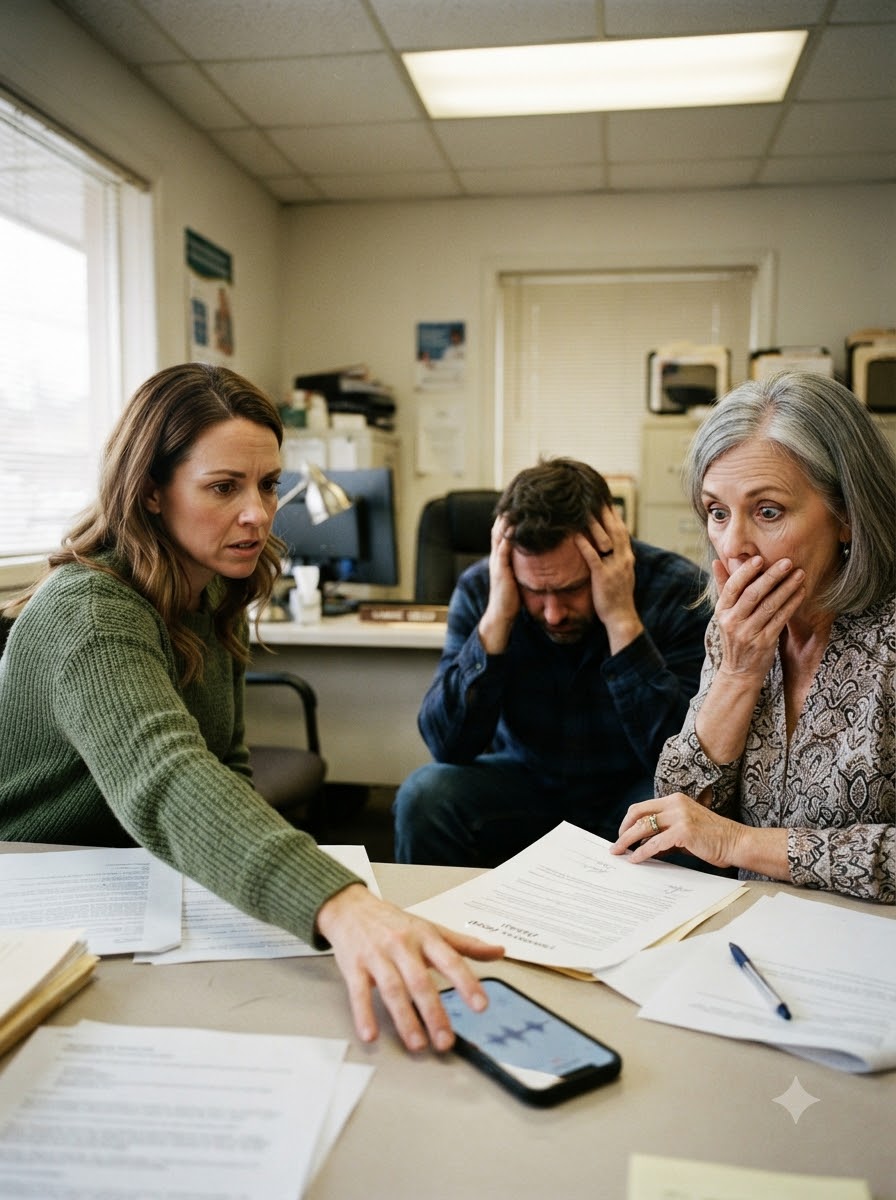
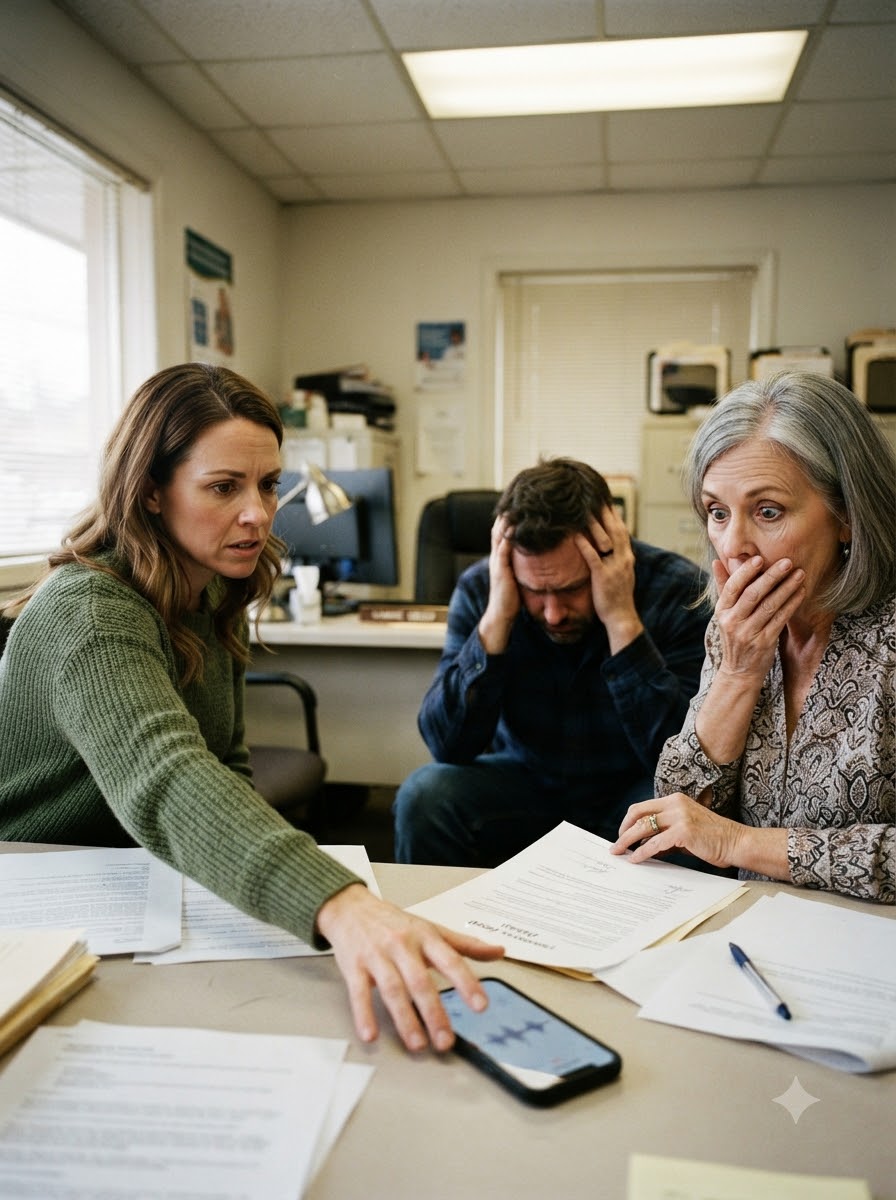
The first thing I heard was the doorbell.
The second was Brooke screaming my name from upstairs.
“Martha! What did you do?”
I was sitting at my kitchen table with a cup of tea between my hands. Outside, a utility truck had pulled into the driveway, its white body blocking the view of the maple tree I had planted when Julian was eight.
I did not answer immediately.
On my tablet, Brooke’s mother’s Facebook post was still open.
The photograph showed a long table at an expensive steakhouse. Julian sat beside Brooke, smiling beneath a hanging brass light. Brooke’s parents were on either side of them. Her brother and his wife were at the far end. Two cousins were squeezed between the salads and wine glasses.
There were twelve people in all.
I was the only one missing.
Under the photograph, Brooke’s mother had written:
“Family only. So blessed to finally have all my favorites in one place.”
I had read it so many times that the words had stopped looking real.
Then I had pressed Like.
After that, I had typed:
“Then I’ll stop paying the bills only family should pay.”
Five minutes later, my phone had begun to vibrate.
Thirty missed calls.
Brooke. Julian. Brooke’s mother. Julian again.
I had turned the phone face down and walked to the filing cabinet in the dining room.
That was where I kept everything.
The deed to the duplex. The tax records. The insurance documents. The utility statements. Five years of bank confirmations showing that the upstairs apartment’s expenses came from my account.
I had also kept a folder I had assembled quietly over the past month.
Inside it were copies of the original building plans, emails from the electric company, a letter from the water department, and notes from a contractor named Daniel Ruiz.
The upstairs unit had once shared my utilities through old connections in the basement. That arrangement had been convenient when Julian first moved in with Brooke. They had promised it would be temporary. A year, perhaps two, until they saved enough for a place of their own.
Five years later, temporary had become a lifestyle.
The utility company had told me a separate meter could be installed. The water department had confirmed that the upstairs plumbing could be divided without major construction. Daniel had inspected the basement and written down exactly what would need to be done.
I had not made a decision until the anniversary dinner.
The dinner itself was not what hurt.
People were allowed to celebrate without me.
What hurt was the way Brooke had told me about it three days earlier.
“We’re keeping it intimate,” she had said while walking past me in the hallway.
She had been carrying a garment bag and a box of shoes.
“Intimate?” I asked.
“Yes. The reservation is tight.”
I had looked at the garment bag.
“Who’s going?”
She had sighed as though I had asked for a detailed financial report.
“Just family.”
Then she had gone upstairs.
I had not argued. At sixty-five, I knew the difference between being forgotten and being deliberately excluded. I also knew that begging for an invitation never made the invitation warmer.
So I had stayed home that Friday evening.
I had heated soup, folded laundry, and watched television until Brooke’s mother uploaded the photograph.
Then the truth became impossible to ignore.
I had paid the property taxes for thirty years.
I paid the insurance on the building.
For five years, I had paid the electricity, water, heating oil, and most of the repairs for the upstairs apartment. I bought groceries that somehow disappeared upstairs. I had allowed Brooke to use my washer and dryer whenever she wanted. I had let her turn the backyard into an outdoor entertaining space, even though she rarely invited me to the gatherings.
Her family arrived for Sunday dinners and praised my cooking.
Brooke called me generous.
Julian called me a lifesaver.
But when the restaurant table filled up, I was not family.
I was an expense.
The doorbell rang again.
I heard the utility technician call from the porch.
“Mrs. Hale?”
Before I could reach the door, Brooke’s footsteps pounded down the stairs. She appeared in the kitchen wearing a silk robe, her hair pulled into a careless knot.
“You need to cancel that truck,” she said.
Her face was flushed.
“Good morning to you, too.”
“Don’t do this.”
“I’m not doing anything to you.”
“You publicly threatened us.”
“I made a financial announcement.”
“You humiliated me in front of my entire family.”
I looked at her.
“You were not humiliated by what I wrote. You were frightened that people would understand what it meant.”
Her mouth tightened.
“You’re acting insane over a dinner.”
“No. I’m responding to five years of being treated like a landlord when you needed something and a stranger when you wanted something.”
The bell rang a third time.
Brooke stepped toward the door.
“I’m not letting that man in.”
“You don’t own this house.”
“It’s Julian’s house.”
“Julian’s name is not on the deed.”
That stopped her.
For a moment, neither of us moved.
Then I walked past her and opened the door.
Daniel Ruiz stood on the porch with a metal case in one hand and a clipboard in the other.
“Morning, Martha,” he said. “Ready to get started?”
Brooke stared at him.
“What is this?”
“A meter installation,” I said.
“You said you were only considering it.”
“I considered it. Then I scheduled it.”
“You can’t make us pay for utilities without warning.”
“You had five years of warning. Every month, the bills arrived. Every month, I paid them.”
“That was your choice.”
“Yes,” I said. “And stopping is also my choice.”
Daniel glanced between us.
“I can come back another day if this is a bad time.”
“No,” I said. “Today is fine.”
Brooke turned toward the stairs.
“Julian needs to be here.”
“Julian has a job,” I said. “The rest of us can manage a meter installation.”
She pulled out her phone and called him.
I heard only her side of the conversation.
“Your mother is doing something awful.”
A pause.
“No, I don’t care what she wrote. She’s putting meters in the basement.”
Another pause.
“Tell her to stop the technician.”
Daniel began unpacking his equipment.
Brooke watched him with growing disbelief.
When Julian arrived twenty minutes later, he was wearing his work jacket and the expression of a man who had been forced to choose between two emergencies.
He came through the door without knocking.
“Mom, what is going on?”
I held out the folder.
“Read the first page.”
He did not take it.
“Can we talk without all this?”
“We’ve talked. You said the bills would be temporary. You said you were saving. You said Brooke was looking for work. You said you would contribute after the medical expenses were paid.”
His face reddened.
“You know things have been difficult.”
“I know exactly what things have been. That is why I kept the records.”
I opened the folder and laid the documents on the table.
The first page was a bank statement showing a payment of $482.17 to the electric company.

More From This Author