STORY
My Daughter-in-Law Said “Family Only”—Then the Bank Opened Her File
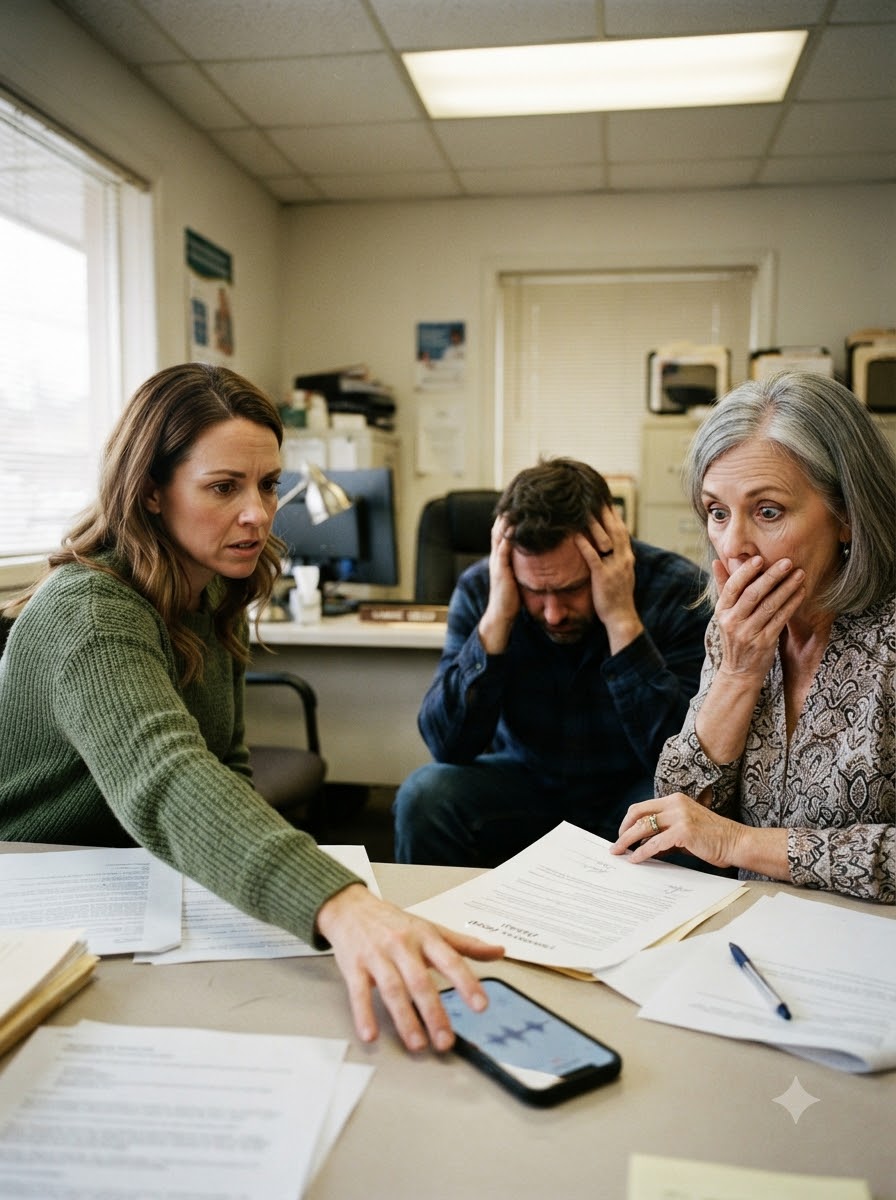
“This is punishment.”
“No,” I said. “Punishment is meant to cause suffering. This is a boundary meant to stop it.”
The meter installation took most of the morning.
Brooke remained upstairs, making phone calls. I could hear her telling someone that I had “lost control” and was trying to evict her on a whim.
At noon, Julian came into the kitchen alone.
“Her parents say you can’t do this.”
“Her parents do not own the property.”
“They say the Facebook post was misunderstood.”
“It was very clear.”
“She says ‘family’ meant everyone who was there, not you.”
“Then why did she tell me the dinner was only for family?”
He had no answer.
I opened a drawer and took out my phone.
“I saved the messages from that night.”
The first message was from Brooke.
Please don’t come to the restaurant. My mother is making a toast and she doesn’t want awkwardness.
The second came ten minutes later.
And don’t comment on the photo. It would make you look bitter.
Julian read them.
His expression changed.
“Mom, I didn’t know she sent this.”
“You knew I wasn’t invited.”
“I thought it was just a small dinner.”
“There were twelve people.”
“I know.”
“No, Julian. You know now.”
His eyes filled, but I did not reach for him.
I had spent years comforting him whenever his choices hurt me. That habit had become another way of protecting him from consequences.
“I should have stopped this,” he said.
“Yes.”
The word landed harder than shouting would have.
He looked at me.
“I’m sorry.”
“I believe you are sorry. That is not the same as being responsible.”
He nodded slowly.
When he went upstairs, the argument began again.
This time, Brooke’s voice was mixed with his.
“You’re choosing her over me!”
“I’m choosing not to lose everything!”
“She’s manipulating you!”
“She paid every bill!”
“She wanted to!”
“And now she doesn’t!”
A heavy object struck the wall.
Helen looked toward the ceiling.
“Do you want me to call the police?”
“No,” I said. “Not yet.”
I called Ellen instead.
She told me to document the damage, photograph it, and not enter the upstairs unit without notice. She also told me to send the lease and utility terms by certified mail and to keep all future communication in writing.
That afternoon, Daniel finished the meter work.
The electric company confirmed the new account would begin on the first of the next month. The water department gave me an activation date. I signed the service paperwork with Helen as a witness.
When I returned upstairs, Brooke was waiting in the hallway.
“You cannot charge us rent,” she said.
“I can and I will.”
“Julian is your heir.”
“He may inherit property. He is not entitled to consume it while I am alive.”
“You’re going to die alone.”
The words were quiet.
That made them worse.
I looked at her for a long moment.
“Maybe. But I will not live as a stranger in my own home.”
She pointed toward the stairs.
“Julian says he can’t accept your terms.”
“Then he has sixty days to move.”
“You’re serious.”
“Yes.”
The following morning, I moved Brooke’s patio furniture from the backyard to the upstairs deck. I locked the laundry room and gave them a schedule for using the machines until they arranged their own. I emptied the basement refrigerator of everything I had purchased and labeled the shelves that belonged to the upstairs unit.
None of it was dramatic.
That was what made it powerful.
There was no screaming. No slammed doors. No threat I could be accused of not meaning.
Only documents, dates, receipts, and locks.
On Tuesday night, Julian came downstairs carrying a stack of apartment listings. His budget was written in blue ink across the top page.
He sat at my table.
“Can we go back?” he asked.
“To what?”
“Before the post. Before the meters. Before all this.”
“You mean before I stopped paying?”
He looked at the floor.
“Brooke says you’re destroying our marriage.”
“Brooke is blaming me because the problem became visible.”
“She says you planned this to force us out.”
“I planned to stop financing you. Whether you stay or leave is your decision.”
He rubbed his thumb over the edge of an apartment listing.
“She won’t sign the lease.”
“Then you both move.”
“She says the house is going to be mine anyway.”
“Maybe. But I am still alive, Julian.”
His face crumpled.
“I know.”
“I refuse to live like a ghost in my own home while waiting for you to inherit it.”
He sat there for nearly an hour.
Before he left, he said, “I should have invited you.”
“Yes.”
“I should have told Brooke the bills were our responsibility.”
“Yes.”
“I’m ashamed.”
I looked at my son.
“Shame is useful only if it becomes change.”
He nodded.
That night, the shouting upstairs lasted until nearly midnight.
The next morning, after Julian left for work, I went into the basement and brought up ten moving boxes.
I stacked them neatly in the hallway outside the upstairs door.
Then I knocked.
Brooke opened it wearing a robe. Her eyes were swollen, but there were no tears left.
“What do you want?”
I gestured toward the boxes.
“Julian mentioned that my terms were unacceptable. I brought these to make the move easier.”
She stared at them.
“You’re actually evicting us.”
“I am requiring you to either sign a lease or vacate.”
“You know Julian won’t leave.”
“Then you can explain to him why staying is more important than finding a solution.”
She stepped into the hallway and lowered her voice.
“You think you’ve won because you have paperwork?”
“No. I think the paperwork prevents you from pretending this is a family argument.”
Her face tightened.
“My parents are coming.”
“They are welcome to stand on the sidewalk. They cannot enter the property without permission.”
“You can’t keep them out.”
“I can. I own the house.”
For the first time, Brooke looked frightened without anger covering it.
Behind her, Julian appeared at the top of the stairs.
He had heard everything.
He looked at the boxes, then at me.
“Mom,” he said, “I’ll sign the lease.”
Brooke spun around.
“What?”
“I’ll sign it.”
“You said you couldn’t afford it.”
“I can’t afford to lose the house.”
“You’re choosing her again.”
“No,” Julian said. “I’m choosing to stop taking advantage of her.”
The silence afterward felt larger than the duplex.
Brooke looked from him to me.
“You planned this.”
“I planned to protect myself.”
“You have turned my husband against me.”
“No. Your decisions did that.”
She began crying then, but the tears no longer moved me as they once had. I had spent too many years mistaking distress for innocence.
Ellen reviewed the lease. Julian signed it three days later. Brooke refused, so Julian signed as the primary tenant and accepted responsibility for the rent and utilities. Ellen advised me not to let Brooke remain outside the agreement indefinitely, so I served the required occupancy notice. Brooke had thirty days either to sign the paperwork or move out.
She moved in nineteen.

More From This Author