STORY
My Son Tried Selling My Home—Then My Lawyer Opened Harold’s Hidden Folder
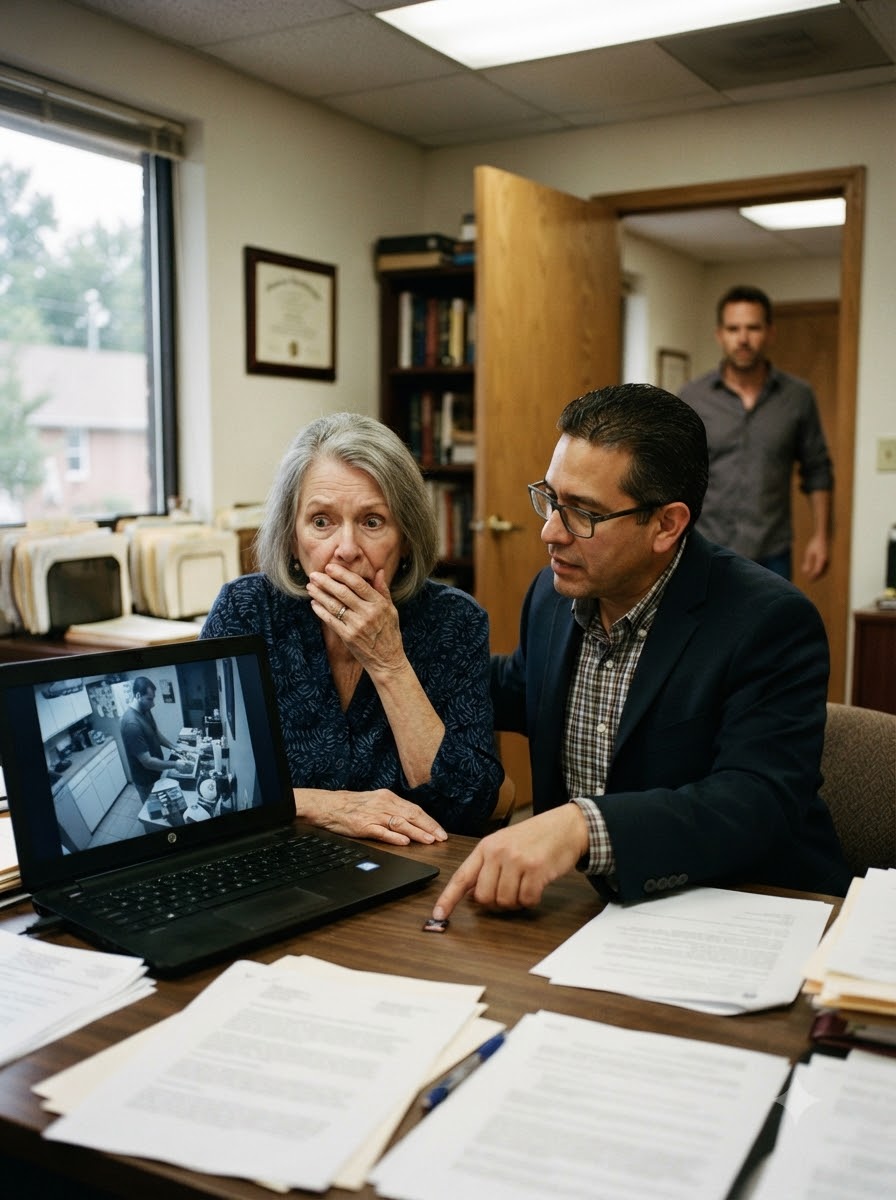
“This is not merely family pressure,” she said. “This is attempted fraud.”
But that was only the first layer.
The second emerged when Evelyn examined the recording information attached to the county’s electronic filing system.
Derek had not simply used the forged power of attorney to contact an agent.
He had used it to apply for a $160,000 home equity line of credit against my house.
The lender had flagged the application because the title records showed the property had passed to me through a survivorship deed after Harold’s death, while Derek’s application described him as co-trustee.
The bank had not released the money yet.
But closing was scheduled for Friday.
Two days away.
My son intended to borrow against my home before selling it.
Evelyn requested the application packet through the bank’s fraud department. It showed that the loan proceeds were supposed to be wired to Caldwell Home Solutions, LLC.
The company had been formed six weeks earlier.
Its owners were Derek and Renee.
A business account statement attached to the application revealed why they were desperate. Their company had nearly $90,000 in debts. Derek had personally guaranteed loans for a failed kitchen-remodeling venture. They were also three months behind on their own mortgage.
My home was not their inheritance plan.
It was their emergency exit.
I sat in Evelyn’s office staring at the numbers.
Part of me wanted to scream.
A larger part wanted to go home, pull Harold’s cardigan from the closet, and bury my face in it.
Instead, I asked, “What do we do?”
Evelyn removed her glasses.
“We stop the loan, report the forgery, and issue a formal revocation of any purported authority. But if you want to prove intent beyond the paperwork, we let Derek believe he still has room to act.”
That was the trap.
The bank froze the application but did not immediately tell Derek why. Thomas Greer agreed to cooperate after retaining his own attorney. He removed the public listing, preserved every email, and provided the originals to investigators.
Paul Mercer, the notary, was questioned.
He turned out to be Renee’s cousin.
His commission had expired eight months earlier.
He admitted Renee had brought him the paper already signed. She told him I was bedridden and asked him to stamp it as a family favor.
He had never seen me sign anything.
Evelyn contacted Adult Protective Services and the financial crimes unit. Detective Lena Ortiz took my statement in my living room.
She did not speak to me as if I were fragile.
That mattered.
“Financial abuse often begins with concern,” she said. “The abuser creates a story that the victim is confused. Then every objection becomes proof of confusion.”
That was exactly what Derek had done.
We needed him to repeat it.
So I called my son.
My voice shook, though not for the reason he imagined.
“I’ve been thinking,” I said. “Maybe I overreacted.”
His relief was immediate.
“I know this is hard, Mom.”
“I want Evelyn there when I sign. Harold always trusted her.”
A pause.
Then he agreed.
He believed I had surrendered.
The meeting took place the next Monday at Evelyn’s office.
Derek arrived in a navy suit. Renee carried a leather portfolio. Thomas Greer came as the supposed real estate representative. Nancy sat beside me, introduced simply as my friend.
Detective Ortiz waited in the adjoining conference room with a bank fraud investigator.
Evelyn had placed a small recorder on the table in plain sight.
“This meeting will be recorded,” she said.
Derek barely glanced at it.
He slid the same papers toward me.
“Just sign here, Mom.”
I kept my hands in my lap.
Evelyn opened a folder.
Before she spoke, I looked at Derek.
“You tried to sell my home like I was already dead.”
His smile vanished.
“No, Mom. We talked about options.”
“You listed it for $439,000.”
Thomas shifted in his seat.
Derek looked at him sharply. “The listing was preliminary.”
“Using a power of attorney I never signed,” I said.
Renee stepped in. “Margaret, you did sign it. You’ve forgotten.”
There it was.
The story they had prepared.
Evelyn placed Dr. Patel’s evaluation on the table.
“Mrs. Caldwell has no diagnosis affecting memory or judgment. She has also completed an independent capacity evaluation.”
Derek gave a short laugh. “One doctor doesn’t see what we see.”
“And what do you see?” Evelyn asked.
“A widow who leaves burners on. Who wanders outside at night. Who can’t manage bills.”
Every word was false.
Evelyn turned to me. “Mrs. Caldwell, have you ever left a burner on?”
“Not once.”
“Do you wander at night?”
“I walk to Nancy’s porch after dinner sometimes.”
Nancy leaned forward. “And I walk her home. She has never been lost.”
Derek’s jaw tightened.
“This is ridiculous. She’s manipulated you all.”
Evelyn removed another document.
“This is the purported power of attorney. Would you like to explain how your mother signed it while she was attending a church bereavement luncheon witnessed by thirty-two people?”
Renee’s face drained of color.
We had confirmed the date through photographs, receipts, and the church sign-in sheet.
Derek looked at his wife.
That tiny movement told me he had not known about the timing problem.
Renee recovered quickly. “The date could be a clerical error.”
“Then perhaps Paul Mercer can explain it,” Evelyn said.
The adjoining door opened.
Paul stepped in with his attorney.
Renee whispered, “Oh, God.”
Paul would not look at her.
He stated that he had not witnessed my signature, that Renee had delivered the document, and that Derek later thanked him by text for “helping get Mom’s house unlocked.”
Evelyn laid printed copies of the messages beside the forgery.
The whole room went silent.
That was the moment Derek realized I had let him walk straight into his own trap.
He pushed back from the table.
“This was Renee’s idea.”
She stared at him.
“You liar.”
“I thought Mom had agreed. Renee handled the paperwork.”
“You called the bank,” Renee snapped. “You told them you were co-trustee.”
Derek stood. “Because you said the document was valid.”
Detective Ortiz entered before he reached the door.
“Sit down, Mr. Caldwell.”
His face collapsed.
Not dramatically. Not all at once.
It simply seemed to empty.
The bank investigator placed the home equity application on the table.
Derek tried one final defense.
“I was protecting family assets. The money would’ve paid for Mom’s care.”
Evelyn turned to the attached wiring instructions.
“Then why were the proceeds going to your company?”
“It was temporary.”
“And why did you submit a purchase proposal from an investment group offering $365,000 for a house listed at $439,000?”
I had not known that part.
Derek looked at Thomas.
Thomas swallowed. “The investment group is controlled by Derek’s business partner. After renovations, they planned to resell.”
So they meant to strip the equity twice—first through the loan, then through a discounted insider sale.
Renee began crying.
She said debt had terrified them. She said Derek could not sleep. She said they had expected to repay everything after reselling the house.
Derek blamed Renee.
Then Paul.
Then Thomas.
Finally, he blamed me.
“If you had helped us when I asked, none of this would’ve happened.”

More From This Author