STORY
Patrick Brought a Realtor to Walter’s Ranch—Then the Surveyor Opened Her Map
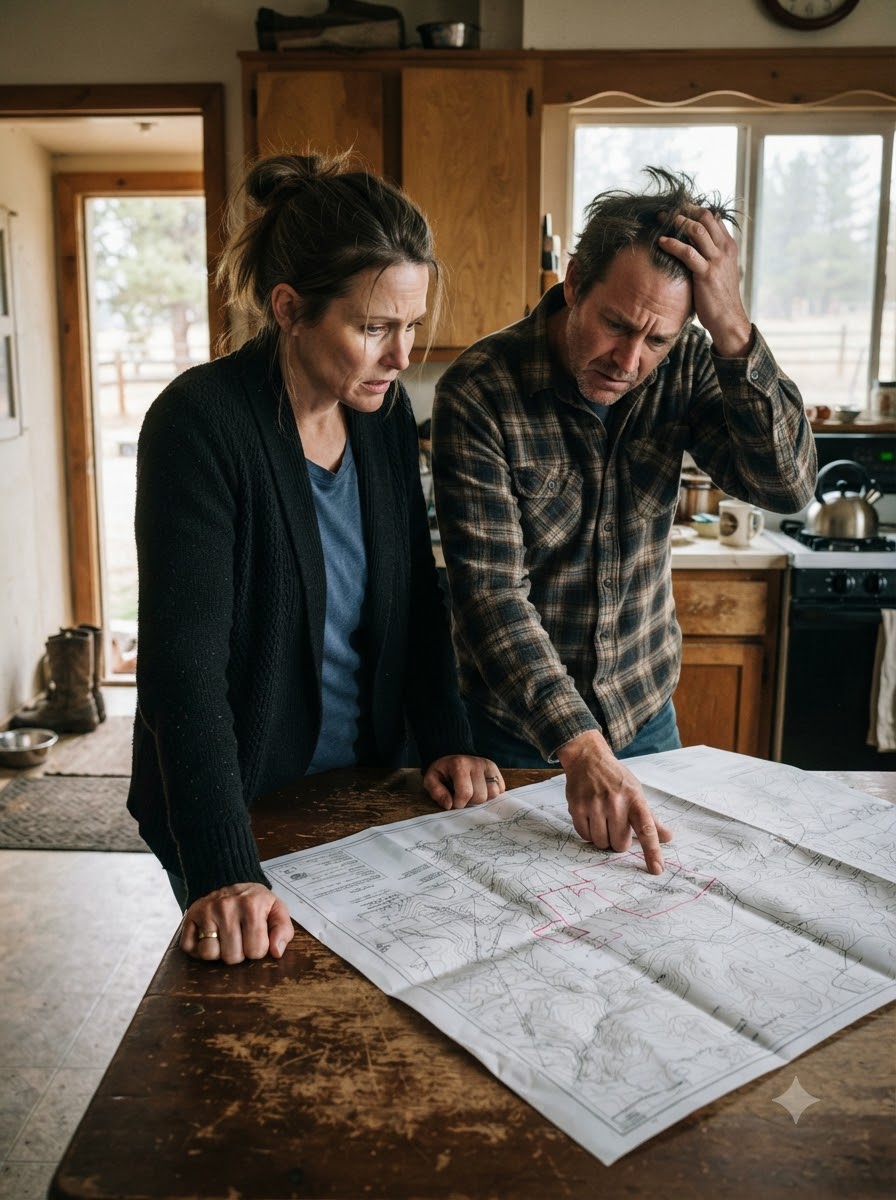
Thomas looked at me. I could see he understood immediately.
Patrick had been carrying a probate acceptance form. The form was prepared by someone who wanted speed, not accuracy. It contained a general statement that the heirs accepted the real property described in the will and intended to sell it.
Patrick signed his name.
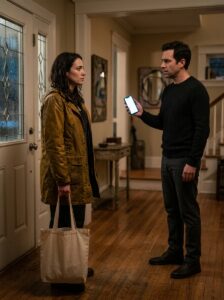
Then he held the phone toward the speaker.
“Melissa, sign.”
There was a long pause.
Finally, she said, “I’m not signing until I talk to a lawyer.”
“You already agreed to this.”
“I agreed to inherit Dad’s ranch. I didn’t agree to inherit a contaminated road.”
“You heard the surveyor. The company owns the ranch.”
“I’m calling an attorney.”
Patrick’s face reddened. “You always do this. You panic and leave me to clean up the mess.”
“Patrick,” I said, “you should not have signed that.”
He turned toward me. “Why? Because now we own it?”
“Because the acceptance form identifies Parcel A by the legal description. It doesn’t give you the main ranch. It confirms that you are accepting the exact property described in the probate filing.”
He looked at the paper.
Thomas stepped closer.
“Mr. Harrow, you may want counsel before recording anything.”
Patrick crumpled the form.
“It isn’t filed.”
“Not yet,” I said.
He threw it into the fireplace.
I pulled my phone from my pocket.
“I photographed it before you signed.”
His head snapped up.
“You recorded me?”
“No. I photographed the form.”
“You can’t use that.”
“It’s a document you signed voluntarily in front of witnesses.”
Thomas nodded toward the dining room.
“My assistant is there,” he said. “She saw the signature.”
Patrick looked toward the back hall. A young woman in a county jacket stood holding a clipboard. She had been taking notes while Thomas worked.
The room seemed to contract around him.
The two layers of his plan had collapsed at once.
He had tried to take the ranch using a will that did not cover it. Then, when corrected, he had formally accepted the one parcel that carried the dangerous lien.
Melissa finally arrived an hour later, driving too fast over the gravel. She entered the house with a lawyer from town, a woman named Carla Jimenez, who had clearly been called in a hurry.
Carla examined the maps, deeds, operating agreement, lien documents, and the photograph of Patrick’s signed acceptance form.
Patrick paced behind her.
“This woman manipulated our father,” he said. “She pressured him into transferring the property.”
Carla looked at me. “Were you present when the company documents were signed?”
“Yes.”
“Was Walter represented by independent counsel?”
“Yes. Miriam Cole.”
“Is she available?”
“She’s in Cheyenne. Thomas already called her.”
Carla sighed.
A moment later, my phone rang. I placed it on speaker.
Miriam’s voice filled the room.
“Elaine, I’m sorry you’re going through this. I have the complete closing file. Walter was advised repeatedly that the company was separate from his estate. He understood the transfer, signed voluntarily, and specifically told me he wanted Elaine protected.”
Patrick stopped pacing.
Miriam continued.
“I also have a video statement Walter recorded at my office six years ago. He was explaining why the ranch was placed in the company. I never filed it with the county because it was not a testamentary document, but I retained it in my client file.”
“Play it,” Patrick said.
Carla turned to him. “That is not your decision.”
But Miriam sent the file to my phone.
Walter appeared on the screen sitting in Miriam’s office. He wore a blue work shirt and looked annoyed in the way he did whenever paperwork took him away from the ranch.
“I want it clear,” he said. “The ranch is Elaine’s. She put her money into this place when nobody else would. Patrick and Melissa can have what I leave personally, but they cannot force her to sell the land. She is the reason there is land left to argue over.”
The recording ended.
No one spoke.
Patrick’s anger had nowhere left to go, so he aimed it at the dead.
“He was manipulated,” he whispered.
Miriam answered through the phone. “Mr. Harrow, I represented your father for more than twenty years. If you intend to challenge the conveyance, you will need evidence of fraud, incapacity, or coercion. I have the medical records, execution notes, and witness affidavits. None support your claim.”
Carla closed the folder.
“Patrick, the company owns Parcel B and Parcel C. The will appears to apply only to Parcel A. The lien is attached to Parcel A. Your sister should not sign anything until she understands that.”
Melissa sat down heavily.
“How much is the lien now?” she asked.
“Interest and administrative costs have increased it,” Thomas said. “The county’s current estimate is three hundred eighteen thousand.”
She covered her face.
Patrick stared at me as if I had personally buried the barrels.
“You knew this was coming,” he said.
“I knew the documents existed. I did not know you would rush here before the funeral.”
“You planned to let us take it.”
“I planned to let the law speak for itself.”
The fallout took six months.
The probate court recognized Patrick and Melissa as heirs to Parcel A, subject to the environmental lien and the recorded easements. The court also confirmed that Harrow Ridge Holdings, LLC owned the main ranch property, the house, barns, water rights, and business assets.
Patrick tried to challenge the 2016 transfers. He alleged that Walter had been mentally incompetent and that I had concealed the company.
The bank produced loan records showing Walter had signed annual reviews after the transfer. Miriam produced her file. Thomas testified about the recorded deeds. The county produced tax notices mailed to the ranch every year.
The judge dismissed the challenge.
The environmental department gave Patrick and Melissa two choices: complete the cleanup or sell Parcel A to an approved remediation contractor. No buyer offered more than a token amount. The lien consumed the parcel’s value several times over.
In the end, they accepted a settlement with the county. They signed over the strip for one dollar, and the county agreed not to pursue them personally beyond the property.
They received nothing.
Their attorney’s fees, however, were substantial.
Patrick blamed me for all of it.
Melissa sent one letter saying she was sorry. She said she had allowed Patrick to speak for both of them because grief made her afraid of making decisions. She did not ask for money. She only asked whether I would send her one of Walter’s photographs.
I sent her three.
Patrick never apologized.
He did, however, stop calling the ranch his.
The credit cards were restored. The bank removed him as an authorized user. The probate court ordered him to reimburse the estate for unauthorized withdrawals he had made after Walter’s death. The real estate agent gave a sworn statement confirming that Patrick had told her the property was worth $1.2 million and that I had no claim to it.
The ranch was never listed.
That spring, I repaired the east barn roof. I replaced the rusted mailbox at the gate with a new black one. Thomas helped me mark the property line, though I no longer needed to see it to know where I stood.

More From This Author