STORY
My Wife Hid Our Intimacy Inside a Calendar Code Called “Grant Closeout.” Then She Told Me What It Was Costing Us.
At 9:14 on Thursday, while I was trying to book a plumber through our shared calendar, I found seventeen appointments called GRANT CLOSEOUT—each on a night my wife, Sloane, had later kissed me as if nothing was wrong.
The last one began in forty minutes.
In the notes, she had written: NO MORE PROVING WE’RE OKAY.
I read it three times before I understood that “Grant Closeout” was not a report she had forgotten to submit. It was us.
Sloane worked for a nonprofit that funded neighborhood arts programs. Grant closeout was a real phrase in her world, something involving receipts, outcome statements, signatures, and a final report proving that money had gone where it was supposed to go.
I knew this because I had listened to her explain it at least a dozen times.
I also knew that our shared calendar was where we put everything neither of us wanted to forget: dentist appointments, trash pickup, my mother’s birthday, the day the furnace repairman was coming. I had opened it because the kitchen sink was leaking under the cabinet and the plumber had offered me a Thursday slot.
I had not been looking for evidence of anything.
But there it was.
GRANT CLOSEOUT, every other Thursday at 9:30.
There were seventeen entries. Some were marked complete. Some had been moved. Two had been canceled and rescheduled. One contained only three words:
NOT TONIGHT. DON’T ASK WHY.
Another said:
IF I CHANGE MY MIND, LET ME.
The newest one—the one scheduled for that night—had a note beneath it.
NO MORE PROVING WE’RE OKAY.
I was forty-one. Sloane was thirty-nine. We had been married eleven years, long enough to know how to read the silence between one another’s sentences.
I still didn’t know how to read that.
***
Sloane came home before I could decide whether looking at the notes counted as betrayal.
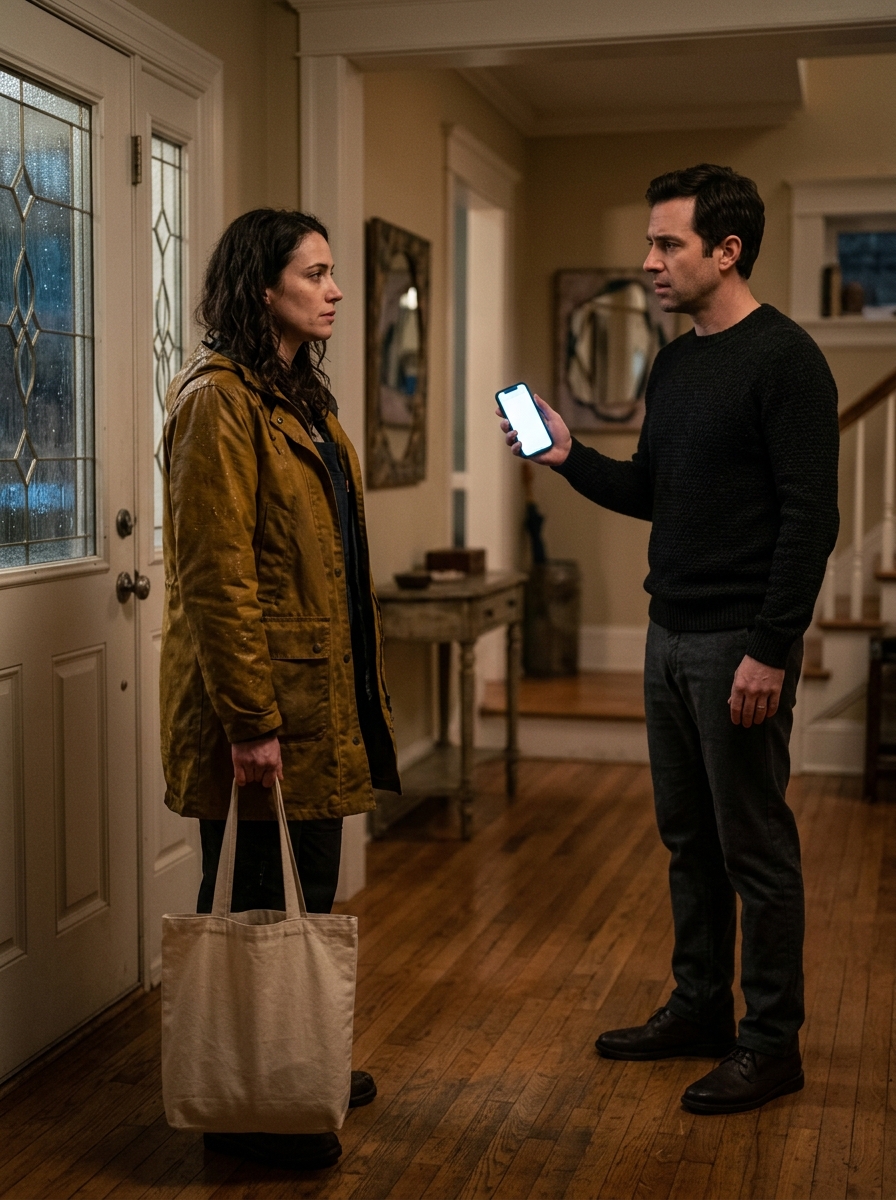
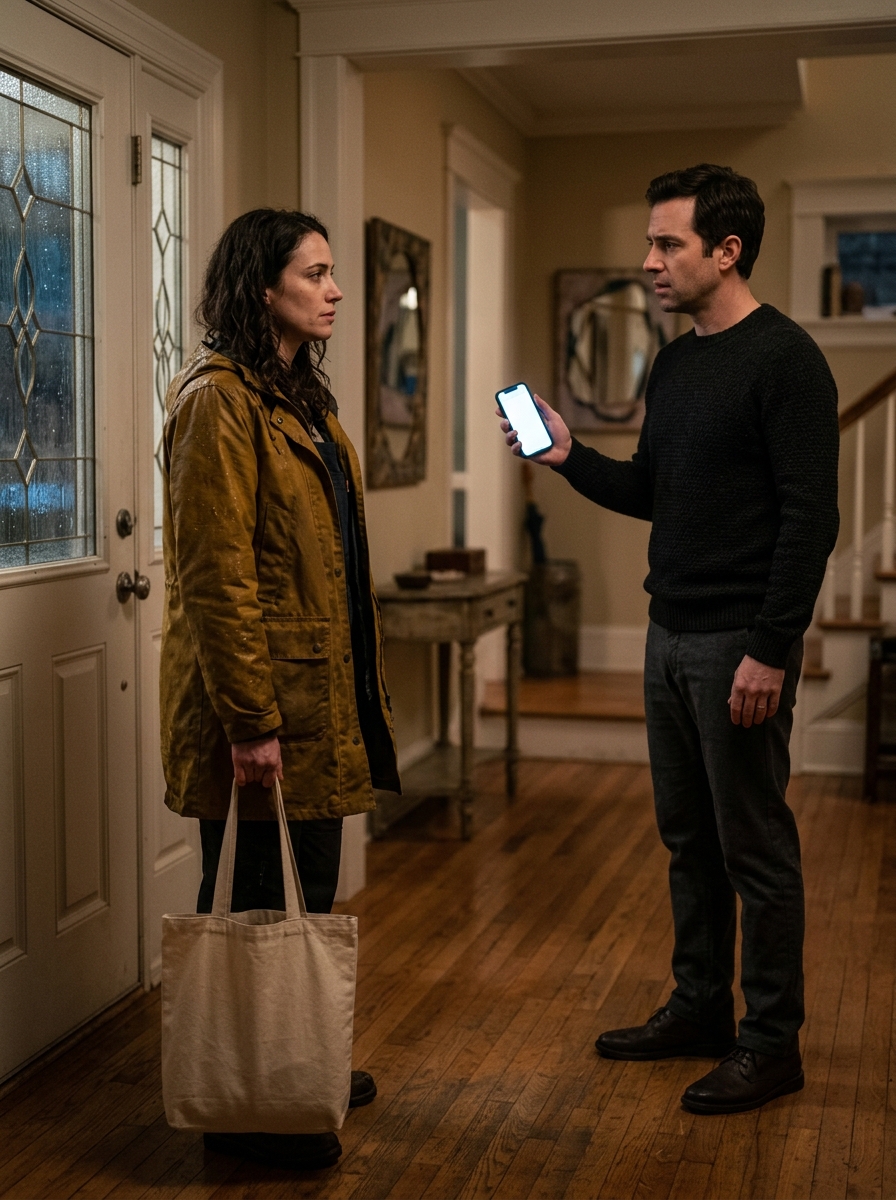
She was wearing her raincoat, though the rain had stopped. Her hair was damp at the ends. She carried a canvas tote in one hand and her laptop bag in the other.
She looked at me in the kitchen.
Then she looked at my phone.
Her expression didn’t change right away. That was worse than panic.
“What is Grant Closeout?” I asked.
She put the laptop bag on the chair.
“It was supposed to look like work.”
“Was it work?”
“Not exactly.”
I held the phone out. “You scheduled us?”
“I scheduled a chance to want you.”
“That’s not what this looks like.”
“No,” she said. “It looks like I scheduled sex so I could pretend it was desire.”
She said it without tears or accusation. It was almost administrative, which made me feel as if I had wandered into the wrong meeting.
I scrolled through the dates again. Every other Thursday. Nine-thirty to ten-thirty. Some had notes. Some had only the title.
I remembered those nights.
On one, Sloane had come into the bedroom after putting away the dishes and kissed me first. I remembered feeling relieved, then guilty for feeling relieved. On another, I had asked if she was tired, and she’d said, “I’m okay,” in a voice I had taken as permission. On a third, she had turned off the bedside lamp without speaking.
I had assumed intimacy was sometimes quiet.
I had not considered that quiet could be a form of endurance.
“Were you pretending every time?” I asked.
Sloane looked toward the hallway.
“No.”
“Which times weren’t pretend?”
“I don’t know, Jonah.”
Her answer struck me as evasive until I saw what it cost her to say it.
“That’s the problem,” she continued. “I started making an appointment because I wanted to give desire a chance to show up. Then I started treating the appointment like something I had to complete. Somewhere in there, I stopped knowing whether I was choosing you or choosing the least painful way through the evening.”
The calendar entry was still open. Forty minutes remained.
Sloane set down her keys. Then she took off her wedding ring, turned it once between her fingers, and put it back on.
I watched the gesture because I didn’t know where else to look.
“Tonight is canceled,” she said.
“Because I found the calendar?”
“Because I found myself waiting for you to discover it.”
That sentence moved the floor beneath us.
She picked up the canvas tote. It was already packed.
“Are you leaving me?”
“I’m sleeping at my sister’s.”
“For how long?”
“I don’t know.”
The old panic rose before I could stop it. I felt it in my chest, hot and immediate. The part of me that wanted to ask what I could do, what she needed, how I could fix this, was already moving toward her.
But she stepped back.
“I’m leaving the room where I’ve been trying to make your disappointment disappear,” she said. “That’s all I know tonight.”
I wanted to tell her that I had never asked her to do that.
The words reached my mouth and stopped there.
Maybe I had never said, Make your disappointment disappear. Maybe I had only sighed. Maybe I had gone still when she said no. Maybe I had made breakfast the next morning without looking at her.
Maybe the body learns a language from repetition, even when the mouth insists it never gave instructions.
Sloane looked at the phone in my hand.
“Before we touch each other again,” she said, “we have to decide whether a yes can be a yes and whether a no can be a no.”
Then she left.
I heard the front door close. I heard the lock turn.
At 9:31, my phone reminded me about Grant Closeout.
I deleted the notification.
I did not delete the appointment.
***
I slept on the sofa and woke at 3:20 with a crick in my neck and the conviction that Sloane had sent a message.
She hadn’t.
The house was too quiet. Not peaceful. Just emptied of the small sounds that made it ours: her feet crossing the upstairs hall, the kettle beginning to complain, the drawer in the bathroom that always stuck before opening.
I opened the calendar again.
I told myself I was trying to understand.
That was partly true. It was also true that I wanted to locate the exact night when everything had changed so I could point to it and say, There. That was the beginning. Before that, we were safe.
The entries didn’t give me that.
The first Grant Closeout had been in April. The note said:
DINNER FIRST. NO PHONES.
The second said:
DON’T START IF I’M STILL WORKING.
The third had no note.
The fourth said:
I WANT TO TRY. THAT IS NOT THE SAME AS PROMISING.
I remembered that night. I had come home from a long day at the high school where I taught science, frustrated because one of my classes had destroyed a lab station. Sloane had been at the nonprofit late, preparing a budget revision. We ate takeout standing at the counter.
Afterward, I asked if she wanted to go upstairs.
She had looked at the clock.
“What kind of want?” she asked.
I laughed because I thought she was teasing.
“What does that mean?”

More From This Author