STORY
My Husband Demanded Divorce at Dawn—Then My Folder Exposed His Forged Plan
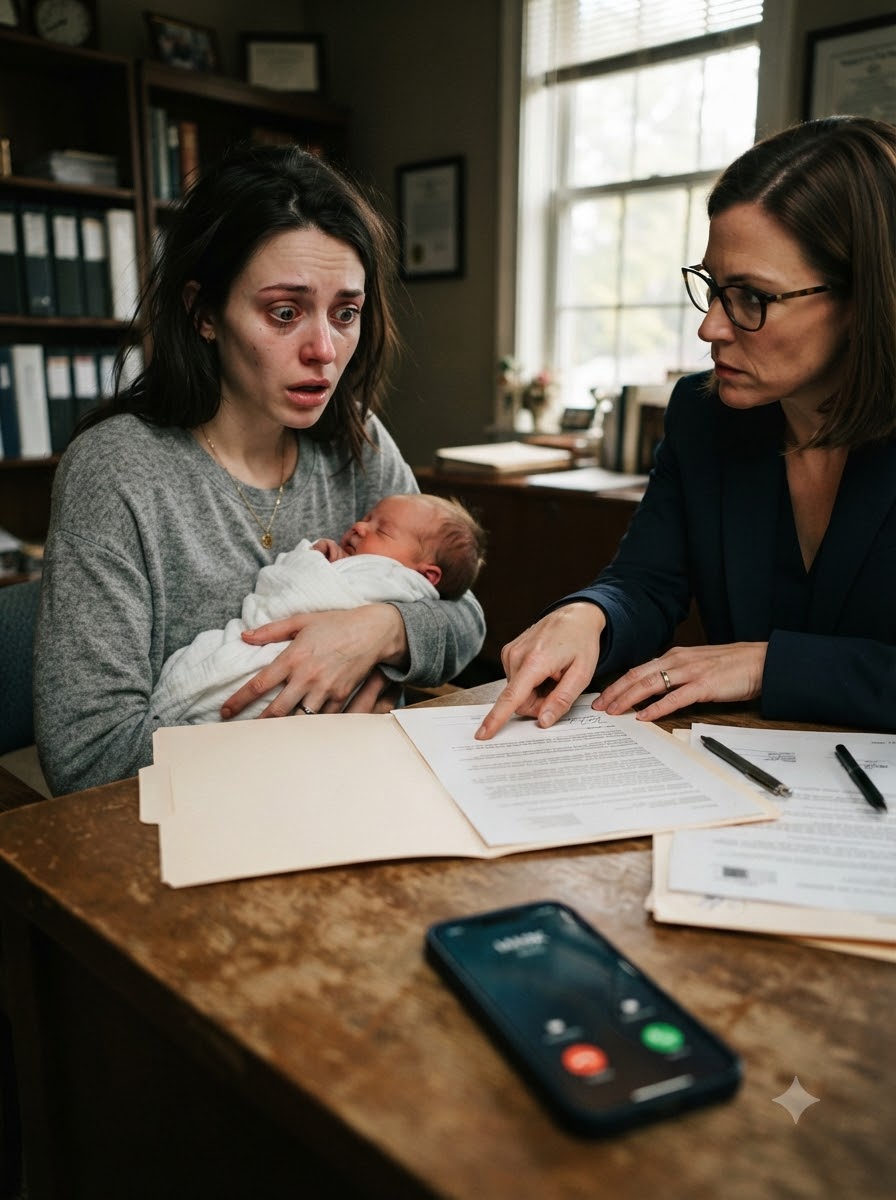
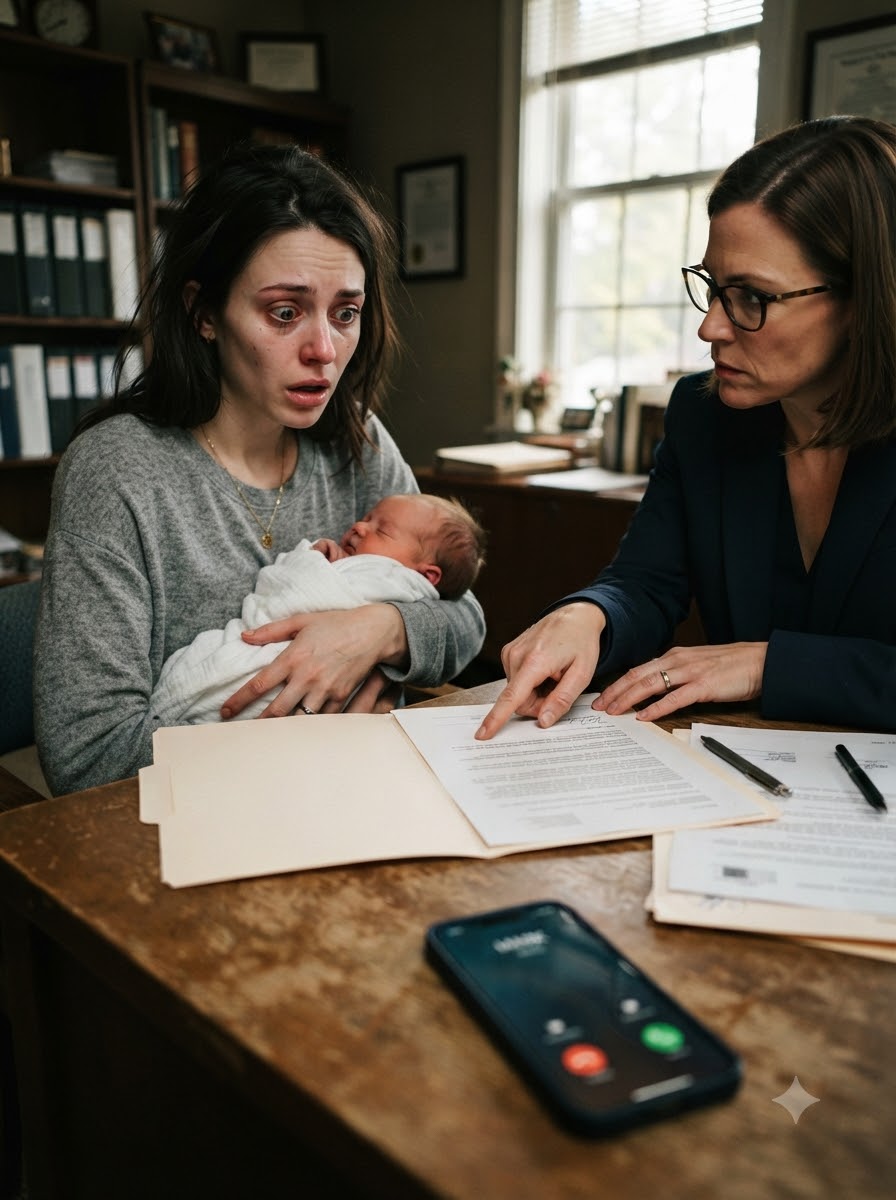
The front door opened at 4:30 in the morning.
Emily heard the lock turn, then the careful click of the door settling into place. Mark was trying to come home quietly.
He was not quiet enough.
She stood barefoot on the kitchen tile with their two-month-old son asleep against her chest. One hand supported the baby’s neck. The other moved a wooden spoon through a pan of eggs.
The coffee maker sputtered behind her.
Three plates waited on the table. A bowl of fruit sat in the center. Upstairs, Mark’s parents and his sister were sleeping in the rooms they had occupied for nearly six weeks.
They had arrived “temporarily” after the baby was born.
Since then, Emily had cooked for them, washed their clothes, changed the sheets, and listened while they criticized the way she held her own child.
No one had asked whether she had slept.
No one had asked whether the baby had slept.
The house simply expected her to continue functioning.
Mark stepped into the kitchen wearing yesterday’s shirt and a loosened tie. His hair was damp with fog. He smelled faintly of whiskey and cold air.
He did not look at the baby.
He looked at Emily.
“Divorce,” he said.
The spoon stopped moving.
The eggs hissed in the pan.
Their son breathed against her collarbone, his small fingers curled into the fabric of her shirt.
Emily looked at Mark’s face. There was no hesitation in it. No grief. No shame.
Only impatience.
“Did you hear me?” he asked.
“Yes.”
His eyebrows drew together. “That’s all you have to say?”
Emily turned off the burner.
A floorboard creaked above them.
Someone was awake.
Mark glanced toward the staircase, then back at her. It was the first sign that his arrival had not been as private as he wanted her to believe. He had expected an audience, perhaps. Or at least the safety of knowing his family would hear only the version he gave them.
Emily carefully lifted the baby into the padded carrier against her chest.
Then she walked past him.
“Where are you going?” Mark asked.
“To pack.”
His expression flickered.
Their bedroom still looked as it had the night before: his jacket draped over a chair, her nursing pillow beside the bed, the bassinet near the window. A suitcase had been hidden behind the winter coats in the closet for three weeks.
Emily pulled it out.
She packed diapers, bottles, three onesies, a nursing sweater, her toiletries, and the blue blanket the hospital had wrapped around the baby after his birth.
She did not pack Mark’s things.
At the bottom of her dresser was a plain manila folder.
No label marked it as important. No tab announced danger. It looked like something used to store old receipts.
Emily slipped it beneath the baby’s clothes.
The folder contained the truth she had been collecting for almost a year.
For nearly three years, Mark had mistaken her silence for stupidity.
Before marriage, Emily had worked in bookkeeping. She had learned to recognize the difference between a mistake and a pattern.
Mark’s mistakes had formed a pattern.
It began with small things.
A withdrawal of twelve hundred dollars he said was for a plumbing emergency. A transfer to an account Emily did not recognize, which he described as a payment to a contractor. A credit-card charge from a hotel two counties away, followed by an explanation about a late client meeting.
At first, she had believed him.
Then the explanations began changing.
The plumbing emergency became an insurance deposit. The contractor became a consultant. The hotel had been a mistake, then a canceled booking, then a place where his car had broken down.
Emily did not confront him. Not immediately.
She started copying statements.
Their joint account showed money leaving on dates that did not match their household bills. Mark’s business account, which he described as barely surviving, had paid for expensive dinners, weekend rentals, and a storage unit in another town.
The storage unit was the first thing she investigated in person.
She found the key in the pocket of one of Mark’s winter coats while looking for a receipt. The address led her to a facility twenty minutes away. Emily did not open the unit. She did not need to.
She photographed the rental agreement through the office window after asking the manager whether a package had been delivered there.
The name on the contract was Mark’s.
The payments came from their joint checking account.
After that, Emily began looking at the house.
Mark called it his house.
His parents called it the family home.
His sister, Lacey, had once told Emily she should feel grateful to be allowed to raise the baby there.
But the first deposit had come from Emily’s inheritance.
Her grandmother had died four months before Emily and Mark married. The inheritance had been placed in a separate account at first. Mark had urged her to use it for the down payment, promising that the house would belong to both of them.
Emily had agreed.
The closing documents showed that $180,000 of the down payment came from Emily’s inherited funds. She had signed a marital-property agreement acknowledging that contribution would remain her separate property unless she later transferred it in writing.
She had never transferred it.
The deed listed both spouses, but the agreement was attached to the closing file. Mark had signed it. His attorney had initialed every page.
Emily remembered Mark barely glancing at the documents while his father joked that lawyers made simple things complicated.
She remembered signing because she trusted her husband.
Now she wondered whether Mark had counted on that trust becoming evidence against her.
She returned to the kitchen with the suitcase in one hand and the baby in the other.
Mark stood near the table.
His mother, Carol, was halfway down the stairs in a robe. His father stood behind her. Lacey peered between them, her phone already in her hand.
Mark looked at the suitcase.
“You’re leaving?”
“You asked for a divorce.”
“I didn’t say you could take everything.”
Emily looked at him.
“I’m taking my clothes and the baby’s things.”
“This is my house.”
Carol’s mouth tightened with satisfaction.
Mark pointed at the suitcase. “You don’t get to storm out and start claiming property because you’re emotional.”
“I’m not claiming anything.”
“You always do this,” Lacey said from the stairs. “You make everything dramatic.”
Emily looked up at her. “I haven’t said a word since Mark came home.”
“That’s part of the problem,” Mark said. “You shut down, then punish everyone with your silence.”
It was an impressive performance.
He had come home drunk before dawn, announced the end of their marriage while she held their newborn, and somehow she was the one being unreasonable.
Emily did not answer.
She carried the baby outside.
The sky was dark blue at the edges. Sprinklers clicked along the sidewalks. The rest of the neighborhood slept behind warm windows.
Mark followed her to the front door.
“You’ll be back,” he called.
Emily secured the car seat.
“No,” she said.
He laughed, but it sounded forced.
“You don’t have anywhere to go.”
“I do.”

More From This Author