STORY
My Adopted Sister Accused Me Twice—A Hospice Recording Exposed Why
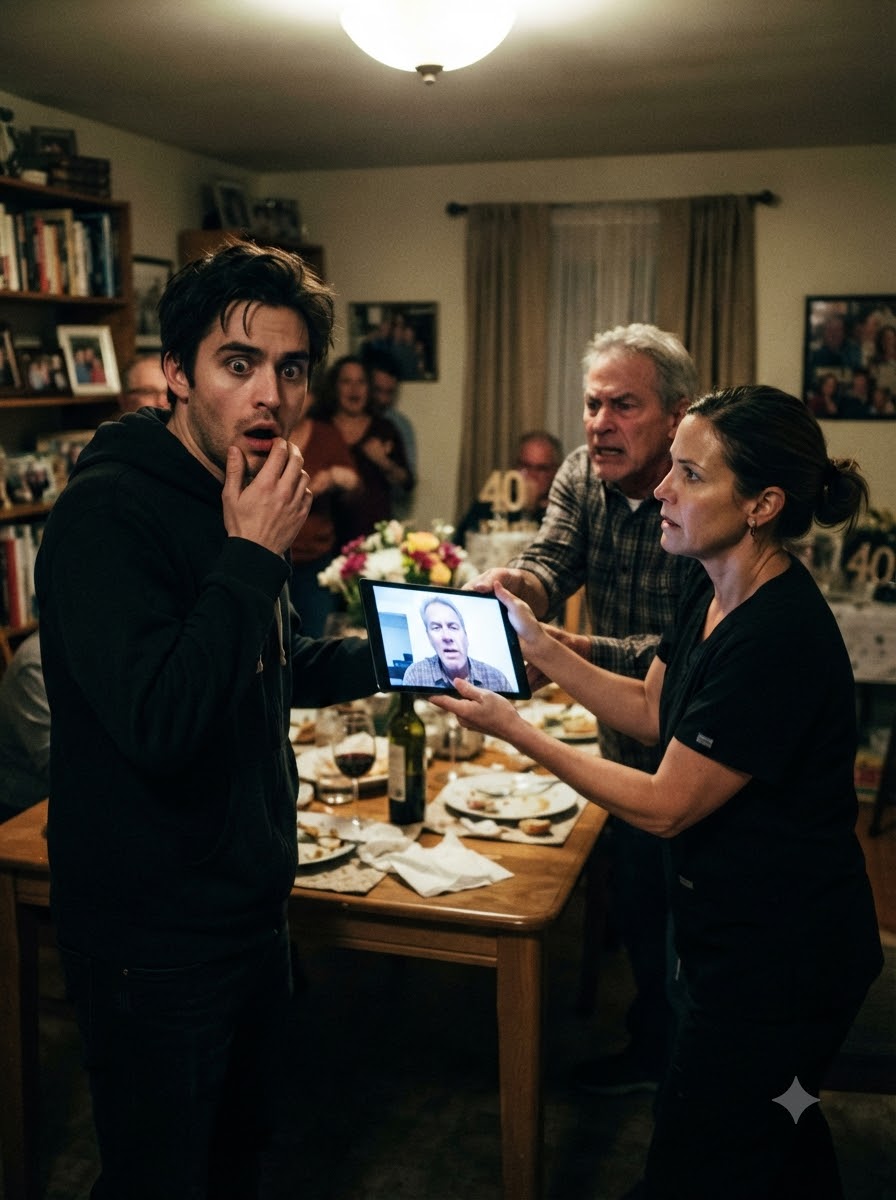
The second time Allison accused me, she made one mistake.
She forgot houses have eyes now.
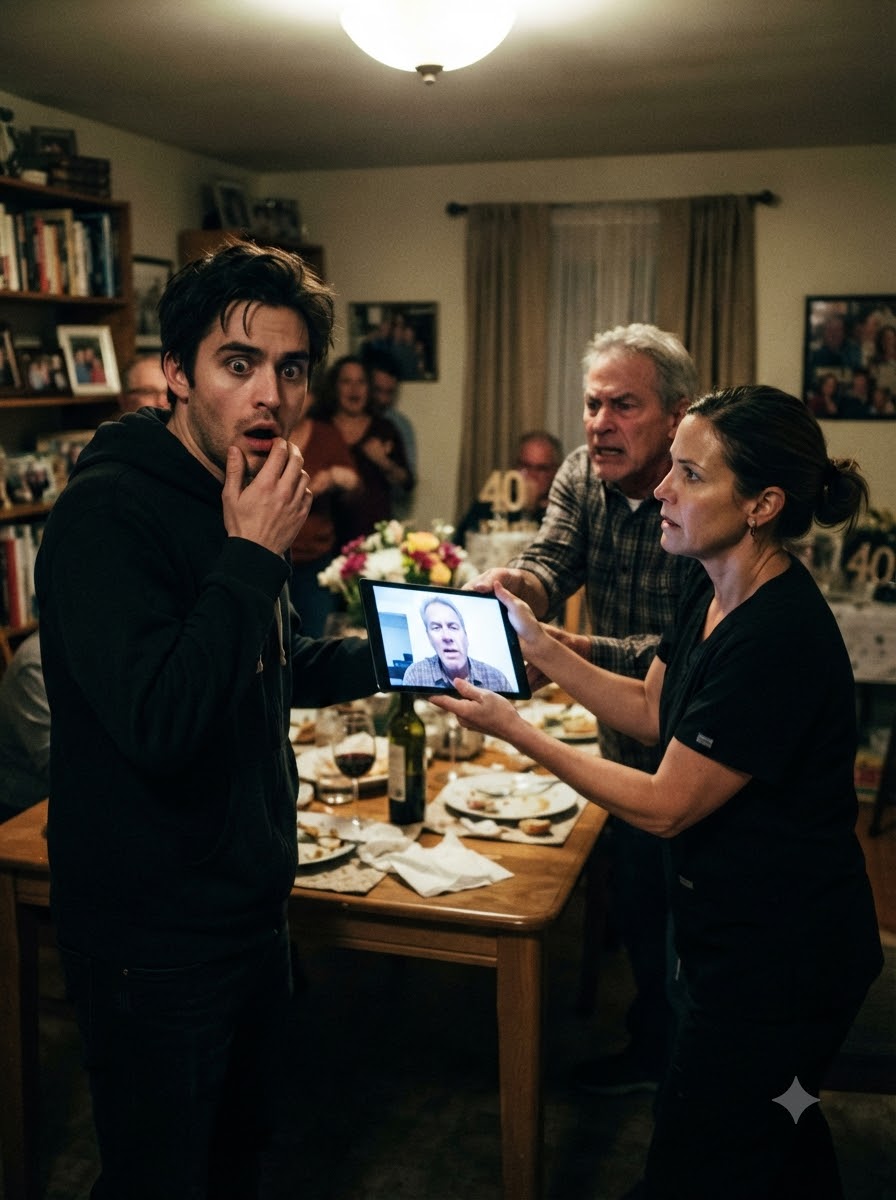
Ten years after she destroyed my life at our parents’ anniversary dinner, I stood in the same white house on Willow Creek Lane while my father called the police and my mother blocked the front door.
Allison was curled against the dining room wall, sobbing into both hands.
“He followed me upstairs,” she said. “He tried to get into Clara’s room.”
My brother Mason stepped between us, fists clenched.
“You came back to finish what you started?”
I stared at the four people who had already buried me once.
Then I looked at the small black camera above the staircase.
“You might want to wait before you hit me this time,” I said.
My father’s face hardened.
At sixty-one, Richard Hayes was thinner than I remembered, but rage still filled him out. His jaw tightened as he took a step toward me.
“You think a camera will save you?”
“No,” I said. “The truth might.”
Ten years earlier, I had believed truth was enough on its own.
I was seventeen then, sitting beneath a crystal chandelier while thirty relatives celebrated my parents’ twentieth wedding anniversary.
My mother, Diane, had polished the silver twice. My father had ordered expensive wine he pretended to understand. Mason, nineteen and home from college, held court at the far end of the table.
Allison sat beside me, pale and rigid.
She was sixteen, adopted at six after her mother died. For years, I had checked beneath her bed for monsters, walked her to school when older girls bullied her, and slipped candy under her door when our father punished her.
When she stood, I thought she might faint.
“I’m pregnant,” she announced.
My mother dropped the cake knife.
My father demanded a name.
Allison pointed at me.
Her finger shook. Her voice did not.
“It was Zach.”
My father crossed the room and punched me before I could finish saying she was lying.
I crashed into the sideboard. A glass pitcher shattered beneath my hand. Blood poured from my palm and mouth while relatives stared as though I had transformed in front of them.
Mason stood above me.
“You’re dead to us,” he said.
The police took me away in handcuffs.
They released me the next morning because Allison’s dates were vague, there was no physical evidence, and soccer camp records showed I had been three hundred miles away during part of the period she described.
None of that mattered at home.
My possessions were scattered across the lawn. My laptop had been smashed. My father waited on the porch with a baseball bat.
“You have five minutes.”
My mother watched from behind the curtain.
I left with two hundred dollars, three shirts, and a college acceptance letter that became useless when my parents emptied the education account they had opened in my name.
My girlfriend Emily said she believed me, but she was too frightened of her own parents to help. Friends stopped answering. Someone spray-painted PERVERT across my car.
The district quietly asked me not to return to school.
I finished my diploma through an adult education center while sleeping in that car behind a twenty-four-hour gym. I washed in the locker room before dawn and worked nights unloading trucks.
For two years, I waited for Allison to tell the truth.
Then I stopped waiting.
I changed cities, studied cybersecurity at community college, and eventually built a small digital-forensics firm with a former detective named Lena Ortiz. We recovered deleted records, authenticated videos, and found the trails people assumed they had erased.
I learned something useful.
Lies rarely disappear.
They simply get stored somewhere people forget to look.
I had no contact with my family until my mother called on a rainy Tuesday in October.
Her voice was older, smaller.
“Your father’s heart is failing,” she said. “There are things you need to know.”
I nearly hung up.
Then she said, “It’s about Allison’s baby.”
According to the story circulated through our extended family, Allison had miscarried three months after accusing me.
My mother told me that was another lie.
The baby had lived.
Her name was Clara. She was nine years old and lived with Allison in the guesthouse behind my parents’ home.
“Come Sunday at six,” my mother whispered. “Richard and Mason will be at a football fundraiser. I’ll show you everything.”
She sent the address, as if I could have forgotten it.
I arrived at 5:52 with my phone recording in my breast pocket. A dash camera captured me pulling into the driveway. The security company’s logo was displayed beside the doorbell.
My mother let me in.
She looked frightened enough to convince me.
“I’m sorry,” she said, touching my sleeve.
It was the first apology I had received from anyone in that house.
“Show me.”
She led me upstairs, then claimed the papers were in my father’s study. While I waited on the landing, car doors slammed outside.
Mason entered first.
My father followed.
Allison appeared from the guesthouse with Clara behind her.
Everything happened with the precision of a rehearsed play.
My mother gasped and asked what I was doing there.
My father shouted.
Mason rushed upstairs.
Allison pulled Clara against her and screamed that I had followed her.
Within a minute, she was on the dining room floor telling a second story about me.
This time, I did not beg.
When the police arrived, I gave them my phone, the dashcam card, and the email my mother had sent.
The doorbell footage showed her greeting me at 5:53 and saying clearly, “Thank God you came.”
The hallway camera showed me standing alone on the landing. I had never approached Clara’s room.
My mother claimed I had fabricated her email.
That was when Lena arrived.
I had arranged for her to wait at a coffee shop nearby. If I did not call by 6:15, she was to come with copies of everything my mother had sent.
Lena handed the officers a preservation report showing the email had originated from my mother’s tablet, through the Hayes home network.
The room changed.
Not dramatically. Truth rarely enters with thunder.
It arrived as a slight easing in the officers’ shoulders and a flicker of panic across my mother’s face.
Then Clara spoke.
“Grandma told Mom she had to cry,” she said.
Allison spun toward her.
“Go outside.”
“She said Uncle Zach would go away again.”
Mason grabbed Clara’s arm.
Lena lifted her phone. “Don’t touch her.”
One officer stepped between them.
My father began barking about misunderstandings, family stress, and an estranged son trespassing where he was not welcome.
I watched my mother.
“You called me here to frame me again,” I said.
Her mouth trembled.
“I was trying to protect this family.”
“From what?”
No one answered.
The police separated us. Because the videos disproved Allison’s immediate claim, I was allowed to leave.
But before I reached my car, Clara ran after me.
She pushed a folded piece of paper into my hand.
It was a photograph printed on ordinary copy paper. Mason sat on a hospital bed holding a newborn. Allison lay beside him, exhausted.

More From This Author