STORY
We Had Become an Excellent Team—Then My Boundary Forced My Husband to Choose Our Marriage
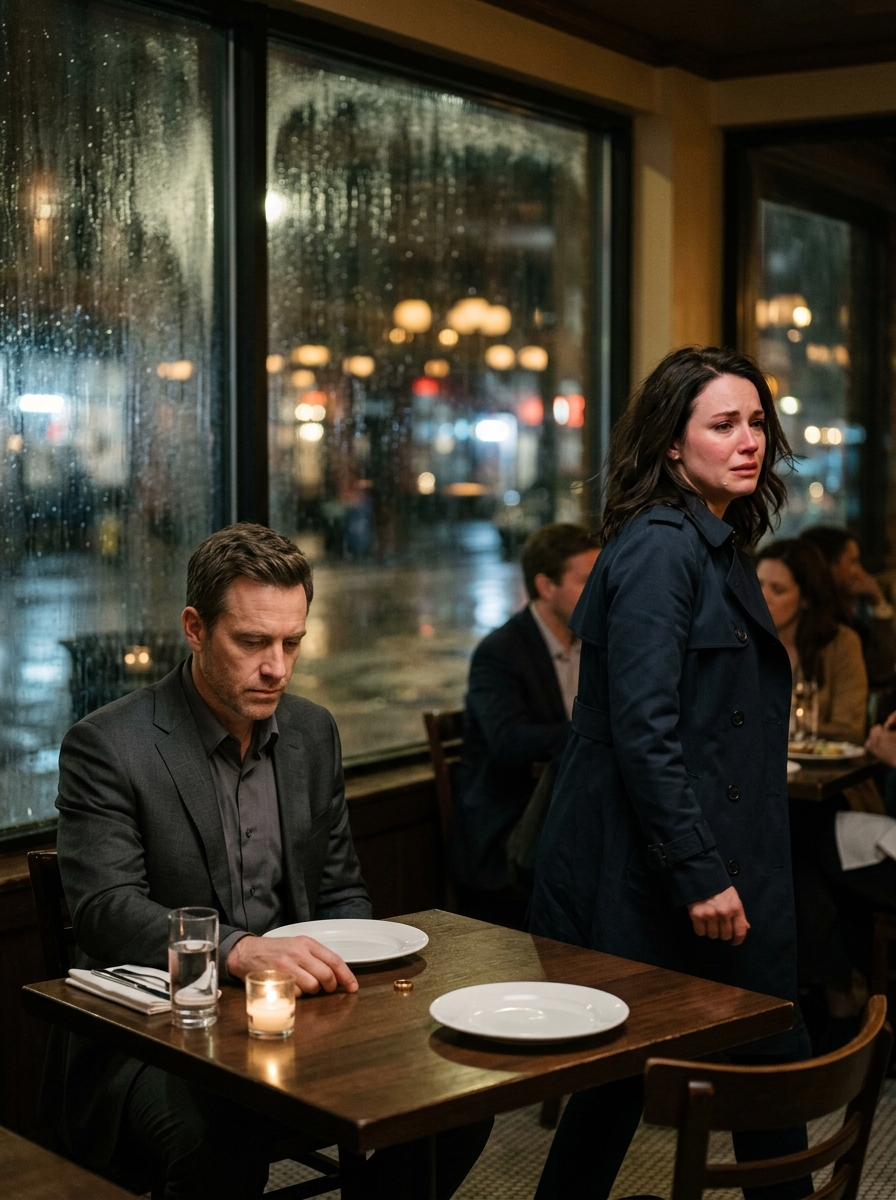
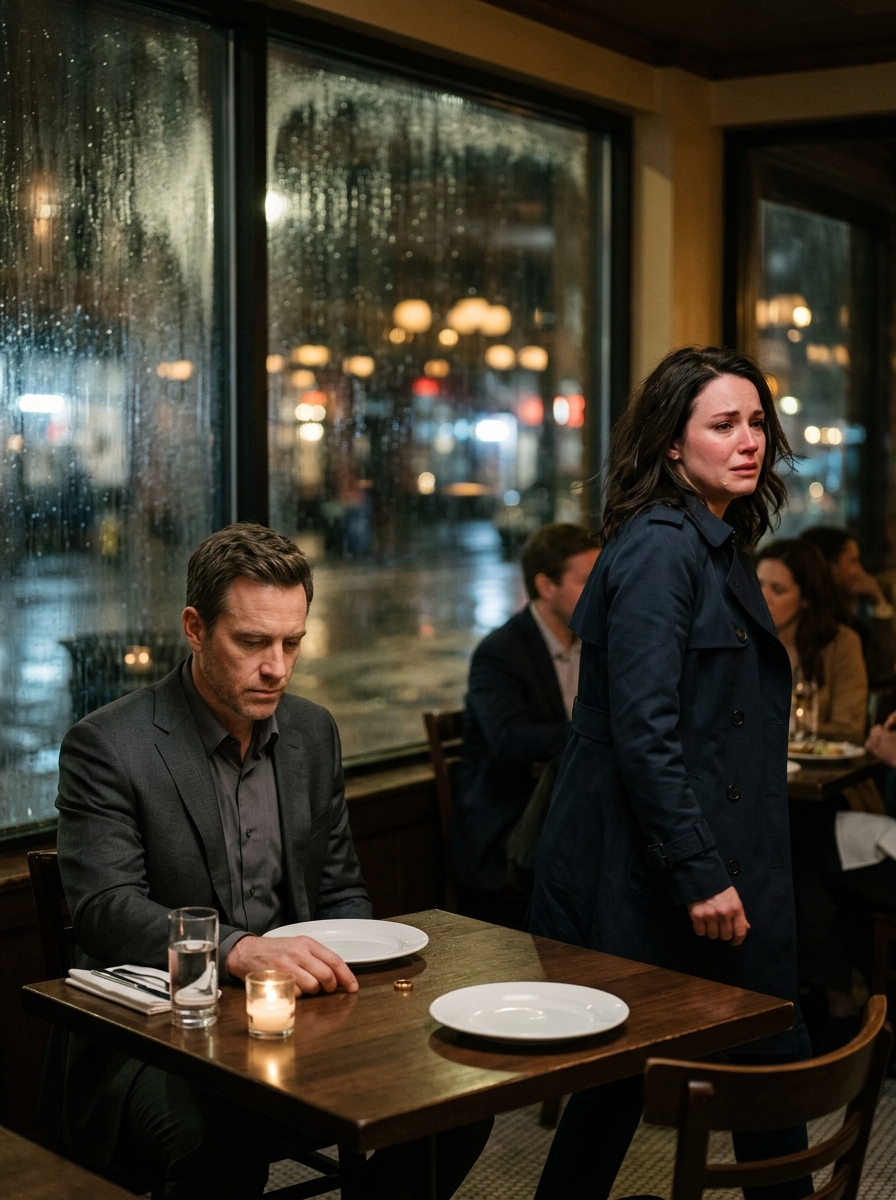
The ring stayed between our plates, shining beside the candle Mason had asked the server to light.
I did not touch it.
Outside, the air smelled like wet pavement and the rosemary planted in the restaurant’s window boxes. I stood beneath the awning with my coat open, waiting for the shaking in my hands to stop. Behind the glass, Mason remained at the table. He had not followed me. He had not called my name.
For eleven years, I had known what Mason did when he was frightened. He made a list. He found the nearest exit. He looked for the practical next step.
Maybe the next step was letting me walk away.
I drove to my furniture studio, which occupied the back half of an old warehouse near the river. There was an office upstairs with a narrow daybed, a hot plate, and a sink that produced either scalding water or no water at all. I had slept there after late projects, but never with a bag packed for the possibility that my marriage might not be waiting when I returned.
At two thirteen in the morning, my phone lit up.
**Do you need the blue blanket?**
I stared at the message until the screen went dark.
Then I turned the phone facedown and slept badly.
***
Mason arrived at the studio at eight the next morning carrying coffee.
He had always carried coffee when he wanted to apologize without using the word sorry.
I opened the downstairs door but did not step aside.
He held out the cup. “Black. No sugar.”
“I know what I drink.”
“I know.”
The coffee steamed between us.
His hair was still damp from a shower. He wore the gray sweater I had given him for our ninth anniversary, back when anniversaries involved gifts chosen for the person rather than reservations made around a work schedule.
“You left your ring,” I said.
“I noticed.”
“Why?”
His mouth tightened. “Because you said you were leaving.”
“I said I was sleeping here.”
“You said you were done letting us call this a marriage.”
“That is not the same as a divorce.”
“It sounded like one.”
I took the coffee. It was too hot to drink.
Mason stepped inside, looking around at the half-finished cabinet near the wall and the clamps lined up beside it. He had helped me build the workbench when I started taking private restoration jobs. At the time, he had held each board steady while I drilled. We had worked shoulder to shoulder, laughing whenever the instructions contradicted themselves.
Now he stood with his hands in his coat pockets, careful not to touch anything.
“I don’t know what you want me to say,” he said.
“I want you to tell me what you heard.”
“That you’re lonely. That you don’t want to live like this anymore. That I’ve turned into somebody who pays bills and remembers appointments.”
“Those are true.”
“And that I’m supposed to make you feel desired by Sunday.”
“I didn’t say that.”
“You gave me a deadline.”
“I gave us a point at which we stop avoiding the question.”
He looked toward the high windows. Morning light fell across the dust in the air.
“What if I don’t know?” he asked.
“Then say you don’t know.”
“I just did.”
“No. You said you don’t know what to say. That’s different.”
He looked at me then. For a second, something moved through his expression—not anger, exactly. Recognition, maybe. The unsettling realization that I had been paying close attention all along.
“I love you,” he said.
“I know.”
“You’re making that sound insufficient.”
“It is insufficient if love means I’m the person you trust to take the car to the shop.”
His face closed.
I immediately wanted to take the words back. Not because they were false, but because I had thrown them hard enough to hurt.
Mason had spent eleven years making himself useful. When my wrist was injured, he learned how to wrap it. When my father died, he handled the calls I couldn’t make. When my business had a bad quarter, he found three ways to cut expenses without making me feel ashamed.
He was not careless with love.
He was careful with it until it stopped feeling like love.
“I can’t promise you a feeling on command,” he said.
“I’m not asking for a feeling on command. I’m asking whether you’re willing to stop hiding behind all the things you do.”
He nodded once, as if I had assigned him an unpleasant but necessary task.
“I’ll find a counselor,” he said.
“Together?”
“If you want.”
“I want you to want.”
His eyes flashed. “Do you hear yourself?”
“Yes.”
“You keep saying you don’t want me to perform, but you also keep rejecting every answer unless it arrives in exactly the right shape.”
The accusation landed because it was not entirely wrong.
I looked down at the coffee in my hand.
“Then maybe we should begin by admitting we both make the other person guess,” I said.
He did not come upstairs. He did not ask to see where I had slept. He left after ten minutes, taking the unopened coffee cup with him.
That afternoon, he texted the name of a couples counselor.
Her name was Dr. Saira Nunez. Her first available appointment was the following Thursday.
It felt both too far away and not far enough.
***
When Mason and I met, he was the first person I had dated who seemed unembarrassed by care.
We were thirty and thirty-three, old enough to have collected a few bad stories but young enough to think the right person would make them irrelevant. He worked for the city’s emergency management office. I restored antique furniture and taught weekend workshops.
On our third date, he noticed I was cold and gave me his scarf without making a production of it. I kept the scarf. I still had it.
In the first years of our marriage, he touched me constantly in small, unremarkable ways. His palm rested against my back when we crossed a street. He brushed sawdust from my shoulder. He caught my hand in the grocery store when I tried to walk away from an argument.
Our affection was never especially theatrical. It was threaded through ordinary life.
Then Mason’s mother had a stroke.
Ruth survived, but the person who came home from the hospital was changed. She needed help with medications, transportation, insurance calls, and the endless negotiations that made illness feel like a second job. Mason became her emergency contact, advocate, scheduler, and translator.
For eight months, our life filled with phone calls.
I went with him to appointments. I learned the names of her medications. I sat in the waiting room while he argued with a billing department. We became an efficient pair moving through a crisis.
One evening, after a particularly bad week, Mason and I were sitting together on the couch. I reached for him.
He flinched before I touched him.
His phone rang. He looked at the screen and closed his eyes.
“I can’t be needed in another way tonight,” he said.
He answered the call.

More From This Author