STORY
Uncle Jesse Opened My Father’s Hidden Box—Then the Family Lie Began Playing
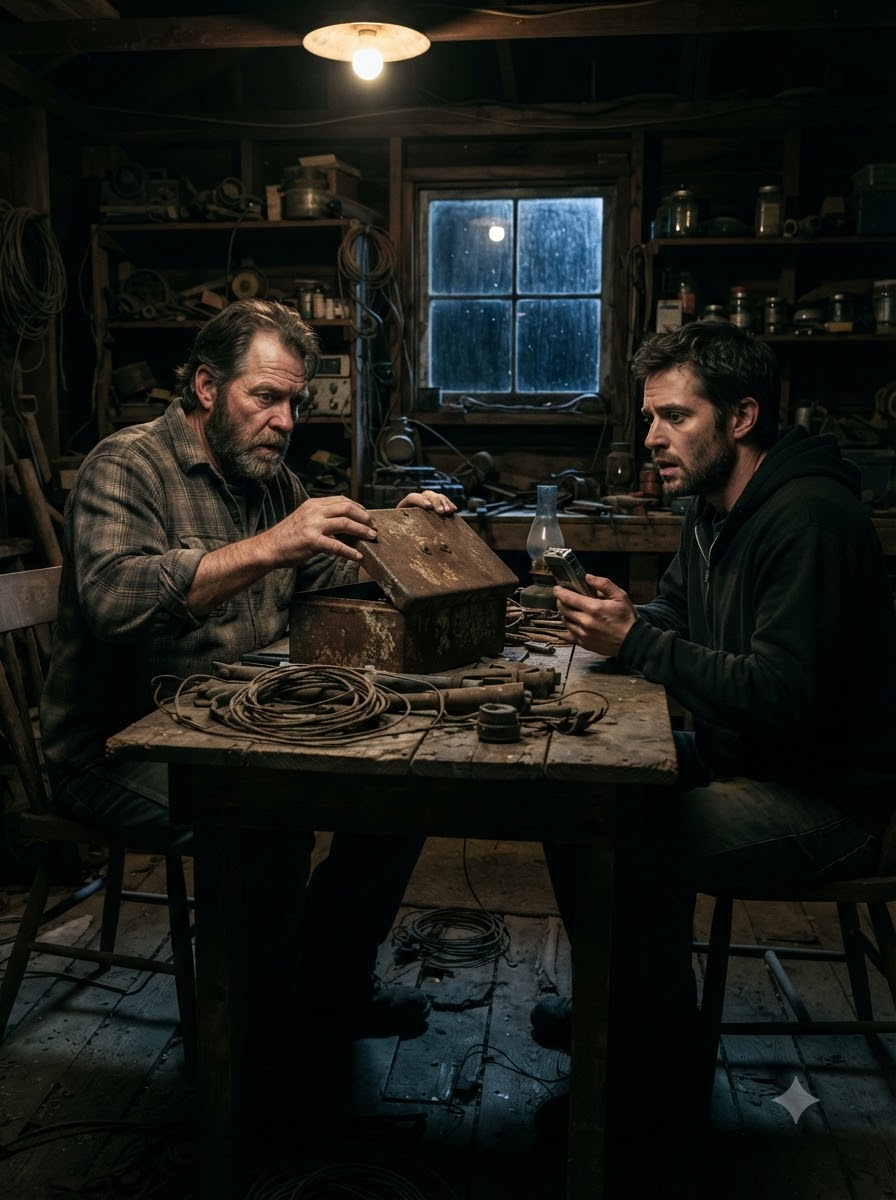
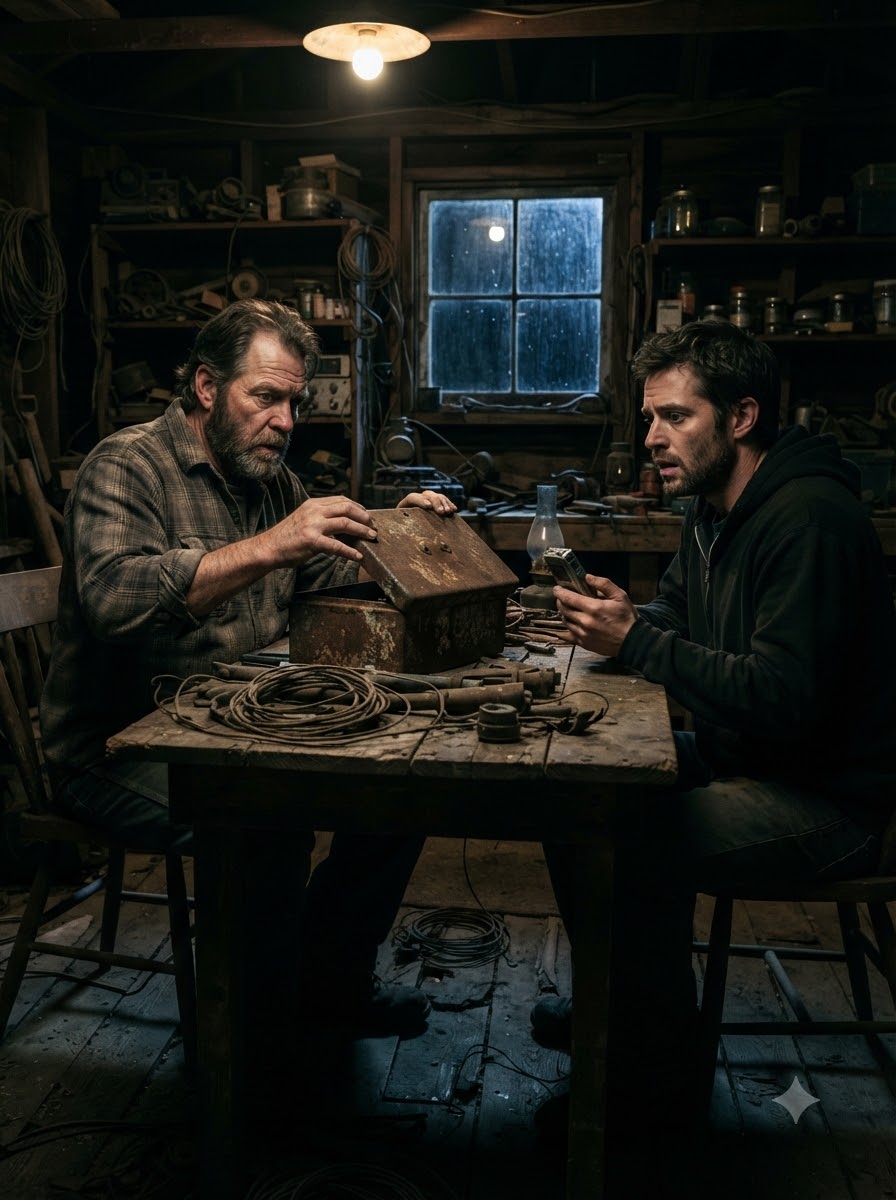
The night I decided to sell our house, my Aunt Elaine arrived with a buyer before I had called a real estate agent.
She stood on our porch in a cream-colored coat, holding a folder against her chest. Beside her was a man with a tape measure clipped to his belt. My mother was asleep upstairs after her second hospital stay that month. There were three past-due notices on the kitchen table and forty-three dollars in my checking account.
Elaine looked past me into the hallway. “I thought we could save you some time, Noah.”
The man stepped forward as if I had invited him in.
I blocked the doorway. “Who is he?”
“Mr. Price buys houses as they are. No inspections, no waiting.” She lowered her voice. “Your mother shouldn’t have to worry about losing this place.”
That was exactly what she had told me on the phone that morning: if I waited much longer, the bank would take the house. Now she laid a paper on top of her folder. It said her family trust had a lien against our property for $68,000.
I stared at my mother’s signature at the bottom.
“I don’t remember her borrowing money from you.”
“She did,” Elaine said. “After your father died. She was embarrassed. I promised I wouldn’t tell you unless I had to.”
My uncle Jesse came down the stairs behind me. He had been carrying a laundry basket, but he set it on the landing when he saw her.
Elaine’s smile vanished. “This is family business.”
“I’m family,” he said.
Mr. Price looked from one of them to the other and took a small step back.
Jesse moved beside me and studied the paper without touching it. “When did Ruth sign this?”
“Fifteen years ago.”
“Funny,” he said. “You used her married name.”
“She’s never changed it.”
“She changed it legally after Sam died. Started using her maiden name on everything but the mailbox. You were at the courthouse with her.”
Elaine snatched the paper away. “She can explain it when she wakes up.”
“No,” Jesse said. “You can explain it now.”
Elaine left with her buyer. Before she got in her car, she turned and called to me, “Ask your uncle what his advice is worth. He’s had plenty of years to think about debts.”
Jesse said nothing. I stood there until her taillights disappeared, angry at her and, to my shame, angry at him too. If he knew something that could help us, why hadn’t he told me?
My father, Sam, had died when I was ten. At his funeral in a small Ohio chapel, my mother sat beside the casket with both hands wrapped around a damp handkerchief. Our relatives came through in a line, embraced her, and drove back to their warm houses. Jesse was the one who stayed. That night he washed the dishes people had left behind and slept on our couch in case my mother needed anything.
A year later, he went to prison for aggravated assault. He had hit a man in a bar fight, and the man had suffered a permanent injury. Jesse never asked us to pretend otherwise. His letters to me were full of ordinary things—books he had read, questions about school, drawings of birds outside his cell window. He never wrote a word in his own defense.
By the time he was paroled fifteen years later, most of the family had decided there was no room for him. My mother disagreed. She opened our front door while he stood at the gate with a torn backpack and told him my father’s old room was his.
He tried to repay her in every way he could. He looked for work each morning. He repaired the fence, swept the porch, and turned a patch of hard dirt behind the house into a garden. Once, when I asked what he was planting, he smiled and said, “Something that’ll feed people with good hearts.”
I thought he meant vegetables.
Five years after Jesse came home, the plant where I worked closed. Then my mother became ill. Her medication alone cost more than I could earn doing delivery shifts, and the bills kept arriving whether she was home or in the hospital. Jesse worked nights cleaning a warehouse. Between us we were still falling behind.
After Elaine left, he followed me into the kitchen. The lien document was gone, but I could see my mother’s signature as clearly as if it were still on the table.
“Tell me she didn’t sign it,” I said.
“She didn’t.”
“How do you know?”
“Because I saw Elaine make the first attempt.”
I pulled out a chair. Jesse remained standing.
Two weeks before he went to prison, he told me, he had brought my mother a form from Elaine’s office. Elaine had said it was needed to settle an old account from my father’s estate. My mother read it and refused to sign. Jesse remembered the argument because he had been embarrassed to carry the paper to her.
“What was the form?”
“A loan agreement.”
“So you knew she was trying this, and you never told me?”
“I told your mother. After prison, I thought Elaine had let it go.” His eyes went to the overdue notices. “I was wrong.”
He asked me for a flashlight and led me into the backyard. The garden beds were bare except for winter stalks and a few rows of garlic. In one corner stood a crooked wooden marker he had made from the old fence. He knelt beside it and pressed his fingers into the soil.
“I found something in your father’s room,” he said. “A drawing tucked under a drawer liner. Sam drew this yard down to the inch. He marked a spot here, but I couldn’t make sense of it until I started rebuilding the beds.”
“You found it five years ago?”
“The drawing. Not what it led to. I moved the marker yesterday. I was going to show you tonight.”
He dug with a narrow trowel. I held the flashlight while he worked through a layer of stones. Less than a foot down, metal rang against metal.
We carried the dirt-caked biscuit tin into the kitchen. Jesse pried up the lid with a screwdriver. Inside a sealed plastic bag were my father’s pocket notebook, a yellowed deed, and a letter addressed to my mother.
The letter was dated three weeks before he died.
Ruth, it began, if Elaine keeps insisting we sign the land over, I want you to know what I found.
My father had worked maintenance for a company that leased land near an old gravel road. Years before, he and his brother had inherited a neglected forty-acre parcel from their grandfather. Jesse had signed his interest over to my father when he was young and short of money; my father had paid him for it. The land seemed worthless until a gravel company sought rights to use a section of it.
Elaine, who helped their grandfather with his paperwork, had offered to manage the lease. My father had refused. In his letter he wrote that she had already taken the original deed from his desk once and had told him my mother would be better off if he stopped asking questions.

More From This Author