STORY
He Said Their Bedroom Had Been Dead for Two Years—Then His Wife Heard the Truth About Why
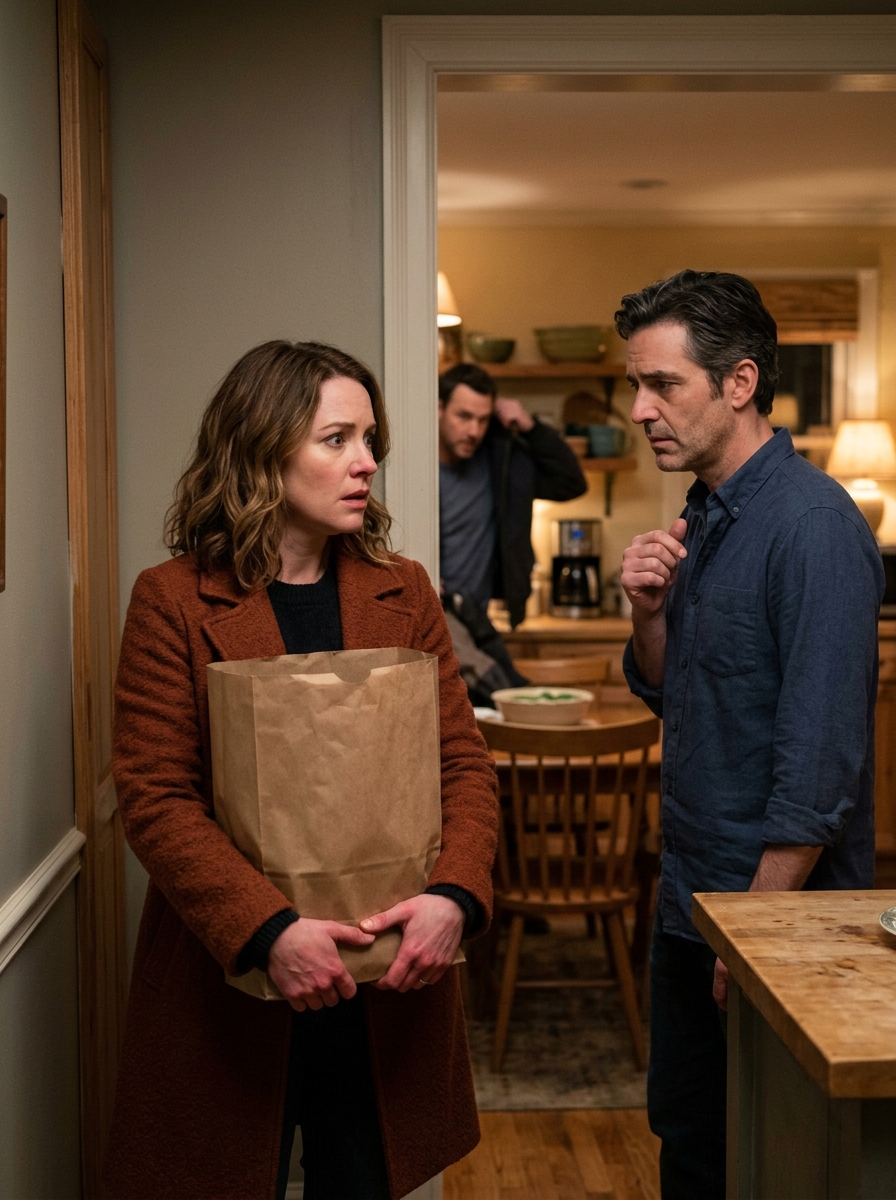
“You made me stay without knowing.”
His face tightened.
“Yes.”
The room went quiet.
It was the first time he had said it without trying to cushion it.
***
A week later, Simon brought up an open marriage.
They were standing in the kitchen, dividing the mail. The mortgage statement was addressed to both of them. The museum’s annual donation request was addressed to Nora. A postcard from Simon’s sister showed a lighthouse in Maine.
“I’ve been reading about ethical nonmonogamy,” he said.
Nora placed the mail in two separate stacks.
“Of course you have.”
“I’m serious.”
“I know.”
“I don’t want you to give up sex because I don’t experience it the same way.”
“That sounds generous.”
“I’m not trying to be generous.”
“What are you trying to be?”
“Practical.”
Nora looked at him.
He went on. “Maybe there’s a way for us to stay married. You could have sexual relationships outside the marriage. We could be honest about it. I wouldn’t have to pretend to want something I don’t want, and you wouldn’t have to pretend you don’t need it.”
“You make it sound like I need a gym membership.”
“That isn’t what I mean.”
“I know it isn’t. That’s why it’s worse.”
Simon’s face went pale.
Nora took a breath.
“I don’t want a hall pass. I don’t want you to grant me permission to get the part of marriage you quietly removed. And I don’t want to come home from someone else’s bed and find you congratulating yourself for being evolved.”
“I wouldn’t.”
“You don’t know that.”
“No,” he said. “I don’t.”
She turned toward the sink.
“I’m not saying couples can’t choose that. I’m saying we would be choosing it because you don’t want sex and I do. That isn’t automatically wrong. But it would have to be something we both genuinely wanted, not a way to keep our house and our history while outsourcing the part that hurts.”
“I don’t want to lose you.”
“I know.”
“I don’t want to trap you either.”
Nora closed her eyes.
“Then stop asking me to solve this while you keep the shape of the life you prefer.”
Simon did not answer.
The next morning, Nora asked him to move out.
Not forever.
Not with a suitcase thrown onto the porch or a legal document placed between them.
She asked for eight weeks.
“I need to know what missing you feels like,” she said, “when I’m not also waiting for you to want me.”
Simon sat at the edge of the bed.
“And if you realize you don’t miss me?”
“Then I’ll tell you.”
“And if you realize you do?”
“I’ll tell you that too.”
He looked toward the bedroom window.
“Do you want me to fight for us?”
“I want you to stop performing the part you think I need.”
His eyes closed briefly.
“Okay.”
He moved into a furnished apartment near the school where he taught. He took six shirts, his coffee grinder, two boxes of books, and the wooden bowl Nora’s father had carved before he died.
He left the piano.
He left the photographs.
He left the blue mug with the chipped handle because Nora had always used it in the morning.
At the front door, he held his keys in his palm.
“Can I hug you?” he asked.
The question undid her more than the departure.
“Yes.”
The embrace was familiar and careful. Simon’s cheek rested against her hair. Nora felt the warmth of him, the weight of his arms, the grief of knowing that tenderness could be real and still not be enough.
When he stepped back, neither of them said anything hopeful.
That was the first honest kindness between them in a long time.
***
The house changed shape after Simon left.
Not dramatically. His shoes disappeared from the hallway. His science magazines vanished from the bathroom. The chair in the bedroom remained empty, angled toward the window.
Nora expected relief to feel bright.
Instead, it felt like noticing a low electrical hum had stopped. The silence was not joy. It was simply no longer demanding an explanation.
She kept finding things to tell him.
A curator at the museum had accidentally labeled a medieval devotional panel “possibly a landscape.” The upstairs neighbor had begun practicing trumpet at six in the morning. Someone had left a bag of oranges on the front steps.
She typed messages and deleted them.
On the third Sunday, Simon texted her.
I told my sister.
Nora stared at the screen.
How did she respond?
She asked if you knew before we got married.
Nora sat at the dining table.
What did you say?
That I didn’t. Then I said that wasn’t enough.
Nora read the message twice.
She wanted to be angry that he had told his sister. She wanted to ask whether he had described her as patient, difficult, heartbroken, or confused.
Instead, she wrote:
That’s true.
A minute later, Simon answered.
I know.
This time, she did not tell him to stop saying it.
***
After five weeks apart, Celia introduced Nora to a man named Leon.
It was not a setup, Celia insisted. It was coffee between two adults who knew the situation.
Leon worked for the botanical gardens. He was divorced, had a teenage daughter, and laughed before finishing his own jokes. He knew Nora was separated and did not ask invasive questions.
They talked about museums, public transit, and the strange emotional violence of apartment listings that described closets as “flex spaces.”
At the end of the evening, Leon asked if he could kiss her.
Nora hesitated.
Not because she didn’t want to.
Because she was tired of hesitation being mistaken for virtue.
“Yes,” she said.
The kiss was brief. It did not feel like a revelation. It did not erase Simon. It did not prove that Nora was desirable or that her marriage had been a mistake.
It was simply something she wanted and someone else wanted with her.
On the walk home, she cried anyway.
The next counseling appointment was the following Tuesday.
Simon was already in the waiting room, reading a magazine upside down.
Nora sat beside him.
“I went on a date,” she said.
He nodded.
“With someone named Leon.”
“I don’t need his name.”
“I’m telling you because I don’t want any more hidden rooms.”
Simon looked at her.
“Did you like him?”
“Yes.”
“Do you want to see him again?”
“Maybe.”
Simon’s hands tightened around the magazine.
Nora noticed.
“Are you jealous?”
“I don’t know.”
“Are you hurt?”
“Yes.”
She waited.
“I’m not hurt because you did something wrong,” he said. “I’m hurt because I can imagine you wanting something with him, and I don’t know how to be the person you tell about it without feeling like I’m standing outside your life.”
Nora looked down at her hands.
“That’s what I’ve been doing for two years.”
“I know.”
They sat in silence.
Then Simon said, “I thought not being sexually jealous would make this easier.”
“Did it?”
“No. It just made me feel guilty that I wasn’t jealous in the way people expect.”
Dr. Shah opened the office door.
They went inside.

More From This Author