STORY
He Said Their Bedroom Had Been Dead for Two Years—Then His Wife Heard the Truth About Why
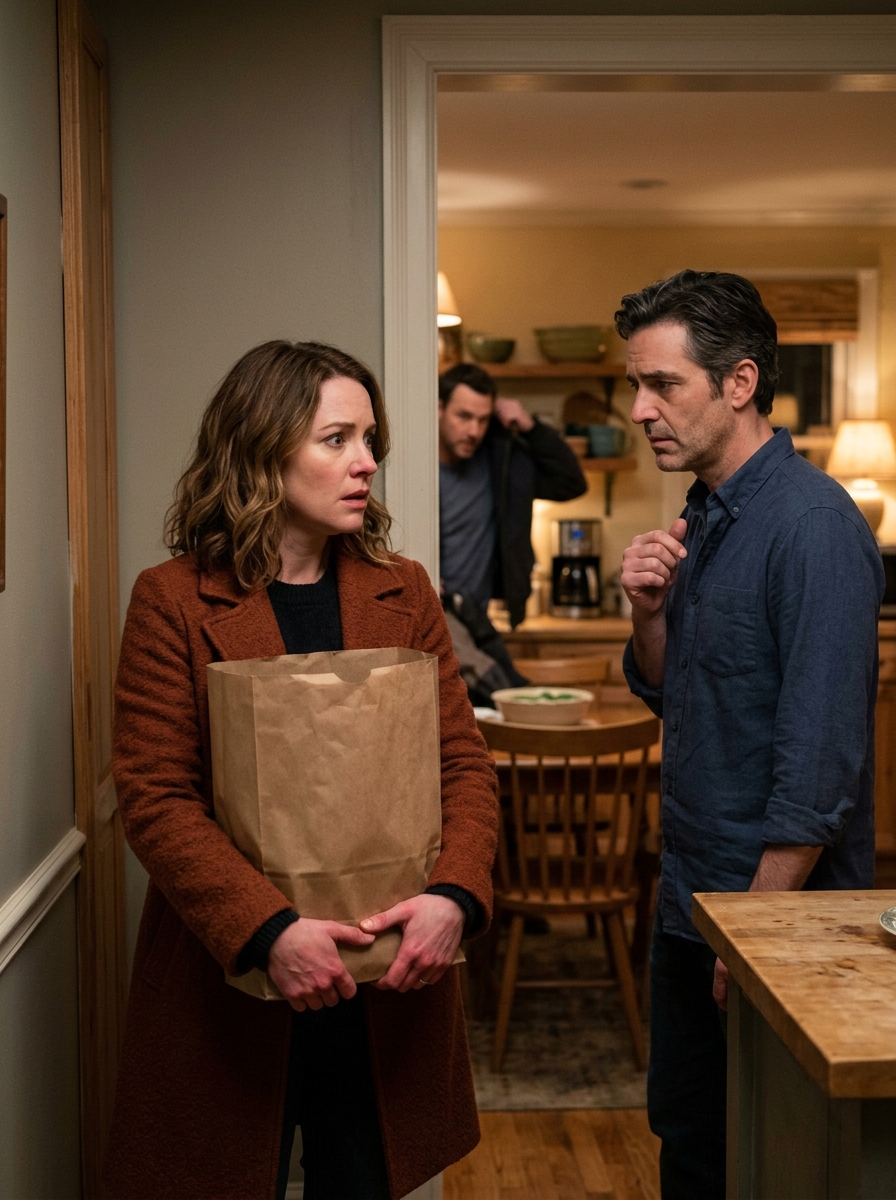
That day, they did not discuss how to revive their marriage.
They discussed whether the marriage they had was one either of them could continue choosing.
***
The answer did not come all at once.
It arrived through smaller decisions.
Simon began seeing an individual therapist. He joined an online group for asexual adults and told two close friends what he had learned about himself. He stopped describing his orientation as a problem he needed to solve.
Nora continued seeing Leon once, then twice. She told him she was not ready for a relationship. He said he wasn’t asking for one. That kindness made her wary, but she did not punish him for being kind.
She and Simon met every other week with Dr. Shah.
They discussed whether affection could be separated from obligation. They discussed what fidelity meant when the relationship itself was being renegotiated. They discussed whether Nora could have outside sexual relationships without feeling like she was building a second life beside Simon’s first one.
They discussed it honestly.
They could not make it work.
Not because Simon rejected the idea. He was willing to consider it. He would have tried if trying were enough.
Nora understood, finally, that his willingness was part of the problem.
She did not want to be accommodated.
She wanted to be met.
At the eighth week, Dr. Shah asked them what decision they had come to.
Nora looked at Simon.
“I want a divorce.”
Simon’s eyes lowered.
The pain on his face was immediate but not theatrical. He took a breath.
“Okay.”
Nora’s throat tightened. “I’m not leaving because you’re asexual.”
“I know.”
“I’m leaving because you knew there was a truth that could change my decision, and you kept it from me.”
“I know.”
“And because even with the truth, we want different marriages.”
Simon nodded.
“I want to stay married to you,” he said. “But I don’t want you to stay married to me by cutting away something essential and calling the missing piece maturity.”
Nora looked at him.
“That is the first thing you’ve said that sounds like love without asking me to give something up.”
He smiled sadly.
“I should have started there.”
“Yes,” she said. “You should have.”
They did not hug in the office.
They had learned that not every tender moment needed to become evidence that they had made the right decision.
***
The divorce was finalized in early spring.
The paperwork called their differences irreconcilable.
Nora thought the word was too blunt and not blunt enough.
Their differences had been reconcilable in theory. There were arrangements, agreements, alternate structures. They could have remained legally married. They could have opened the relationship. They could have stayed together as romantic companions without sex.
But every option required both of them to want the same shape of life.
They didn’t.
At the mediator’s office, they divided the furniture without fighting. Simon kept the workshop tools and the dining table. Nora kept the house, the piano, and the blue mug.
The bowl carved by her father went with Simon.
“I thought you’d want that,” she said.
“I do.”
They signed the final documents in silence.
Outside, the air smelled like wet pavement and budding trees.
Simon put his hands in his coat pockets.
“I hope Leon is good to you,” he said.
Nora looked at him.
“I hope you stop apologizing for being who you are.”
“I’m trying.”
“I know.”
He laughed softly.
“Still hate that answer?”
“Less than I used to.”
He glanced toward the street.
“Can I ask you something?”
“Yes.”
“Was any of it real?”
Nora knew what he meant.
The trips. The jokes. The meals cooked together. The nights they had held each other until one of them fell asleep. The life that had not been a lie, even if one of them had been living inside an incomplete truth.
“Yes,” she said. “It was real.”
He swallowed.
“But it wasn’t enough,” she added.
“No.”
The honesty hurt them both.
It was also the only thing left that belonged entirely to them.
***
A month after the divorce, Nora moved her writing desk into the old bedroom.
She had never liked the room’s dark curtains, so she replaced them with linen ones that let in the morning light. She moved the bed against the opposite wall. She placed a green plant on the windowsill and a stack of museum catalogs beside the lamp.
The room did not become beautiful all at once.
It became usable.
Some mornings, she sat at the desk and worked. Some nights, she read in bed. Once, she woke before dawn and listened to the city buses moving along the avenue.
She did not think about whether someone else would want her there.
She did not measure the room by what had or had not happened in it.
On a Thursday in May, Leon asked her to dinner again. Nora said yes, with the understanding that neither of them was promising more than the evening.
She did not know whether it would become a relationship.
She did know what she would ask before building a life around anyone again.
Not whether they loved her.
Whether they could tell her the truth about what kind of love they were offering.
When she came home, the bedroom was quiet.
It was not dead.
It was only a room now—one Nora could enter without waiting for someone else to name what she was allowed to want.

More From This Author