STORY
I Sent Ethan Away After Amara Died—Priya Found the Report
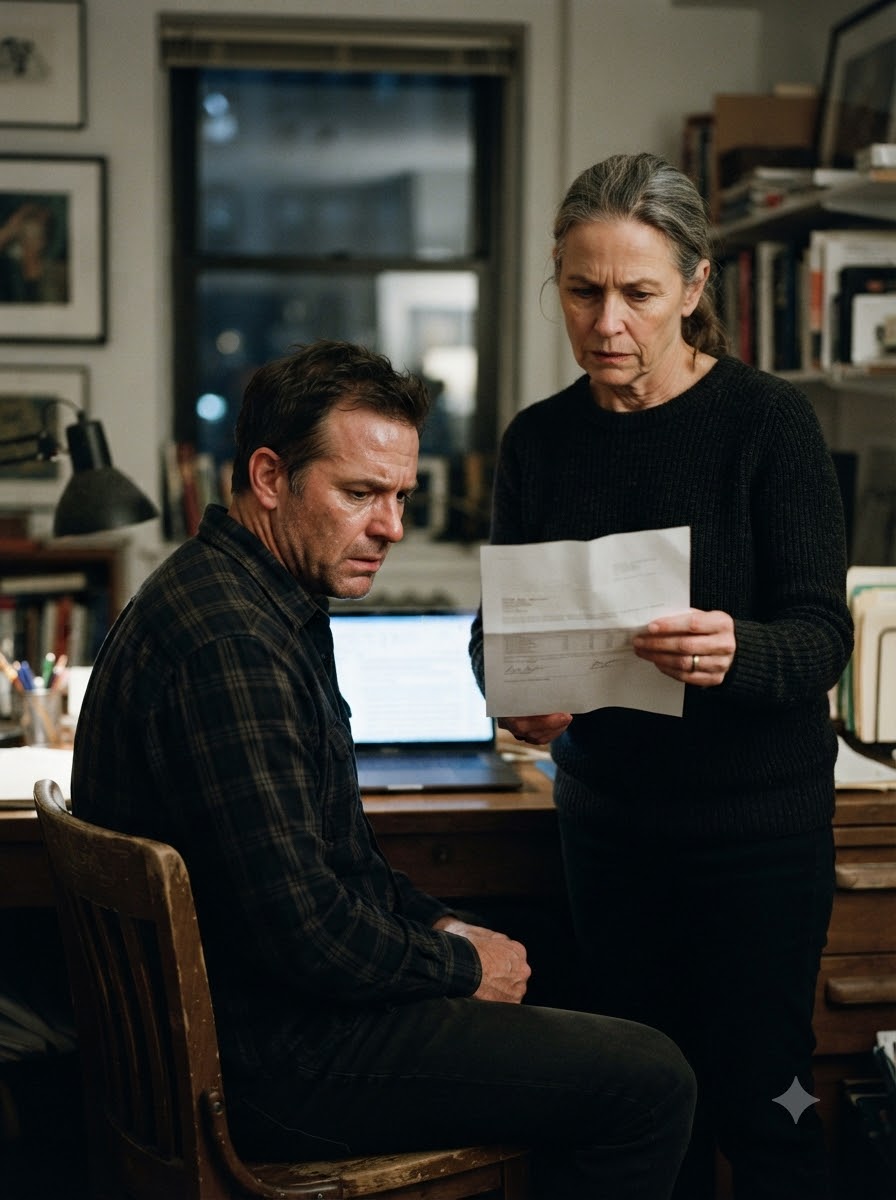
Priya did not argue. She drew another document from the folder.
“Before we get to Amara,” she said, “we need to talk about her house.”
I looked at her.
“The house was left to Ethan. Not to you.”
“Amara and I owned it together.”
“No. She inherited it from her aunt before you married. You lived there, but your name was never on the deed.”
I remembered signing papers after the funeral. I remembered telling the lawyer there was no will. I remembered the check from the sale clearing my bank account.
For ten years, I had told myself I was entitled to that money. I had paid the mortgage, repaired the roof, stood beside Amara in the hospital. I had treated the house as payment for all of it.
Priya pushed a copy of a will toward me. Amara had signed it eighteen months before her death. Rosa Alvarez and an attorney had witnessed it. It named Ethan as the sole beneficiary of the house and of the savings account Amara had kept since before our marriage. Priya was named as the person Amara wanted to manage those assets for him.
I knew the attorney’s name. I had seen it on the return address of an envelope that arrived two weeks after Amara died.
Priya watched me recognize it.
“You opened that envelope,” she said.
“I got a lot of mail then.”
“The office kept a copy of what they sent. They also kept the delivery receipt. You signed for it.”
I looked down at the will. Its last page carried Amara’s signature, slanting slightly upward. She had signed it on a day when she was alive and expected to stay that way.
“You could have contacted me,” Priya said. “My number was in it.”
“I didn’t know where Ethan was.”
“You knew he was at Rosa’s the morning after you sent him away.”
Outside the office, I could hear laughter from the gallery. Someone passed close to the glass, studying a painting on the far wall.
“I didn’t read the whole thing,” I said.
Priya took a breath. “Daniel, you gave the probate court a sworn statement saying Amara had left no will and that you knew of no child with an interest in the estate.”
I remembered the form. I had signed it at a lawyer’s desk in a town where nobody knew Ethan. I had been told that lying on it carried penalties. My hand had not shaken.
Priya placed that page beside the will.
“Her attorney followed up,” she said. “He called you twice. His notes say you told him Ethan was living with his father.”
I had no memory of the exact words. I remembered wanting the calls to stop.
A knock came at the office door. Ethan stepped inside.
He was twenty-two now, taller than I was. He had Amara’s eyes. I saw it immediately and wondered how I had missed it when he was small.
He stayed near the door. Priya reached for the folder, but he shook his head.
“I want to hear what he says,” Ethan told her.
I stood. “Ethan, I didn’t know.”
“About the DNA?” he asked. “Neither did I until last month.”
“About you being my son.”
“I know.”
He had painted me throwing him out and still invited me here. I had expected shouting. His calm made it harder to speak.
“I’m sorry,” I said.
Ethan glanced at the papers on the desk. “Which part?”
I wanted to answer all of it. I wanted to tell him what grief had done to me, how the house had felt after Amara died, how afraid I had been of raising a boy alone. The words gathered in my mouth. I could hear how they would sound to him.
He waited.
“For sending you away,” I said. “For taking what your mother left you.”
“Did you know she left it to me when you sold the house?”
I looked at Priya. She did not help me.
“Yes,” I said.
Ethan’s face changed then. He had come into the room prepared to hear a denial. My answer gave him something worse.
“Rosa said she thought you knew,” he said.
Rosa had found him at the bus stop three blocks from home. He told me he had sat there because there was a bench and a light. He had not known which bus came through, or where he would have gone if one had stopped.
“She called you the next morning,” he said. “After that, I thought you’d come over. I waited until dinner.”
I gripped the back of the chair. “I should have.”
“Yes.”
He did not ask why I hadn’t. I was grateful for that, though I had no right to be.
Priya had spent months finding the records. After Ethan tracked her down, she contacted Amara’s attorney. He still had the original will in his files. She found Rosa, who remembered signing it at Amara’s kitchen table and remembered Ethan’s torn backpack at the bus stop. She found the deed, the probate filing, the sale records, and the transfer of the proceeds into my business account.
Ethan had helped with the search. The first thing he wanted from Priya was not money. He wanted photographs of his mother before he was born.
I asked why they had waited until the opening to confront me.
“I wanted you to see the paintings,” he said. “You saw one night. I lived the years after it.”
On the wall beyond the office glass were paintings I had passed too quickly on my way in: a narrow bed under a window; two women at a kitchen table; a boy riding a bicycle with his knees high against the handlebars. Priya told me Rosa and her family had kept him while the agency found a placement. He later lived with her sister. He stayed close to both households.
I had pictured him vanishing into somebody else’s care because that had made my choice bearable. He had lived an entire childhood that I could have known if I had once picked up the phone.
“I’ll repay him,” I said.
Ethan nodded toward the documents. “My attorney will contact yours.”
It was the first moment I understood he had not invited me to bargain. He had come with the truth, witnesses, and a plan to make me answer for what I had done.
Back in Cincinnati, I told Claire everything before the attorney called. She sat at our dining table and asked me to repeat the part about Ethan’s age.
“Twelve,” I said.
“You left a twelve-year-old outside?”
“Yes.”
She put her hand over her mouth. For years she had known me as a man who answered hard questions directly. I watched her realize how much I had left out.
Claire moved to her sister’s place the following week. She said she needed time. Months later, we divorced.
The legal case took longer. Amara’s estate was reopened, and the court found that I had concealed the will and made false statements in the original proceeding. I was ordered to return the sale proceeds and the money taken from her account, with interest and legal costs. There was an investigation into my sworn filings. My attorney warned me that admitting everything would not erase what I had done.

More From This Author