STORY
My Son Left the Steakhouse Bill—Then a Forged Deed Surfaced
I had never heard the name.
Marshall tapped the recording number.
“This is the first layer,” he said. “You’re a secured creditor, not a helpless mother who gave away her savings.”
Elena turned over the title report.
“And this is the second.”
Two weeks after the fraudulent reconveyance, Donovan and Phaedra had opened a new $410,000 line of credit against the house. They had already withdrawn $287,500.
The transaction history, obtained through legal demand days later, told the rest.
Sixty thousand went to credit cards.
Thirty-eight thousand bought Phaedra a luxury SUV.
Twenty-two thousand paid overdue taxes from Donovan’s new consulting company.
Fifteen thousand went to a cosmetic surgery practice.
Forty thousand had been transferred into an account belonging only to Phaedra.
And $96,000 had gone to a Nevada investment platform promoting “fractional hospitality assets.”
They had erased my lien to borrow against equity created largely by my money.
Then Elena uncovered something colder.
The house had been listed privately through a broker three days before the steakhouse dinner. A buyer had made an offer. Donovan and Phaedra expected to close within a month, take what equity remained, and move to Arizona.
They had planned to tell me after they left.
The dinner had not been a farewell.
It had been a final extraction.
When I returned home, I pulled the 2021 file from the cabinet. It sat between Roland’s death certificate and the washer warranty exactly where I remembered.
Inside was Donovan’s note in blue ink.
Just sign highlighted pages. You’re saving us again. Love you.
Beneath it, tucked behind the subordination agreement, was a photocopy of my driver’s license.
Across the top, in Phaedra’s handwriting, were the words:
FOR NOTARY—SERENA HAS REST.
Elena photographed it.
We learned Serena Pike was Phaedra’s friend from a charity committee. Her notary commission had expired four months before the reconveyance. Her stamp should have been destroyed.
More importantly, California notaries keep journals and obtain thumbprints for certain property documents.
Serena’s journal showed no appointment with me.
When investigators contacted her, she broke within a day.
Phaedra had brought her the document and said I was bedridden but had signed it willingly. Serena had stamped it without my presence in exchange for $2,500.
She still had the text messages.
One from Phaedra read:
Camille never looks at county stuff. Once this records, we’re clean.
Another said:
D says his mom won’t fight family. She’d rather die than have people know.
That was the sentence that ended my grief.
Until then, some part of me had still been searching for an explanation that would let Donovan remain my son in the way I remembered him.
But he had not merely taken advantage of my trust.
He had calculated the weight of my shame and used it as collateral.
Elena moved quickly. She recorded a notice disputing the reconveyance, filed suit to restore my lien, sought an injunction against the sale, and notified both lenders of suspected fraud.
The private buyer withdrew.
The new lender froze the unused portion of the credit line.
Then Donovan called.
“Mom, this has gotten completely out of hand.”
His tone was gentle, almost amused, as if I had misplaced my glasses.
“You reported us for fraud?”
“I hired a lawyer.”
“You could have talked to me.”
“You left me with a nine-hundred-dollar restaurant bill.”
“Oh, come on. Is that what this is about?”
“No. That was simply the last thing you stole before I started counting.”
He inhaled sharply.
“We never stole from you. The Tahoe money was a gift.”
“You signed a promissory note.”
“That was Dad’s obsession. He made everything formal.”
“And in 2021, you had me subordinate my lien.”
“You knew what that was.”
“You told me I was helping you qualify.”
“You were helping us. Same difference.”
“No, Donovan. Words have meanings even when you say them to your mother.”
He changed tactics.
“Phaedra handled the reconveyance. I assumed you’d approved it.”
I heard Phaedra in the background.
“Don’t you dare,” she snapped.
Then she took the phone.
“Camille, you’re confused. Serena can confirm everything.”
“Serena already has.”
Silence.
It lasted only two seconds, but I felt the truth rearrange itself on their end of the line.
Phaedra recovered first.
“You’re destroying your grandchildren’s home.”
“You borrowed against their home after forging my signature.”
“We were going to repay you after the sale.”
“The closing statement lists no payment to me.”
Another silence.
Elena had obtained the draft settlement statement that morning. Every dollar of expected proceeds was allocated to the banks, broker fees, taxes, and a wire to an Arizona title company for their next house.
Nothing was allocated to me.
Donovan came back on the line.
“Who are you trying to be right now?”
It was such a revealing question.
As though dignity were a role I had no right to play.
“I’m the woman whose name you practiced badly,” I said, and hung up.
The confrontation happened ten days later in Elena’s office.
Donovan arrived in a navy suit. Phaedra wore cream and carried a leather binder. Their attorney, Mr. Haskell, looked exhausted before anyone sat down.
Marshall attended as my financial witness.
So did the escrow officer from the 2017 purchase, who had found archived emails confirming that Donovan understood the $312,000 was a loan secured by the property.
Serena appeared by video with her own criminal attorney.
Phaedra began by insisting I had always intended the money as a gift.
The escrow officer read Donovan’s 2017 email aloud.
My parents are lending us the down payment. We agree Camille must be protected if anything happens to us or the property.
Donovan stared at the table.
Phaedra claimed I had later forgiven the debt.
Elena displayed the 2021 subordination agreement, signed by all three of us, identifying the full unpaid principal.
Donovan said he believed I had authorized the reconveyance.
Elena displayed his text to Phaedra from the night before it was recorded.
Make sure Serena doesn’t call Mom. If she asks questions, this dies.
Phaedra blamed Donovan.
Donovan blamed Phaedra.
Then Serena’s attorney announced that she was cooperating with the district attorney and had surrendered their complete message history.
The room changed.
Denial requires air. Proof removes it.
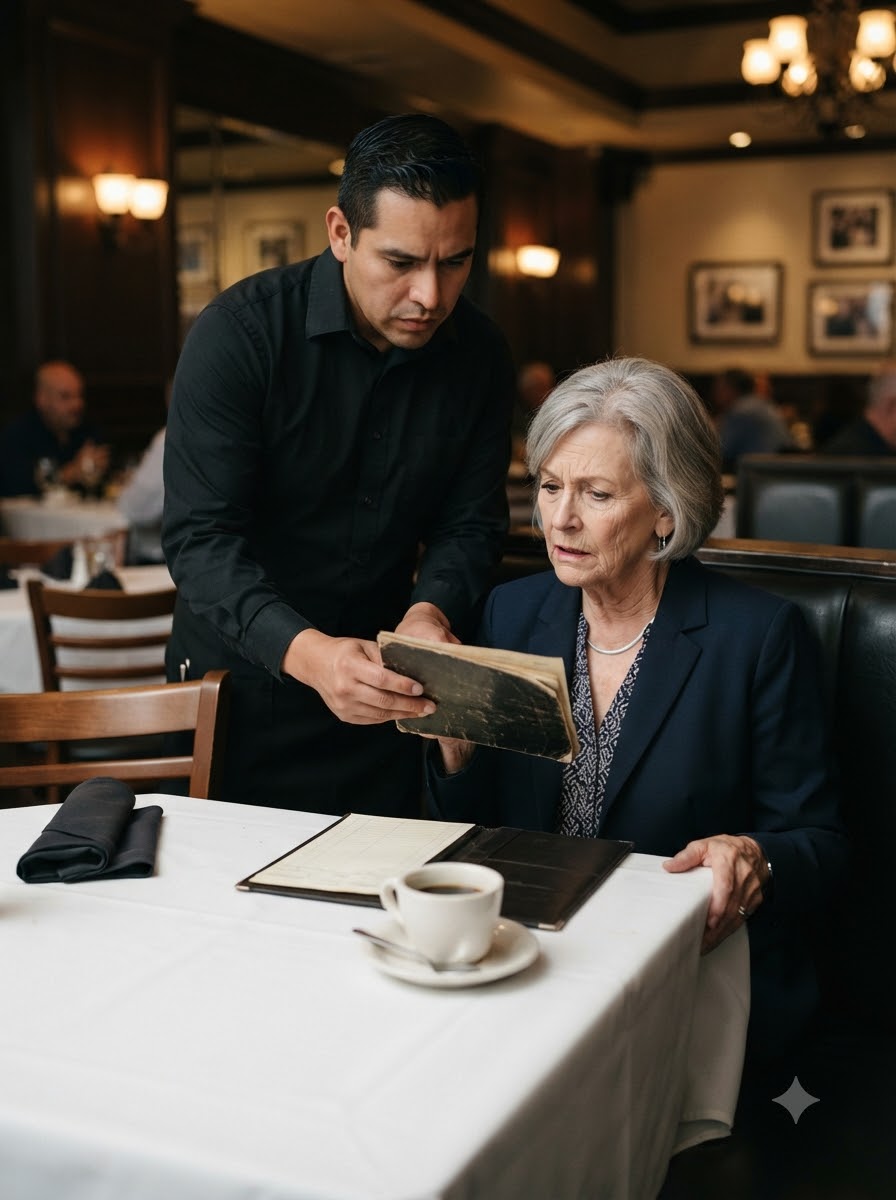
Elena placed the steakhouse photograph on the table. Two empty chairs. One crumpled napkin. One folded.
Then she produced the message Phaedra had sent Donovan from the restaurant restroom.
Car is out front. Leave before check comes. She’ll pay. She always does.
It was not legally important.
But it was the piece that made Donovan finally look at me.
“I’m sorry,” he whispered.
I wanted the apology to heal something.
It did not.
“You’re sorry there are witnesses,” I said.
The settlement took four months.
The fraudulent reconveyance was voided. My lien was restored to its proper position. Because the later lender had failed to investigate obvious irregularities, it negotiated rather than fight through years of litigation.
The house was sold under court supervision.
It did not bring enough to preserve Donovan and Phaedra’s lifestyle, but it brought enough to pay the first mortgage, satisfy my principal, accrued interest, attorney’s fees, and a portion of the disputed later loan.
My recovery was $389,740.

More From This Author